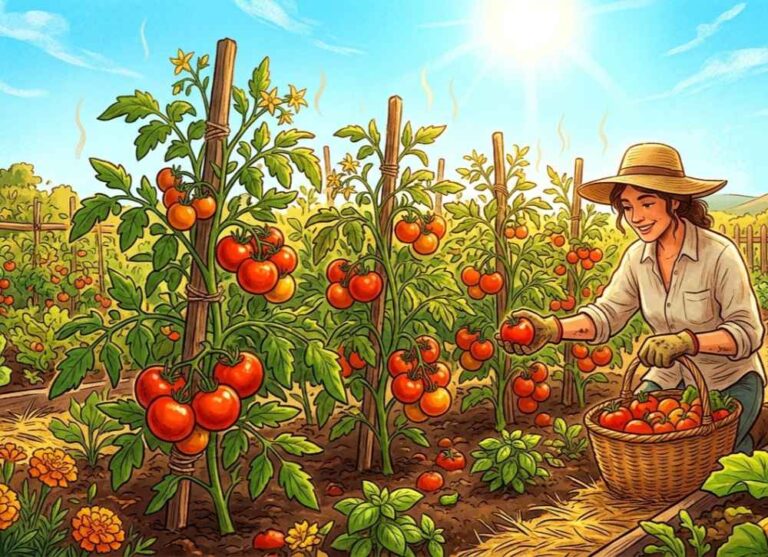
You planted your tomatoes with big dreams, fresh slices on every summer sandwich, salads bursting with homegrown flavor all season long.
But then August hits, and your once-thriving plants look exhausted. The leaves yellow, fruit production slows, and you’re left wondering if you did something wrong.
Here’s the truth: Do tomato plants produce all summer? By the tomato plant is perennial natively, but the answer depends entirely on your climate and variety.
- In moderate zones, indeterminate tomatoes can fruit continuously until frost.
- But in extreme heat above 90°F, most plants pause production until temperatures cool again.
Factors That Affect Do Do Tomato Plants Produce All Summer
Many gardeners wonder if their tomato plants will produce fruit throughout the entire summer season. The answer depends on a few key tomato-growing factors.
It All Starts With the Tomato Plant Type
Not all tomato plants behave the same way during the summer months. The tomato variety you choose makes a big difference in how long you’ll be picking ripe tomatoes.
Indeterminate tomatoes are the marathon runners of the summer garden. These vining tomato plants keep growing taller and producing new tomato fruit until the first frost arrives.
They’re perfect if you want fresh summer tomatoes for your salads week after week. You’ll have a steady tomato supply rather than one big harvest.
Determinate tomatoes work differently in your summer garden. These bushy tomato plants grow to a set height and then stop producing new growth.
They give you most of their tomato fruit in a short burst of two to four weeks. If you’re planning to make tomato sauce or can tomatoes for winter, these are your best bet.
When Summer Heat Becomes a Problem for Tomatoes
Here’s something that surprises many tomato gardeners. Even the best tomato plants can stop producing fruit when summer temperatures get really hot.
Tomato flowers need the right temperature conditions to turn into fruit. When daytime summer temps climb above ninety degrees, tomato pollination often fails.
The tomato flowers simply fall off without setting any fruit. Nighttime summer temperatures above seventy degrees make this tomato pollination problem even worse.
Extreme summer heat also messes with tomato ripening. Tomatoes need certain pigments like lycopene, to turn red.
When summer temperatures stay above eighty-five degrees for too long, those tomato pigments don’t form properly. You might see summer tomatoes stuck at an orange color that never quite ripens.
Where You Live Changes Your Summer Tomato Experience
Your location plays a huge role in your tomato timeline during summer. Gardeners in different regions have very different experiences growing tomatoes in summer heat.
If you’re growing tomatoes in the Northeast or Midwest, expect ripe tomatoes from midsummer until frost. The moderate summer temperatures work in your favor for tomato production.
Southern and Southwestern tomato gardeners face tougher summer conditions. Intense summer heat often ends the main tomato harvest by early June.
But don’t give up hope if you grow tomatoes in a hot summer area. A second tomato planting in late summer can give you a nice fall tomato crop.
Smart Tricks for More Summer Tomatoes
You can outsmart the summer heat with a few simple tomato growing strategies. These tomato tips help extend your summer harvest even in challenging hot weather.
Look for heat-tolerant tomato varieties when you shop for plants. Tomato types like Heatmaster and Solar Fire are bred to set tomato fruit in scorching summer conditions.
Consider using shade cloth over your tomato plants during the hottest summer afternoons. It can drop temperatures around your tomato plants by up to ten degrees.
Don’t skip the mulch around your summer tomato plants. A thick mulch layer of two to three inches keeps tomato roots cool and happy during hot summer days.
Mulch also holds soil moisture where your tomato plants need it most. Your summer tomatoes will thank you when the hot August days roll around.
Water your tomato plants deeply to prevent underwatering and encourage strong tomato root growth.
But avoid overwatering your tomato soil as soggy conditions attract fungus gnats that harm tomato roots.
Let the top inch of tomato soil dry between waterings to keep your summer tomato plants healthy and pest-free.
Best Tomato Planting Time in Summer
Summer heat intensity varies greatly depending on where you live and garden. This means your summer tomato growing time and strategies need to match your specific regional climate conditions.
A tomato growing approach that works in mild Northeast summers won’t work in intense Southwest summer heat. That’s why understanding your regional summer conditions is essential for tomato success.
GardenChains provides region-specific summer tomato growing guides tailored to your local climate. If you live in any of these regions, these summer tomato guides will be a golden opportunity for your garden.
When to Plant Tomatoes in Georgia?
When to Plant Tomatoes in Florida?
When to Plant Tomatoes in Texas?
When to Plant Tomatoes in Zone 5?