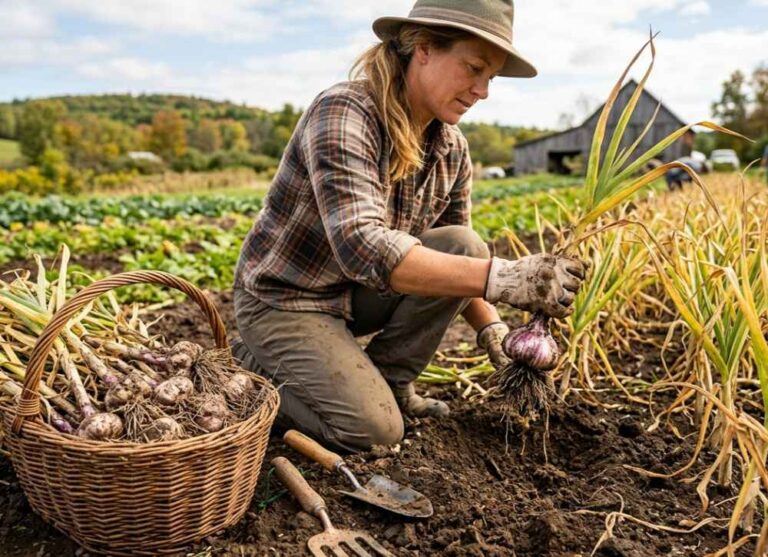
Fall-planted garlic is the patient gardener’s reward. You push cloves into cold soil in October or November, watch them sleep through winter, and then wait through an entire spring of growth.
The payoff? Full-sized, properly segmented bulbs with robust flavor and long storage life.
By the way, the garlic plant is perennial natively, but if you are harvesting just bulbs for cooking, then fall garlic needs 8-9 months in the ground from planting to harvesting.
Plant garlic in mid-October, and you’re looking at a late June or July harvest. Plant in November, expect July or August.
Here’s the interesting part: fall planting works for both hardneck and softneck varieties, but hardneck thrives with this schedule.
When To Harvest Garlic Planted In Fall?
Those cold winter months trigger vernalization, the process that tells garlic to form separated cloves instead of rounds.
Without winter cold, hardneck struggles. With it, you get beautiful segmented bulbs with 4-10 cloves each.
Softneck planted in fall matures slightly earlier, often 2-3 weeks ahead of hardneck. Elephant garlic, despite its size, follows hardneck timing and sometimes needs an extra week or two to finish.
The long garlic growing season means bigger bulbs, more wrapper layers, and significantly better storage potential.
Fall-planted softneck can last 6-9 months after curing. Hardneck gives you 3-5 months. Compare that to spring-planted garlic that barely makes it 2-4 months in storage.
Key Indicators That Tell You It’s Time To Harvest Fall-Planted Garlic
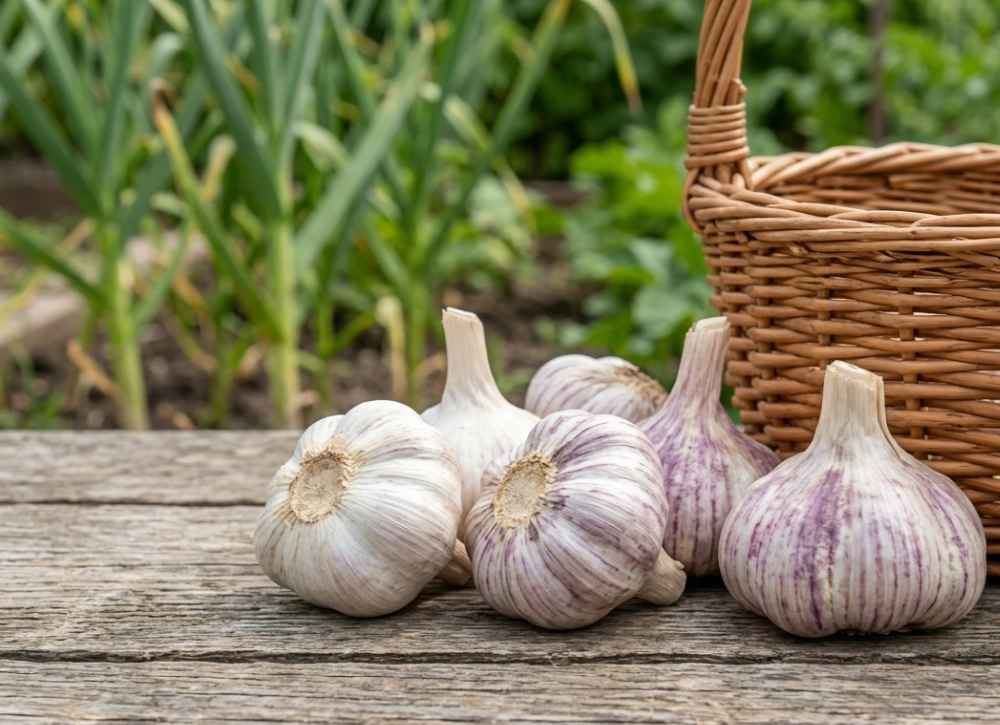
Fall-planted garlic communicates clearly when it’s ready. The trick is learning its specific language instead of pulling too early out of excitement or waiting too long, hoping for bigger bulbs.
Count your green leaves; each one means something.
Every green leaf above ground corresponds to one wrapper layer around the bulb below. Fall-planted garlic typically grows 10-12 leaves.
When 4-5 lower leaves have died back while 5-6 upper leaves remain green, you’re in the harvest window. This ratio gives you enough wrapper protection for storage without risking bulb deterioration.
Brown moves up from the bottom, never the top.
Healthy garlic dies back from the ground up. The lowest leaves yellow and brown first, then the next row, and so on.
If browning starts at the top or appears randomly throughout the plant, something else is wrong: disease, pests, or water issues. Top-down browning means investigating before harvesting garlic.
Hardneck scape timing tells you where you are.
If you grow hardneck, the scape gives you a built-in calendar. When you cut scapes (usually June), mark that date. Bulb harvest typically follows 3-4 weeks later.
Missed cutting your scapes? Once the flower capsule at the top starts cracking open, your bulbs are definitely ready, possibly overready.
Softneck neck feel beats leaf counting.
For softneck varieties, squeeze the neck where it meets the bulb. A firm neck means the bulb is still growing.
When that neck softens, and you can compress it easily between your fingers, growth has stopped. Harvest garlic within the next few days.
The wrapper test dig.
Around the time lower leaves start browning, carefully excavate soil around one bulb without pulling it.
Look at the wrapper. You want it tight against the bulb with visible clove bumps pressing from inside. If the wrapper looks loose or the cloves aren’t defined yet, rebury and check again in a week.
If the wrapper shows any splitting or the cloves are starting to separate from each other, harvest immediately; you’re at the edge of being too late.
Soil cracking around the stem.
As fall-planted garlic reaches full maturity, the expanding bulb sometimes pushes against the soil surface.
You might notice small cracks radiating from the stem base. This isn’t a definitive sign alone, but combined with leaf browning and timing, it confirms you’re close.
Elephant garlic plays by slightly different rules.
Those massive bulbs need extra time. Even when leaves suggest harvest, elephant garlic often benefits from another week underground.
The size means more interior development time. When harvesting, dig wide; those bulbs extend further than you’d expect.
Post-Harvest Steps for Fall-Planted Garlic
Pulling bulbs from the ground is only half the job. What you do in the next few weeks determines whether your garlic lasts until next spring or rots by October.
Curing
Move garlic out of direct sunlight immediately after harvest. Sun exposure for even an hour can scald bulbs and ruin flavor.
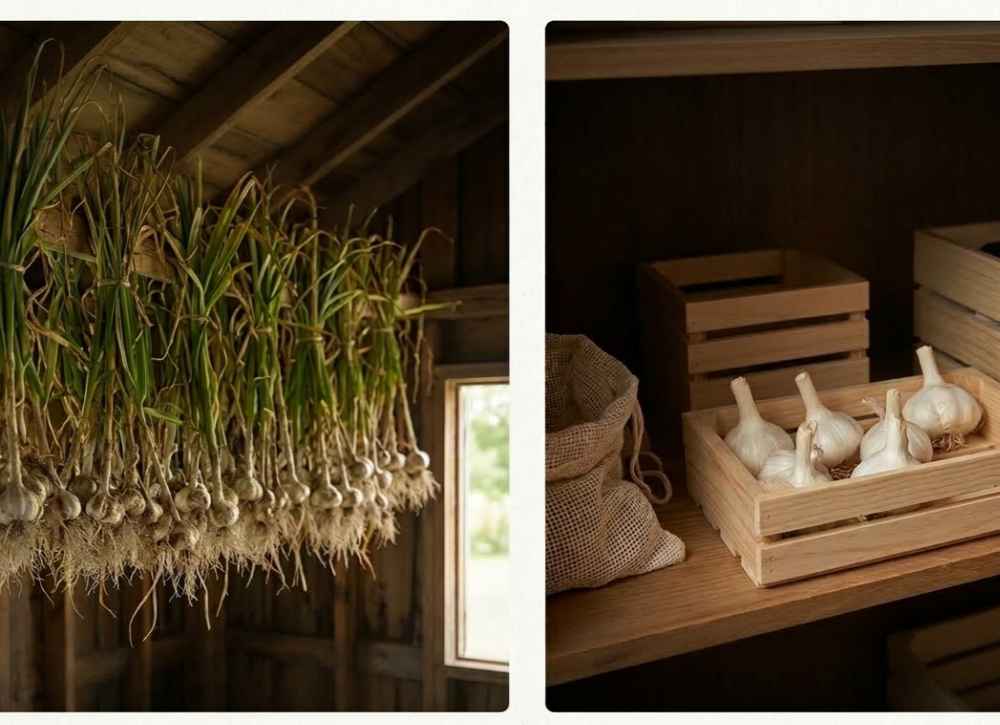
Find a spot that’s shaded, dry, and has air movement, a covered porch, open garage, or barn with cross-ventilation works perfectly.
Lay bulbs in single layers on screens or racks, or bundle 8-10 plants by their stalks and hang upside down.
The goal is for the air to reach every bulb from all sides. Piling garlic or laying it on solid surfaces traps moisture and invites mold.
Fall-planted garlic needs 3-6 weeks of curing, longer than spring-planted because the bulbs are larger and contain more moisture.
Hardneck typically finishes in 3-4 weeks. Softneck and elephant garlic often need the full 6 weeks, given their denser structure.
You’ll know curing is complete when wrappers feel completely papery, roots are dry and brittle, and the neck above the bulb is hard, no softness when squeezed. If anything still feels pliable, give it more time.
Storage
Once fully cured, trim roots to about half an inch. Cut stalks to one inch above the bulb, unless you’re braiding softneck, then leave stalks intact. Peel away the dirtiest outer wrappers, but stop at the first clean layer.
Store in mesh bags, paper bags, wire baskets, or braided strands. Avoid plastic or sealed containers. Temperature around 60-65°F with moderate humidity is ideal.
A basement, cellar, or cool pantry works well. Refrigerators are too cold and humid, and the garlic thinks it’s time to grow and starts sprouting.
Keep hardneck and softneck separate if possible. Use hardneck first since it has a shorter storage life. Check monthly for soft spots, mold, or sprouting and remove affected bulbs immediately.
Properly cured fall-planted garlic stores impressively, softneck up to 9 months, hardneck 3-5 months, elephant garlic around 4-6 months.
FAQ’s
Why does fall-planted garlic form cloves, but spring-planted often doesn’t?
Winter cold triggers vernalization, the biological signal that tells garlic to divide into cloves. Fall-planted garlic gets those cold weeks naturally. Spring-planted garlic misses them entirely, so it often grows as undivided rounds.
Can I harvest fall-planted garlic early if I need it?
Yes, but bulbs will be smaller with fewer wrapper layers. You’re trading size and storage life for early use. If you must harvest early, use those bulbs first since they won’t store as long.
What if it rains right when my fall garlic is ready?
Wait if you can. Harvesting wet garlic increases rot risk during curing. If rain continues for days and you’re worried about over-maturity, harvest anyway, but cure in a spot with extra airflow. Consider using a fan to speed drying.
My fall-planted garlic has scapes, but my neighbor’s doesn’t. Why?
You likely planted hardneck and your neighbor planted softneck. Only hardneck produces scapes. Both are normal; you just have different varieties.
Is fall-planted garlic stronger in flavor than spring-planted?
Often yes. The longer growing season allows more time for sulfur compound development, which creates garlic’s pungent flavor. Spring garlic tends to taste milder because it matures faster.
Garlic Planting Time is Different in Different Areas, That’s why GardenChains Has Created Detailed Research Based Guides.
When to plant garlic in Alaska?
When to plant garlic in Texas? Plant garlic in spring in Texas!!
When to plant garlic in Florida?
When to plant garlic in Georgia?
When to Plant garlic in zone 5?
Explore More Garlic Growing Guides
Harvesting & Storing Garlic
| Full guide to harvesting and storing garlic | How to tell when garlic is ready to harvest |
| When to harvest garlic in Florida | When to harvest garlic in Texas |
| When to harvest garlic in Georgia | When to harvest fall-planted garlic |
| When to harvest spring-planted garlic | How long garlic takes to grow |
When & Where to Plant Garlic
| The best time to plant garlic in your area | How and when to plant garlic in the fall |
| When to plant garlic in Florida | When to plant garlic in Texas |
| When to plant garlic in Georgia | When to plant garlic in Massachusetts |
| When to plant garlic in Colorado | When to plant garlic in Zone 5 |
Growing & Garlic Basics
| How deep and far apart to plant garlic cloves | Five easy steps to plant garlic |
| Can you plant garlic in spring? | Can you plant garlic in spring in Texas? |
| Can you plant garlic in summer? | Is garlic a perennial or annual? |
| How to grow garlic in Alaska |