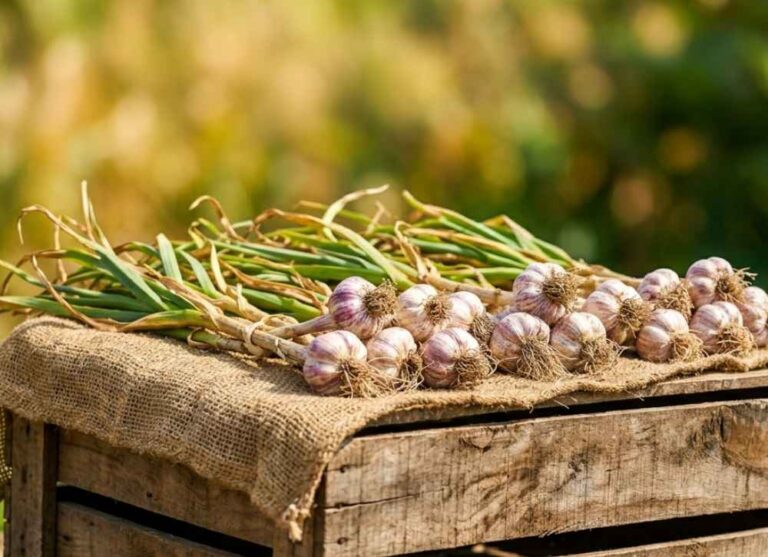
Many gardeners feel the urge to plant garlic in the summer heat to make the most of their annual vegetable garden space. However, garlic is a cool-season biennial that typically requires a long winter chill period to develop healthy garlic bulbs.
The struggle of planting garlic in July or August often results in cloves that simply rot in the warm, moist soil.
Watching your hard work disappear as the cloves fail to sprout creates a frustrating gap in your seasonal planting schedule.
While traditional bulb production is difficult, you can successfully grow “green garlic” in the summer by using controlled environments. According to the Cornell Cooperative Extension, garlic cloves require at least 4 to 8 weeks of temperatures below 40°F for proper bulb differentiation.
Can You Really Plant Garlic in the Summer? What’s Reality?
Biologically, garlic cloves planted in the summer prioritize leaf production over bulb expansion. Without the physiological trigger of cold winter temperatures, the plant will not transition into the stage where it creates individual cloves.
If you plant garlic in the summer, you are essentially growing it as an annual crop for its edible green stalks.
Most gardeners will find that summer-planted garlic produces a single “round” bulb that resembles a small leek or green onion. If you missed the ideal window, you may be wondering can garlic be planted in the spring instead — and the answer depends largely on your local climate and zone.
Summer Planting Challenges for Garlic
The primary challenge is thermodormancy, a state in which garlic cloves refuse to sprout because soil temperatures are too high. When soil temperatures exceed 85°F, the garlic clove remains dormant to protect itself from the metabolic stress of extreme heat.
Furthermore, summer humidity combined with warm soil increases the risk of soilborne diseases, such as Fusarium basal rot. These pathogens quickly colonize the garlic clove, turning the firm tissue into a soft, decayed mass before roots can establish.
How Often to Water Garlic in Summer
Garlic planted in summer requires consistent but careful watering to survive the heat without succumbing to rot. The general rule is to water deeply once or twice per week, providing roughly one inch of water each time.
However, you should always check the top two inches of soil before watering. If it still feels moist, hold off for another day or two.
During peak summer heat waves, you may need to water every three to four days to prevent the shallow roots from drying out completely.
Avoid overhead watering in the evening, as wet foliage overnight dramatically increases the risk of fungal disease.
A drip irrigation system or soaker hose delivers moisture directly to the root zone and remains the most effective method for keeping summer garlic hydrated without stressing the above-ground plant.
How to Grow Garlic in the Summer? Understanding Better Alternatives
To grow garlic in the summer, you must provide heavy mulch to keep the soil temperature at least 10 degrees cooler. Using straw or shredded leaves helps retain moisture and shields the garlic roots from the direct intensity of the summer sun.
A superior alternative is to plant garlic in the late summer, specifically late August, for a “green garlic” harvest in autumn. This allows you to enjoy the mild garlic flavor of the leaves while the soil begins its natural cooling transition toward winter.
When to Harvest Summer Garlic?
Summer garlic grown for its green stalks is typically ready to harvest within six to eight weeks after planting, long before a traditional bulb harvest would occur.
The ideal time to pull summer garlic is when the lower two or three leaves begin to turn yellow while the upper leaves remain firm and green. Knowing how to tell when garlic is ready to harvest correctly prevents you from pulling too early and losing flavor or too late and risking rot.
At this stage, the small, round bulbs at the base have developed enough flavor to be worthwhile, and the green tops are still tender enough to use fresh in cooking.
Unlike fall-planted garlic, you do not need to wait for the majority of leaves to brown. Delaying the harvest past this window in summer heat risks the bulb splitting or the outer skin deteriorating rapidly in the warm, moist soil.
For a continuous supply, stagger your plantings two weeks apart so fresh green garlic becomes available throughout the season.
FAQ’S
Can I plant sprouted garlic in the summer?
You can plant sprouted garlic in the summer, but it should be harvested as green garlic within a few weeks. The high temperatures will prevent the sprouted clove from forming a large, multi-cloved bulb later in the season.
Can you plant garlic in the summer in pots?
Planting garlic in pots during the summer is possible if you keep the containers in a shaded, well-ventilated area. This prevents the potting soil from overheating, which is a common cause of garlic crop failure in mid-summer.
Should I Mulch Garlic in Summer?
Yes, mulching garlic in summer is strongly recommended. Apply three to four inches of straw, shredded leaves, or wood chips to keep soil temperatures cooler, retain moisture, and suppress weeds. Pull the mulch slightly away from the base of each plant to prevent crown rot and allow the stem to breathe.
Do You Cut Off the Tops of Garlic in Summer?
It depends on the variety. Hardneck garlic produces a curling flower stalk called a scape; remove it to redirect the plant’s energy toward bulb development.
Softneck varieties rarely produce a scape, so no cutting is needed. For green garlic grown in summer, leave the tops intact entirely, as the whole plant is harvested and eaten together.
Explore More Garlic Growing Guides
Harvesting & Storing Garlic
| Full guide to harvesting and storing garlic | How to tell when garlic is ready to harvest |
| When to harvest garlic in Florida | When to harvest garlic in Texas |
| When to harvest garlic in Georgia | When to harvest fall-planted garlic |
| When to harvest spring-planted garlic | How long garlic takes to grow |
When & Where to Plant Garlic
| The best time to plant garlic in your area | How and when to plant garlic in the fall |
| When to plant garlic in Florida | When to plant garlic in Texas |
| When to plant garlic in Georgia | When to plant garlic in Massachusetts |
| When to plant garlic in Colorado | When to plant garlic in Zone 5 |
Growing & Garlic Basics
| How deep and far apart to plant garlic cloves | Five easy steps to plant garlic |
| Can you plant garlic in spring? | Can you plant garlic in spring in Texas? |
| Can you plant garlic in summer? | Is garlic a perennial or annual? |
| How to grow garlic in Alaska |