Chicago winters are no joke. One wrong plant choice and everything you grew dies before spring even arrives. That is a real loss, not just of money, but of months of effort and hope.
The reason this happens is simple. Most gardeners pick plants without checking their zone first. They buy what looks good at the store and hope for the best.
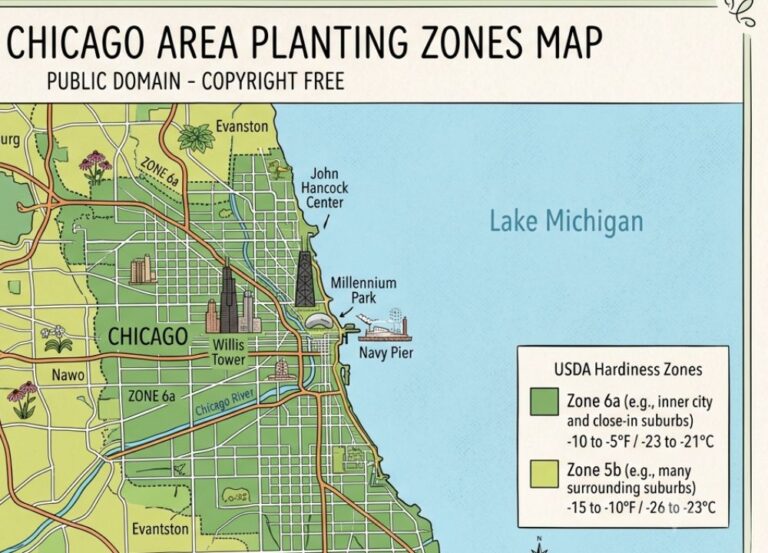
Knowing Chicago’s planting zone gives you a clear starting point. Chicago is in USDA Zone 6a, with average annual minimum temperatures from -10°F to -5°F. Once you know that, choosing plants that survive and thrive becomes much easier.
According to the Chicago Botanic Garden, most of the Chicago area is now in zone 6a, including the Chicago Botanic Garden itself, which was previously in zone 5b. That shift matters for every gardener in the city.
This guide covers everything from your zone details to what to grow and when to plant it. Read it once, and your garden decisions will never feel like a guess again.
Chicago’s Plant Hardiness Zone Explained
What Zone Is Chicago In for Planting?
According to the 2023 USDA Hardiness Zone Map, Chicago, Illinois, is primarily in Zone 6a, with some areas also falling into Zone 6b. That tells you the coldest temperatures your plants need to survive each winter.
Zone 6a means winter lows can drop to around -10°F. That is cold enough to kill plants not built for it, but manageable with the right choices.
How the USDA Plant Hardiness Zone Map Works
The USDA map divides the country into zones based on average winter low temperatures. The map is separated into 13 ten-degree Fahrenheit zones, and each zone is further broken into “a” and “b” half zones.
When you buy a plant, the tag usually lists a zone number. If your zone matches or is warmer, that plant can survive your winters.
Why Chicago’s Zone Matters for Gardeners
Your zone is not just a number. It decides what lives and what dies in your garden each year. Plant something rated for Zone 8 in Chicago and it will not make it through January.
Plant hardiness zones represent the best estimate of the average annual extreme minimum temperature at any location, based on temperature data over a particular time period, often 30 years. That long-term data is what makes the map reliable.
Chicago’s Planting Zone by Area
Planting Zone for Chicago, IL (City Core)
The city core of Chicago sits firmly in Zone 6a. The dense buildings and pavement hold heat, which keeps the coldest temperatures slightly higher than surrounding rural areas.
The downtown core and areas near Lake Michigan typically fall into Zone 6a due to the lake’s moderating effect, while outlying suburbs often experience Zone 5b conditions.
Planting Zone Variations Across Chicago, Illinois
Not every part of Chicago shares the exact same zone. The 60614 zip code has moved to Zone 6b, while the 60622 area covering Wicker Park remains in Zone 6a. Even a few miles can make a difference.
If you garden in the far northern suburbs, your conditions lean cooler. The far northern suburbs like McHenry, Fox Lake, and Lake Villa fall in Zone 5b.
How Urban Heat Affects Chicago’s Zone
Cities are naturally warmer than rural areas. Concrete, asphalt, and buildings trap heat and raise nighttime low temperatures. This is why the city core often stays slightly warmer than what the map shows for the broader region.
The Chicagoland area sits in Zone 6a because of the combined moderating effects of Lake Michigan and urban sprawl. Both factors work together to soften extreme cold.
What You Can Grow in Chicago’s Planting Zone
Best Plants for Chicago’s Zone
Zone 6a gives you a solid range of plants to work with. You can grow perennials, shrubs, vegetables, and many flowering plants without much trouble if you pick zone-appropriate varieties.
Choose trees, shrubs, and perennials specifically rated for Zones 5 to 6 to ensure your plants can withstand Chicago’s temperature extremes and thrive in the local climate.
What Zone Is Chicago for Planting Flowers
Chicago gardeners have plenty of flower options. Echinacea, black-eyed Susan, and coneflowers all do well in Zone 6a. These plants come back year after year without needing replacement.
Tulips are flowers that thrive in Zone 6 conditions, making them a reliable and colorful choice for Chicago gardens each spring.
Trees and Shrubs That Thrive in Chicago
Red Maple is one of the most dependable trees for Chicago. It handles cold winters, adapts to different soil types, and puts on a great show of color in fall.
Proven performers like Red Maple and Black Chokeberry thrive in local conditions and are well worth planting if you want low-maintenance plant care with reliable results.
Vegetables and Herbs Suited to Chicago’s Zone
Tomatoes, peppers, cucumbers, and zucchini all grow well in Chicago during the warmer months. Herbs like basil, parsley, and chives are easy to grow and useful in the kitchen.
The key is timing. Start warm-season crops after the last frost and give cool-season crops a head start in early spring or fall. Good soil care makes a big difference too, especially with Chicago’s clay-heavy ground.
Planting Calendar for Chicago, IL
First and Last Frost Dates in Chicago
Frost dates are the two most important dates for any Chicago gardener. Chicago’s first frost date is around October 13, and its last frost date stretches to approximately April 25.
That gives you a growing window of roughly five and a half months. Plan your garden around these dates and you will avoid most cold-related losses.
When to Start Seeds Indoors
Starting seeds indoors gives your plants a head start before the outdoor season opens. Most warm-season vegetables need 6 to 8 weeks of indoor growth before transplanting.
For Chicago, that means starting tomatoes and peppers indoors around mid to late March. You can check out when to plant tomatoes in Zone 5 for a detailed timing guide. The Zone 5 frost dates and growing season guide is also helpful since parts of Chicago’s suburbs fall in that zone.
Best Times to Plant Outdoors in Chicago
Cool-season crops like lettuce, spinach, and peas can go in the ground as early as late March or April. They handle light frost just fine and actually prefer the cooler weather.
Warm-season plants like tomatoes and peppers should wait until after April 25. Plant perennials in late spring after the last frost date, typically mid to late May, or in early fall, 6 to 8 weeks before the first hard frost. Spring planting guides can help you plan the exact schedule.
Tips for Gardening Successfully in Chicago’s Zone
How to Work With Chicago’s Climate Challenges
Chicago gardening comes with real challenges. Cold winters, strong winds, and heavy clay soil all make things harder. But none of them are impossible to work around.
To counteract the drainage issues posed by compaction and clay-heavy soil, incorporate compost or organic matter, giving your plants the right foundation to weather both puddles and dry spells. This one step alone fixes most soil problems.
Microclimates in Chicago and How to Use Them
Your garden may behave differently from what the zone map suggests. A spot near a brick wall or a south-facing corner can stay several degrees warmer than an open space nearby.
Small portions of Chicago may lie in microclimates due to the presence of concrete, tall buildings, fenced-in areas, and other features. Use those warm pockets to push your zone a little and try plants that might not otherwise survive.
Choosing the Right Plants for Long-Term Success
The best thing you can do as a Chicago gardener is start with plants that are already rated for your zone. Trying to fight the climate usually ends in failure. Working with it leads to a garden that gets better every year.
Also pay attention to your soil before planting anything. If you are starting from seeds, this guide on propagation by seeds is a helpful resource. Learning how to keep plants alive through Chicago’s harsh winters is the skill that separates struggling gardeners from successful ones.
Frequently Asked Questions
What Planting Zone Is Chicago, IL?
Chicago is in USDA Zone 6a. Some parts of the city near Lake Michigan or in dense urban areas fall into Zone 6b. Far northern suburbs are typically in Zone 5b.
Can I Grow Tropical Plants in Chicago?
Tropical plants cannot survive Chicago winters outdoors. You can grow them in containers and bring them inside before the first frost in October.
Does Chicago’s Zone Change by Neighborhood?
Yes, it can. Urban heat, proximity to Lake Michigan, and building density all create small microclimates. Your specific spot may run slightly warmer or cooler than the general zone.
When Should I Start a Garden in Chicago?
Start cool-season crops in late March or early April. Wait until after April 25, the average last frost date, before planting warm-season vegetables and flowers outdoors.
What is the Difference Between Zone 6a and 6b in Chicago?
Zone 6a has winter lows between -10°F and -5°F. Zone 6b is slightly warmer, with lows between -5°F and 0°F. The difference matters for borderline plants, but most common garden varieties handle both zones well.
For nearby Midwest growers, here’s what zone Ohio is in