Buying plants in Indiana can feel like a gamble. You bring something home, put it in the ground, and by February, it is completely dead. That is not bad luck; that is a zone mismatch.
Most gardeners skip checking their zone. They go by what looks good at the nursery, not what actually survives Indiana winters. The result is wasted money and a frustrating start to every season.
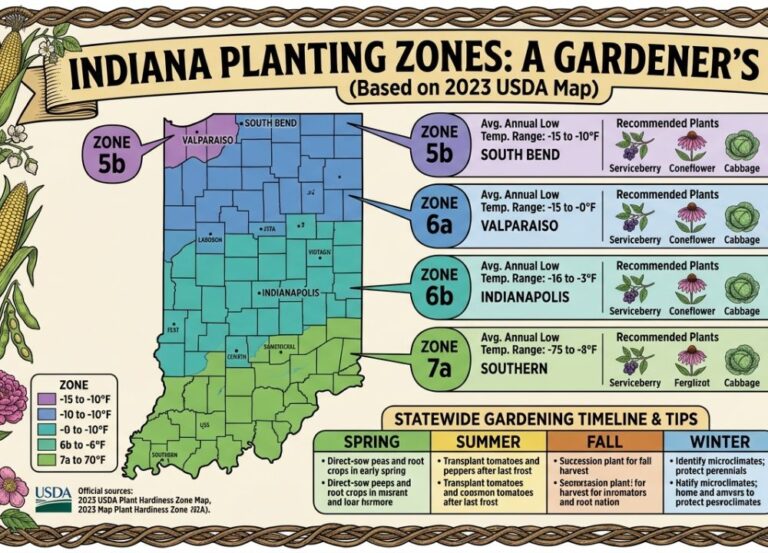
There are 4 planting zones in Indiana, from Zone 5b to Zone 7a, based on the 2023 USDA Plant Hardiness Zone Map. Knowing which one covers your city tells you exactly which plants can handle your winter lows.
According to Hoosier Gardener, Indianapolis moved to Zone 6b in the 2023 update, northern Indiana sits in Zone 6a, and the Ohio River counties have shifted all the way to Zone 7a. That is a big range for one state.
This guide breaks down what planting zone Indiana is by region and city, so you can stop guessing and start growing with confidence.
Indiana’s Plant Hardiness Zones Explained
What Zone Is Indiana In for Planting?
Indiana does not have just one zone. The state stretches far enough north to south that the climate changes quite a bit from top to bottom. Based on the 2023 USDA map, Indiana ranges from Zone 5b to Zone 7a, with most gardeners now in Zones 6a to 6b.
That spread matters a lot when you are picking trees, shrubs, or perennials. A plant that thrives in Evansville may not make it through a winter in South Bend.
How the USDA Plant Hardiness Zone Map Works
The USDA map divides the country into zones based on average winter low temperatures. Each zone is 10 degrees warmer or colder than the one next to it, and each is split into “a” and “b” halves for more accuracy.
When you see a zone number on a plant tag, that tells you the coldest winter temperature that plant can survive. Match it to your zone, and you avoid most cold-weather plant losses.
Why Your Indiana Zone Matters for Gardening
Your zone decides what lives in your garden year after year. Plant something one zone too warm, and it dies in January. Plant something rated for your zone, and it comes back stronger every spring.
Knowing the correct zone for where you live in Indiana can make gardening easier and more successful. It is the single most useful piece of information before you buy anything for your garden.
Planting Zones Across Indiana
Indiana’s zones shift as you move from north to south. The northwest corner is the coldest, the center runs moderate, and the south gets genuinely mild by Indiana standards. Zone 5b covers Indiana’s northwestern corner, Zone 6a spans northern and central Indiana, Zone 6b dominates central and southern Indiana, and Zone 7a covers the warmest southern border areas.
Each region has its own strengths for seasonal gardening. Knowing where you fall saves you from making the same mistakes every spring.
Planting Zone for Northern Indiana
Northern Indiana is mostly in Zone 6a, which means cold winters but still a solid growing season for most common plants. The far northwestern corner dips into Zone 5b, where winter lows can hit -15°F.
In Northwest Indiana, including counties like Starke, Pulaski, Jasper, and Benton, the region remains in Zone 5b, the coldest part of the state, so plants need to be extremely cold-hardy to survive.
Planting Zone of South Bend, Indiana
South Bend sits in Zone 6a. Winters are cold but manageable, and the growing season is long enough for most vegetables, perennials, and flowering shrubs.
Planting Zone of Elkhart, Indiana
Elkhart is also in Zone 6a. Counties such as Allen, Noble, Whitley, and Elkhart experience extreme minimum temperatures ranging between -10 and 5°F.
Planting Zone of Michigan City, Indiana
Michigan City is in Zone 6a, sitting close to Lake Michigan, where the water helps moderate the most extreme winter cold.
Planting Zone of Valparaiso, Indiana
Valparaiso falls in Zone 6a as well. It sits in Porter County, just south of the Lake Michigan shoreline, which softens the coldest winter nights slightly.
Planting Zone of Northwest Indiana
The northwest corner of Indiana, including areas like Crown Point, Lowell, and Cedar Lake, falls in Zone 5b. With average minimum temperatures of -15°F to -10°F, it is the state’s coldest area, stretching from Lake Michigan south through Lake, Porter, and La Porte counties.
Planting Zone of Hobart, Indiana
Hobart is located in Lake County and falls within Zone 6a. It sits close enough to the lake to benefit from some temperature moderation, but winters still get cold.
Planting Zone for Central Indiana
Central Indiana is primarily Zone 6a and 6b. This is the sweet spot for most Indiana gardeners, with four true seasons, manageable winters, and a growing window that works for both cool and warm season crops.
Indianapolis, Carmel, Fishers, Muncie, and surrounding suburbs fall primarily in Zones 6a to 6b, with classic four-season weather, hot summers, and a solid mid-length growing season.
Planting Zone of Indianapolis, Indiana?
Indianapolis is in Zone 6b after the 2023 USDA update. The 2023 version has Indy in Zone 6b, with winter lows between 0 and -5°F.
Planting Zone of Carmel, Indiana
Carmel sits just north of Indianapolis in Hamilton County and falls in Zone 6a to 6b depending on the exact location. Expect winter lows between -10°F and 0°F.
Planting Zone of Fishers, Indiana
Fishers is also in Hamilton County, placing it in Zone 6a or 6b. It shares the same general conditions as Indianapolis and Carmel, with a solid four-season climate.
Planting Zone of Noblesville, Indiana
Noblesville is in Hamilton County and falls in Zone 6a. It is just a touch cooler than the Indianapolis city core, but the difference is minor for most plant choices.
Planting Zone of Hamilton County, Indiana
Hamilton County overall spans Zone 6a to 6b. The southern end near Indianapolis leans 6b, while the northern edge stays in 6a.
Planting Zone of Greenwood, Indiana
Greenwood is south of Indianapolis and sits comfortably in Zone 6b. The slightly milder winter lows open up a few more plant options compared to the northern suburbs.
Planting Zone of Anderson Indiana
Anderson is in Madison County, central Indiana, and falls in Zone 6a. It gets cold winters but nothing extreme compared to the northwest corner of the state.
Planting Zone of Kokomo Indiana
Kokomo is among the cities in Zone 6a, which experiences average annual minimum temperatures between -10°F and -5°F. Most common perennials, shrubs, and vegetables handle this zone just fine.
Planting Zone of Muncie Indiana
Muncie is in Zone 6a. It shares the same zone as most of central and northern Indiana, with winters cold enough to require zone-appropriate plant choices.
Planting Zone of Marion Indiana
Marion, in Grant County, falls in Zone 6a. It sits in the heart of north-central Indiana and experiences the same moderate winter lows as other cities in that zone.
Planting Zone of Wabash Indiana
Wabash is in Zone 6a. Located along the Wabash River, it has typical central Indiana winters and a growing season that works well for most vegetables and perennials.
Planting Zone of Columbus Indiana
Columbus is in Zone 6b. Zone 6b covers much of central and southern Indiana, including cities like Bloomington and Columbus, with average annual minimum temperatures ranging from -5°F to 0°F.
Planting Zone of Richmond Indiana
Richmond is in Zone 6a or 6b, depending on the specific area. It sits on the eastern edge of Indiana near the Ohio border, with winters that are cold but not extreme.
Planting Zone for Southern Indiana
Southern Indiana is the warmest part of the state. Most of it sits in Zone 6b, with the counties along the Ohio River border reaching Zone 7a. This is where the growing season gets noticeably longer, and more plant options open up.
Southern Indiana and the Ohio River valley, including cities like Evansville, New Albany, and Jeffersonville, fall in Zones 6b to 7a and enjoy some of the longest frost-free seasons in the state.
Planting Zone of Bloomington Indiana
Bloomington is in Zone 6b. Bloomington, Indiana, is located in USDA hardiness Zone 6b. This gives it milder winters than most of the state and a longer season for warm-loving plants.
Planting Zone of Terre Haute Indiana
Terre Haute is in Zone 6b. Terre Haute and nearby communities are generally Zone 6b, with warm summers and relatively mild winters that favor fruit trees and long-season vegetables.
Planting Zone of Evansville Indiana
Evansville is in Zone 7a, the warmest zone in Indiana. Zone 7a covers the southern border of Indiana, with minimum temperatures averaging between 0 and 5°F, and Evansville falls within this zone.
Planting Zone of Lafayette Indiana
Lafayette is in Zone 6a. South Bend, Elkhart, Fort Wayne, and Lafayette are mostly Zones 6a to 6b, with long, productive seasons for vegetables, small fruits, and ornamentals.
Planting Zone of West Lafayette Indiana
West Lafayette sits right next to Lafayette and falls in the same Zone 6a. Both cities share the same climate conditions and growing calendar.
Planting Zone of Fort Wayne Indiana
Fort Wayne is in Zone 6a. It sits in northeastern Indiana, where winters are cold but the growing season is still productive for most garden plants and vegetables.
Planting Zone of Plymouth Indiana
Plymouth is in Marshall County in northern Indiana and falls in Zone 6a. It experiences the same cold winters as the rest of northern Indiana, with minimum temperatures between -10°F and -5°F.
What You Can Grow in Indiana’s Planting Zones
Best Plants for Indiana’s Zone
Indiana’s Zones 6a and 6b give you a wide range of plants to choose from. Most common vegetables, perennials, and shrubs are rated for this zone, which makes Indiana a genuinely good state for home gardening.
Selecting plants suited to your specific hardiness zone is key to a successful garden, whether you are in the colder Zone 5b or the milder Zone 7a. Always check the tag before you buy.
What Zone Is Indiana for Planting Flowers
Flowers like coneflower, black-eyed Susan, and daylily all do well across Indiana’s zones. These plants are rated for Zones 5 and 6 and come back reliably each year without replanting.
For Zone 7a gardeners in the south, the options expand even further. You can push into some warmer zone flowers that would not survive a northern Indiana winter. Good plant care habits make all the difference with borderline varieties.
Trees and Shrubs That Thrive in Indiana
Red Maple, Eastern Redbud, and serviceberry are excellent tree choices across most of Indiana. They are native, cold-hardy, and require very little extra care once established.
For shrubs, viburnum and native ninebark are solid picks for Zone 6. They handle cold winters well and provide seasonal interest from spring flowers to fall berries. If you want to plant trees in the fall, Indiana’s autumn weather is actually ideal for root establishment before winter.
Vegetables and Herbs Suited to Indiana’s Climate
Tomatoes, peppers, cucumbers, and squash all grow well in Indiana during the warm months. Herbs like basil, thyme, and parsley are easy choices that work across all of Indiana’s zones.
The key is starting warm-season crops at the right time and improving your soil first. Good soil care before planting makes a noticeable difference in how well vegetables produce through the season.
Planting Calendar for Indiana
First and Last Frost Dates Across Indiana
Frost dates change as you move from north to south across Indiana. Average last spring frosts range from mid to late April in southern cities like Evansville and Bloomington, to early to mid-May in northern locations such as Fort Wayne and South Bend.
Your frost dates are just as important as your zone. They tell you exactly when to plant outdoors and when to start bringing tender plants inside in the fall.
When to Start Seeds Indoors in Indiana
Most warm-season vegetables need 6 to 8 weeks of indoor growth before outdoor planting. For central Indiana, that means starting seeds around late March. Northern Indiana gardeners should wait until early April to begin.
Starting too early leads to overgrown seedlings with nowhere to go. Check the when to plant guide for your specific crop and zone before setting up your seed-starting schedule. You can also review Zone 5 frost dates if your area borders the colder zone.
Best Times to Plant Outdoors in Indiana
Cool-season crops like lettuce, peas, and spinach can go in the ground in early to mid-April across most of Indiana. They handle light frosts well and grow best in cool soil.
Warm-season plants like tomatoes and peppers should wait until after your last frost date. For central Indiana, that is usually early May. For spring planting in northern areas, push that to mid-May to be safe.
Tips for Gardening Successfully in Indiana
How to Work With Indiana’s Climate Challenges
Indiana gardening comes with real challenges, cold winters, clay soil in many areas, and hot, humid summers that can stress plants. None of these is impossible to work around, but you need to plan for them.
Amending heavy clay soil with compost before planting improves drainage and root growth. Learning how to keep plants alive through both winter cold and summer heat is what separates a thriving garden from a struggling one.
Microclimates in Indiana and How to Use Them
Every yard has warm spots and cold spots. A south-facing wall, a raised bed, or a sheltered corner can all run a few degrees warmer than the open garden. That small difference lets you grow plants that would otherwise be borderline for your zone.
The USDA hardiness zone you are in significantly influences the types of plants that will thrive in your local climate, but small microclimates can give you even more flexibility. Pay attention to where frost hits first in your yard and use that knowledge to your advantage.
Choosing the Right Plants for Long-Term Success
Start with plants rated for your zone and build from there. Trying to grow something two zones warmer almost always ends in disappointment after the first hard winter. Zone-appropriate plants come back stronger every year without extra coddling.
Also, think about propagation by seeds if you want to expand your garden cheaply and grow varieties not sold at local nurseries. Understanding plant biology helps you match plants to your soil, light, and zone conditions far more accurately.
Frequently Asked Questions
What Planting Zone Is Indiana Overall?
Indiana spans four zones: 5b, 6a, 6b, and 7a. Most of the state falls in Zones 6a and 6b, which cover the north-central through southern regions.
What Zone Is Northern Indiana for Planting?
Northern Indiana is mostly Zone 6a, with the far northwestern corner in Zone 5b. Cities like South Bend and Fort Wayne sit in Zone 6a.
What Planting Zone Is Indianapolis Indiana In?
Indianapolis is in Zone 6b after the 2023 USDA update. That is one-half zone warmer than the previous 2012 map, reflecting milder recent winters.
Can I Grow the Same Plants in Northern and Southern Indiana?
Not always. Southern Indiana’s Zone 7a supports plants that would not survive a northern Zone 5b or 6a winter. Check zone ratings before buying, especially for perennials and fruit trees.
Does My Exact Zip Code Change My Zone?
Yes, it can. Microclimates from urban heat, rivers, and elevation can shift your local conditions by half a zone. Use the USDA zip code tool to get the most accurate result for your exact location.
Just across the border, gardeners can check Ohio’s planting zones.