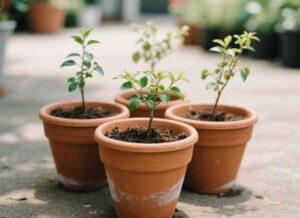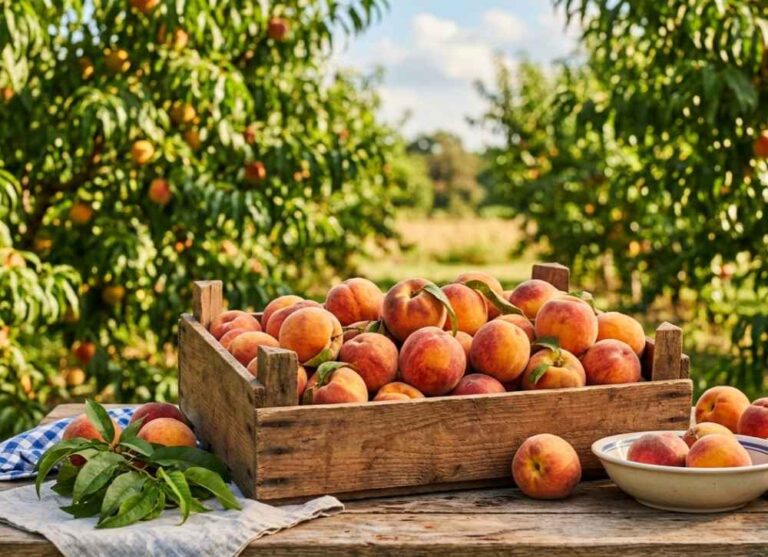
The peaches are considered the ultimate summer fruit. When people think of summer, juicy peaches are often one of the first things that come to mind.
But why is this the case? Well, it all comes down to what peaches need to taste their best. These fruits require lots of heat and long sunny days to develop their famous sweet flavor.
During the summer months, something magical happens inside the fruit. The warm temperatures and bright sunshine help the peach convert its starches into sugars. This process is what gives peaches their signature sweetness.
Without the summer sun, a peach simply cannot reach its full potential. The fruit might still grow, but that incredible taste we all love would be missing. That’s why summer and peaches go hand in hand.
So the next time someone asks you if peaches are a summer fruit, you can confidently say yes. Summer provides everything a peach needs to become perfectly sweet and delicious.
When Exactly Can You Find Summer Peaches?
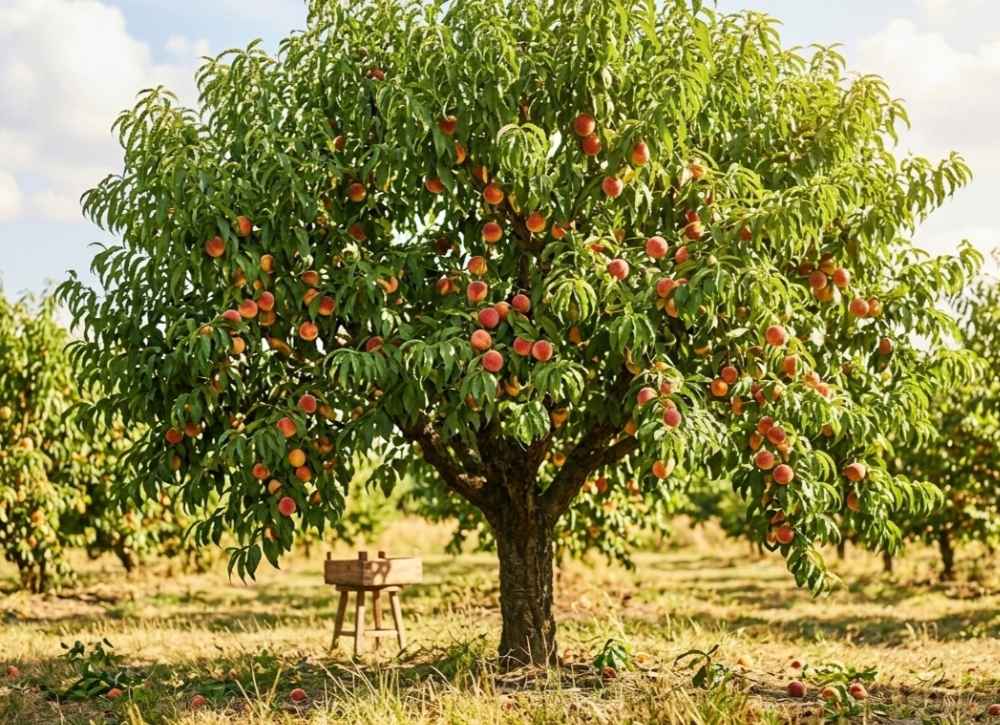
Not all summer peaches are the same. Throughout the season, different types of peaches become available. Each part of summer brings its own special varieties to enjoy.
The First Peaches Arrive in June
June marks the arrival of the first summer peaches. This is an exciting time because it marks the beginning of the fresh peach season.
Early summer peaches tend to be a bit smaller than their later cousins. They are usually firmer, too, which means they hold up well during transport to your local market.
Many of these early peaches are called “clingstone” varieties. This name is used because the flesh sticks tightly to the pit inside. They can be a little tricky to slice, but they still taste wonderful.
These first peaches give us a preview of what’s to come. They might not be as sweet as later varieties, but they are still a welcome treat after months without fresh peaches.
July Is When the Magic Really Happens
July is often called the “Golden Month” for peaches. This is when peach season really hits its stride, and the best fruit becomes available.
During this time, you’ll start seeing “freestone” varieties at the market. These peaches are named because the flesh pulls away from the pit easily. They are much simpler to slice and prepare.
The classic yellow peach becomes widely available in July. This is the peach most people picture in their minds when they think of this fruit. It has golden flesh and a perfect balance of sweet and tangy flavors.
Peak season means more choices and better prices at farmers’ markets and grocery stores. Supply is high, and the quality is at its best. This is the time to stock up if you want to make jams or freeze some for later.
August Brings the Sweetest Peaches of All
August brings the final wave of summer peaches. These late-season varieties are often the largest and sweetest of all.
Why are they so good? Because they have spent the longest time on the tree, soaking up the summer heat. All those extra sunny days allow more sugar to develop inside the fruit.
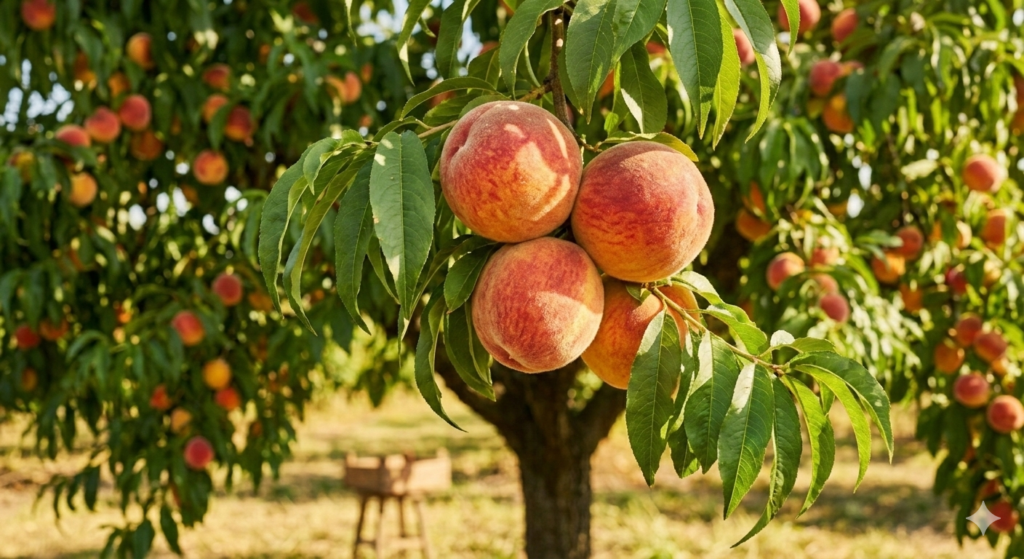
Late summer peaches are perfect for eating fresh, but they are also ideal for canning and preserving. Their intense sweetness is captured beautifully when they are processed and stored for winter enjoyment.
As August winds down, peach season begins to slow. This is your last chance to enjoy the best of what summer has to offer before the harvest ends.
What Makes Summer Peaches Taste So Much Better?
You might wonder why summer peaches taste so much better than peaches at other times of the year. The answer lies in how these fruits develop their flavor.
It All Comes Down to Sugar
The sweetness of a peach is measured by something called Brix levels. This is simply a way to measure how much sugar is present in the fruit juice.
The intense heat of July and August is responsible for high Brix levels in peaches. Warm days and plenty of sunshine help the tree produce sugars that are then sent to the fruit. (ejournal.sinica.edu.tw)
Peaches that ripen during the hottest part of summer have the most juice and sweetness. This is why a peach eaten in late July often tastes so much better than one from early spring.
The difference is not small. Summer peaches can have significantly higher sugar content than off-season fruit. Your taste buds can definitely tell the difference.
There’s Nothing Like a Peach Ripened on the Tree
Another reason summer peaches taste so good is that they are allowed to ripen on the tree. This is called tree-ripening, and it makes a huge difference in flavor.
When a peach ripens naturally on the tree, it develops a wonderful aroma. That sweet, fragrant smell you notice at the farmers’ market comes from tree-ripened fruit.
Off-season peaches are often picked early and shipped from far away. They ripen during transport, so they never develop the same depth of flavor or aroma.
Summer peaches from local orchards spend their final days on the tree getting sweeter. This is why buying local during the summer gives you the best possible eating experience.
But What About Those Peaches You See in Spring?
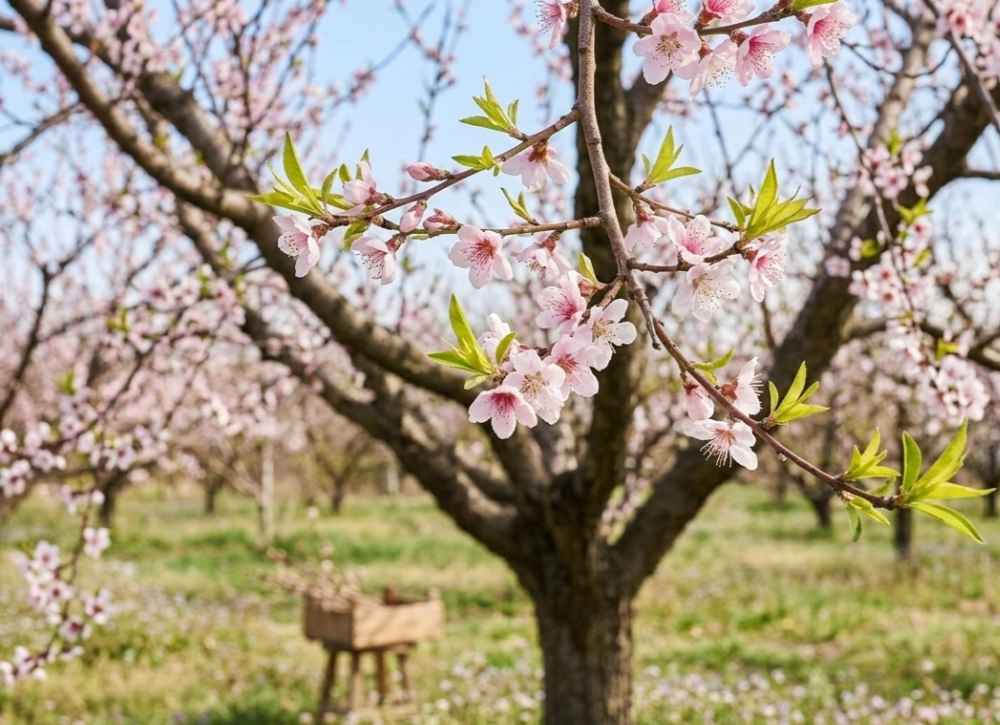
Some peaches do appear before summer officially arrives. You might spot peaches at the store in late May, which is still technically spring. So what’s the deal with these early birds?
They’re Just a Warm-Up for the Main Event
These spring peaches are usually “low-chill” varieties. They are grown in warm areas such as Florida, Southern California, and Southern Texas, where winters are mild.
Low-chill peaches are bred to thrive with less winter cold than traditional varieties need. This allows them to ripen earlier in the year.
While these spring peaches are certainly enjoyable, they are often seen as a prelude to the main event. They give us a taste of what’s coming, but the true summer crop is still on its way.
Think of spring peaches as the opening act before the headliner takes the stage. They get you excited, but the best is yet to come.
You Can Taste the Difference Right Away
There is a noticeable difference between a spring peach and a true July summer peach. Most people can taste it right away.
Spring peaches tend to be firmer and sometimes a bit more tart. They haven’t had as much time in the heat to develop maximum sweetness.
A summer peach picked in July has a softer, juicier texture. The flesh is often more fragrant, and the sweetness is more intense.
When people ask if a peach is a summer fruit, they are usually thinking about that perfect July peach. They want that dripping-with-juice, incredibly sweet experience that only comes from the height of summer.
Spring varieties are nice, but they don’t quite capture that magic. True peach lovers know the difference and wait patiently for summer to arrive.
So Yes, Peaches Are Definitely a Summer Fruit
So, is a peach a summer fruit? The answer is a definite yes. While you might find peaches in late spring or early fall, the real peach experience belongs to summer.
The warm temperatures of June, July, and August create the perfect conditions for peach perfection. Without summer heat, peaches cannot develop their legendary sweetness.
Early summer brings the first exciting harvest of smaller, firmer fruit. Mid-summer marks the peak season, with the best selection and quality. Late summer offers the sweetest, largest peaches that have soaked up months of sunshine.
Tree-ripening during the warm months gives summer peaches an aroma and flavor that off-season imports simply cannot match. The difference is clear from the first bite.
While spring peaches offer a nice preview, they are just the warmup. The true peach experience people crave is found on sunny summer days.
So when peach season rolls around, make the most of it. Visit your local farmers’ market, pick some at a nearby orchard, or simply enjoy them fresh from the store. Summer is short, and so is the window for perfect peaches.