You’ve missed the fall planting window, and now you’re staring at those garlic bulbs wondering if it’s too late.
I’ve been there, watching spring arrive and feeling like I’ve already failed my garden before it even started. The internet says fall is the time for garlic, and anything else is a mistake.
However, the truth is that garlic can indeed be planted in the spring. You’ll get smaller bulbs, but you’ll still get garlic.
The key is planting garlic as early as the ground can be worked and choosing softneck varieties that don’t need a long cold period to develop.
- Can You Plant Garlic in the Spring? Garlic Type and Regional Climate
- Garlic Type
- What Happens If You Plant Garlic in the Spring?
- Your Regional Climate
- When to Plant Garlic in Spring?
- How to Grow Garlic in the Spring?
- When Does Garlic Sprout in Spring?
- Transplanting Garlic in The Spring
- How to Care for Garlic in Spring?
- Watering Garlic in the Spring
- FAQ’S
Can You Plant Garlic in the Spring? Garlic Type and Regional Climate
Yes, you can plant garlic in the spring season. It is not the ideal time, but it still works if you missed the fall planting window. Many gardeners successfully grow garlic planted in the spring every year.
The general rule is simple. Fall planting gives you bigger garlic bulbs, while spring planting gives you smaller garlic bulbs. This happens because garlic needs cold exposure, called vernalization, to form multiple cloves.
Garlic Type
The type of garlic you choose also matters for spring season planting. Softneck garlic varieties need less cold exposure and perform better when planted in spring. Hardneck garlic varieties require more vernalization and may struggle without artificial chilling first.
Elephant garlic is actually the most forgiving for spring season planting. It is technically a leek rather than true garlic and does not need as much cold treatment to form bulbs.
Can You Plant Hardneck Garlic in the Spring?
You can plant hardneck garlic in the spring season, but it needs extra preparation. Hardneck garlic requires more cold exposure than softneck garlic to form proper bulbs with multiple cloves.
If you want to plant hardneck garlic in spring, give the cloves a cold treatment first. Place your garlic cloves in a paper bag inside the refrigerator at 35 to 45 degrees Fahrenheit. Keep it there for about six to eight weeks before planting garlic in the ground.
Elephant garlic is easier to plant in the spring season than hardneck garlic. It is actually a type of leek and needs less vernalization to form bulbs. You can plant elephant garlic in early spring as soon as the soil is workable without any refrigerator chilling required.
Can You Plant Softneck Garlic in the Spring?
Compared to hardneck garlic, softneck garlic is the best choice for planting garlic in the spring season. It needs less vernalization than hardneck garlic and produces bulbs more reliably from spring planting.
Softneck garlic varieties require only about four weeks of cold exposure to trigger bulb formation. This makes them perfect for gardeners who missed the fall planting window and want to plant garlic in spring.
Many nurseries and garden centers stock softneck garlic specifically for spring season planting. Look for varieties like Inchelium Red, California Early, or Silverskin if you are planting garlic in spring.
What Happens If You Plant Garlic in the Spring?
When you plant garlic in the spring season, the cloves start developing roots within the first week. You will see green shoots pushing through the soil within two to four weeks after planting garlic.
Spring-planted garlic grows faster than fall-planted garlic because of warmer soil temperatures. However, spring-planted garlic has less time to develop a strong root system.
Fall-planted garlic spends months building roots over winter, while spring garlic must rush through this stage. Without enough cold exposure, spring planted garlic may form rounds instead of bulbs.
A round is a single large clove without the multiple cloves you expect from a normal garlic bulb. The bulb size of spring-season-planted garlic is usually smaller than that of fall-planted garlic.
This happens because the plant has fewer months to gather energy before summer heat arrives. Hardneck garlic planted in spring will still produce scapes in early summer.
Spring-planted garlic typically matures two to three weeks later than fall-planted garlic, so you will harvest in late summer. The flavor remains just as good, and you can also harvest early as green garlic for salads.
Your Regional Climate
Your regional climate plays a big role in spring season garlic planting success. If you live in a cold climate like zones 3 to 5, you can plant garlic in the early spring season as soon as the soil is workable. The natural cold weather will help trigger garlic bulb formation even with late planting.
Gardeners in warmer climates like zones 7 to 9 need to act quickly in late winter. Once temperatures rise above 40 degrees consistently, garlic loses the cold exposure it needs for proper bulbing.
When to Plant Garlic in Spring?
The best time to plant garlic in the spring season is as soon as the soil can be worked. This usually means late February through early April, depending on your location. You want to get your garlic cloves in the ground while temperatures are still cool because garlic grows best with several weeks of cool weather before summer heat arrives.
Plant garlic in spring when soil temperatures reach around 50 degrees Fahrenheit. The soil should be workable and crumble apart easily when you dig into it. Do not wait too long because late-planted garlic has less time to develop bulbs before hot weather slows growth.
How to Grow Garlic in the Spring?
Growing garlic in the spring season requires careful attention because you are working against time.
1) Start by giving your garlic cloves a cold treatment if you are planting hardneck varieties.
2) Place them in the refrigerator for six to eight weeks before planting garlic in spring.
3) Choose your largest and healthiest garlic cloves for planting because bigger cloves produce bigger bulbs.
4) Break apart the garlic bulb into individual cloves just one or two days before planting.
5) Keep the papery skin intact on each clove to protect it from disease and rot in the soil.
Plant garlic in spring as early as possible when the soil is workable. The key difference from fall planting is speed. Get your garlic cloves in the ground quickly so they have maximum growing time before summer heat arrives and stops bulb development.
How to Grow Garlic in Pots in Spring?
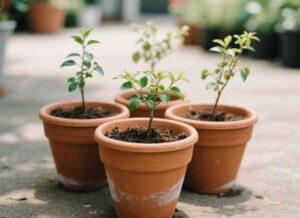
Growing garlic in pots during the spring season works great for small spaces. Choose a container at least eight inches deep with good drainage holes.
Use quality potting soil mixed with compost and plant three to five garlic cloves per pot with four inches spacing. Place your container in a sunny spot and feed it with liquid fertilizer every two to three weeks.
How Deep to Plant Garlic in Spring?
Plant your garlic cloves about two inches deep with the pointed end facing up. Spring-planted garlic does not need to go as deep as fall-planted garlic because there is no frost protection needed.
Space garlic cloves four to six inches apart in rows ten to twelve inches apart. Cover with thin mulch and water deeply after planting garlic.
When Does Garlic Sprout in Spring?
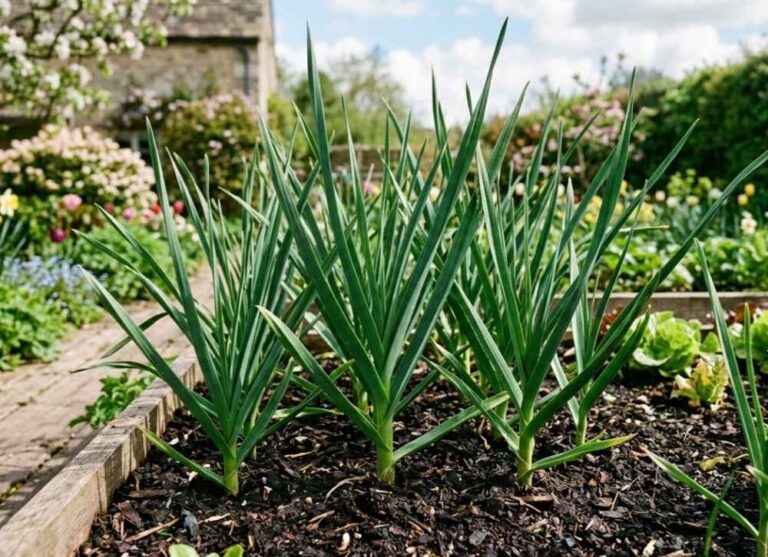
Spring-planted garlic typically sprouts within two to four weeks after you plant the cloves in the ground. You will notice bright green spears pushing through the soil or mulch once roots have established.
Now, if you planted garlic in the fall, those cloves wake up in early spring. This usually happens around March when soil temperatures start warming up. Most gardeners see their fall planted garlic sprouting around the same time daffodils bloom in their garden.
Your sprouting time really depends on soil temperature and where you live. Garlic cloves sprout faster when the soil is warm, around 50 to 60 degrees Fahrenheit. If your soil is still cold below 40 degrees, then sprouting will take a bit longer.
Do not panic if you see garlic sprouts during a late frost or cold snap. Garlic is super cold-hardy, and those young shoots handle freezing temperatures just fine. Even a light snow covering your garlic sprouts will not cause any harm to your plants.
If your spring planted garlic has not sprouted after four weeks, go check the soil moisture. Sometimes, overly dry or waterlogged soil delays garlic sprouting. Your cloves may also rot if the soil does not drain well.
Transplanting Garlic in The Spring
Can You Transplant Garlic in the Spring?
Yes, you can transplant garlic in the spring season, but you need to be careful. Garlic has a shallow root system that gets disturbed easily during transplanting. Dig around each plant carefully and move the entire root ball to avoid damage.
Transplanting works best when your garlic plants are still small with just a few inches of green growth. Choose a cool, cloudy day to move your garlic so plants do not suffer from transplant shock. Water deeply right after transplanting and keep the soil moist for the first couple of weeks.
How to Care for Garlic in Spring?
Caring for garlic in the spring season is all about feeding, watering, and keeping weeds away. Your garlic plants will be growing actively during this time and need your consistent attention to develop good-sized bulbs.
If you applied heavy mulch over winter, pull some of it back as temperatures warm up. This helps the soil heat faster, which your garlic needs for active growth. Keep a thin layer of mulch around plants to suppress weeds and hold moisture.
Fertilize your garlic when plants reach about six inches tall. Use a high nitrogen fertilizer like blood meal or composted manure. Give a second feeding about three weeks later, but stop fertilizing once you see scapes appearing on hardneck garlic varieties.
Keep your garlic bed completely free of weeds throughout the spring season. Garlic is a poor competitor with shallow roots that cannot fight weeds for water and nutrients. Pull weeds by hand carefully so you do not disturb the garlic roots growing below.
Watering Garlic in the Spring
Garlic needs consistent moisture during the spring season to develop healthy bulbs. Your plants require about one inch of water per week during active growth. Water deeply when you irrigate, rather than giving light sprinklings, because deep watering encourages roots to grow down into the soil.
How Often to Water Garlic in the Spring?
Water your garlic about once a week during active spring growth. If the weather is hot and dry, you may need to water every five to seven days. During the bulbing period from mid May through June, increase watering to every three to five days if conditions stay dry.
Stop watering your garlic about two weeks before harvest time. You will know harvest is near when the lower leaves start turning yellow. Letting the soil dry out helps the outer bulb wrappers cure properly for better storage.
FAQ’S
When Does Garlic Start to Sprout in Spring?
Fall planted garlic starts sprouting in early March when the soil warms up. Spring-planted garlic sprouts within two to four weeks after planting. Warmer soil temperatures speed up the sprouting process.
How Late in the Spring Can I Plant Garlic?
You can plant garlic as late as early April in most regions. However, earlier planting is always better for bigger bulbs. If you plant after April, consider harvesting as green garlic instead of waiting for bulbs.
Should I Mulch My Garlic in the Spring?
Yes, keeping a thin layer of mulch on your garlic bed in spring is helpful. Mulch conserves soil moisture, suppresses weeds, and keeps roots cool as temperatures rise. Pull back heavy winter mulch to let the soil warm up.
What If Garlic Shows Above Ground in Early Spring?
Garlic shoots appearing in early spring are completely normal and nothing to worry about. Garlic is very cold hardy and handles frost and freezing temperatures without damage. Your plants will continue growing normally through the season.
When to Plant Garlic in Spring in North Carolina?
For spring planting garlic in North Carolina, aim for late February through mid-March. Get your garlic cloves in the ground before temperatures warm up too quickly. Fall planting between September and November works better in the North Carolina climate.
Garlic Planting Time is Different in Different Areas, That’s why GardenChains Has Created Detailed Research Based Guides.
When to plant garlic in Alaska?
When to plant garlic in Texas?
When to plant garlic in Florida?