If you are a gardener in Georgia, you know that the “Peach State” has a little bit of everything, from snowy mountain peaks to sandy, palm-filled beaches.
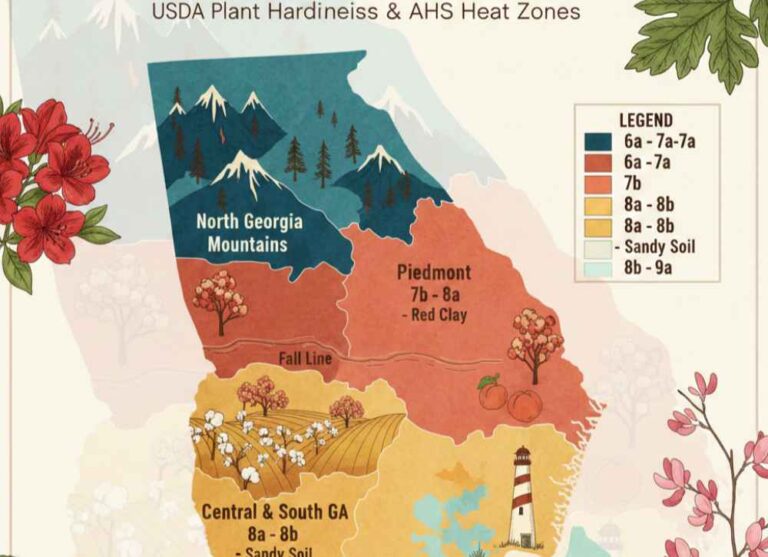
Because the weather changes so much as you drive from North to South, the United States Department of Agriculture (USDA) divides the state into different “Planting Zones.”
These zones are simply a way to tell you how cold it gets in the winter so you can choose plants that will survive the frost and come back next year.
In late 2023, the USDA updated these maps for the first time in over a decade. Because our winters have been getting slightly warmer, most areas in Georgia shifted about a “half-zone” up.
Today, Georgia covers Zones 6, 7, 8, and 9. Knowing your specific zone is the first step to a healthy, thriving garden. This content is all about Georgia planting zones; however, understanding its growing seasons also helps you to be ready for every season.
Georgia Planting Zone 6: Coldest Mountain Highs
Zone 6 is the “winter wonderland” of Georgia. It is the coldest part of the state and is found only in the highest elevations of the North Georgia mountains.
Temperature Range, Climate, and Areas
In Zone 6, winter temperatures can drop to between -5°F and 0°F. This area feels very different from the rest of Georgia; it has a “continental” climate, which means the winters are long and crisp with a real chance of snow and ice.
It is also the wettest part of the state, receiving up to 75 inches of rain per year, which often creates misty, “smoky” mountain views.
Cities and Popular Areas in Zone 6 of Georgia
This zone is small but beautiful. You will find Zone 6 conditions in:
- Blairsville: A classic mountain town where winter temperatures are the lowest in the state.
- Sky Valley: Known as Georgia’s highest city, it is a prime example of Zone 6 gardening.
- Mountain City and Clayton: Parts of Rabun County that hug the ridges bordering North Carolina.
- High Ridges near Blue Ridge and Ellijay: While the towns themselves might be slightly warmer, the higher slopes around them fall firmly into Zone 6.
Gardening Situation, Challenges, and Suitable Plants for Zone 6 of Georgia
Gardening here is all about timing. The growing season is the shortest in Georgia, usually starting in late April and ending by mid-October.
- The Biggest Challenge: Sudden spring frosts. A warm week in March might trick your plants into blooming, only for a hard freeze in April to kill the blossoms. The soil is also often very rocky, which makes digging difficult.
- Suitable Plants: This is the best place in Georgia to grow Apples, such as ‘Arkansas Black’ or ‘Gala’ because these trees need a lot of “chill hours” to produce fruit. It is also perfect for Peonies, Mountain Laurel, and Rhododendrons, which love the cool mountain air and acidic soil.
Georgia Planting Zone 7: The Rolling Foothills and North Georgia
Zone 7 acts as a bridge. It is warmer than the high peaks but still cold enough to feel a true winter. This zone covers the “Ridge and Valley” region and the foothills just above the Atlanta metro area.
Temperature Range, Climate, and Areas in Zone 7 of Georgia
Winter lows in Zone 7 typically stay from 0°F to 10°F. The climate is very forgiving, the summers are warm but usually stay in the 80s, and the winters are cool but erratic.
You might have a day that feels like spring followed by a night that drops well below freezing. This “seesaw” weather is a hallmark of the Georgia foothills.
Cities and Popular Areas in Zone 7 of Georgia
Many of Georgia’s most popular outdoor destinations are in Zone 7:
- Rome and Dalton: These Northwest Georgia cities are the heart of the Ridge and Valley region.
- Dahlonega: Famous for its vineyards, which love the well-drained slopes and moderate winter cold of this zone.
- Cartersville: This city sits right on the edge, bridging the gap between the cooler North and the warmer Central Georgia belt.
- Carrollton and Cedartown: Representative of the western side of the state where hills begin to level out.
Gardening Situation, Challenges, and Suitable Plants for Zone 7 of Georgia
Gardeners here enjoy a generous 200-day growing season, starting in late March.
- The Biggest Challenge: Drainage. The soil can vary from rocky slopes to heavy valley clay. If your garden stays too wet in the winter, your plants’ roots can rot before spring even arrives.
- Suitable Plants: This is the kingdom of Blueberries and Peaches. Flowering Dogwoods and Hydrangeas also thrive here because they appreciate the slight break from the extreme Southern heat.
Georgia Planting Zone 8: The Heart of Georgia and the Piedmont
Zone 8 is the largest zone in the state. If you live in a major Georgia city or the suburbs, you are likely in Zone 8. This is the land of red clay, long summers, and very mild winters.
Temperature Range, Climate, and Areas in Zone 8 of Georgia
In Zone 8, the coldest winter nights usually only reach 10°F to 20°F. The climate is “humid subtropical,” which is a fancy way of saying it is very hot and very sticky in the summer.
The sun is intense, and summer temperatures stay above 90°F for many months of the year.
Cities and Popular Areas in Zone 8 of Georgia
Most of Georgia’s population lives in this zone, including:
- Atlanta and the Metro Suburbs: Cities like Marietta, Alpharetta, and Decatur are firmly in Zone 8a.
- Athens: Home to the University of Georgia, this area is a hub for gardening research.
- Macon and Columbus: These cities sit near the “Fall Line,” where the hills of the North meet the flat plains of the South.
- Augusta: Located on the eastern border, Augusta has a very long and productive growing season.
Gardening Situation, Challenges, and Suitable Plants in Zone 8 of Georgia
You can garden almost all year here, with a growing season that often lasts 230 days or more.
- The Biggest Challenge: The famous Georgia Red Clay. This soil is rich in nutrients but is very thick and heavy. It can get as hard as a brick in the summer and stay soggy in the winter. You must add compost or organic matter to help your plants’ roots “breathe.”
- Suitable Plants: This is where Crepe Myrtles, Camellias, and Azaleas truly shine. For food, you can grow massive crops of Okra, Sweet Potatoes, and Peppers, which all love the heat.
Georgia Planting Zone 9: The Coastal Empire and Tropical Fringe
Zone 9 is the warmest part of Georgia. It follows the Atlantic coastline and the border with Florida. Here, the ocean keeps the air warm, and hard freezes are very rare.
Temperature Range, Climate, and Areas in Zone 9 of Georgia
In Zone 9, winter temperatures rarely fall below 20°F to 25°F. The climate is influenced by the ocean, meaning the air is always moist and the winters are incredibly short.
Frost might not arrive until mid-December and is usually gone by mid-February. The soil here is the opposite of Atlanta’s; it is mostly fast-draining sand.
Cities and Popular Areas in Zone 9 of Georgia
This zone covers Georgia’s beautiful coast and southern tip:
- Savannah: The historic city core often feels like Zone 9 because the buildings and roads trap heat.
- Brunswick and St. Marys: These cities are firmly coastal and enjoy the warmest winters in the state.
- St. Simons, Jekyll, and Tybee Islands: Because they are surrounded by water, these islands almost never see a hard freeze.
- Valdosta: Portions of the far South Georgia border fall into this warm category.
Gardening Situation, Challenges, and Suitable Plants for Zone 9 of Georgia
In Zone 9, you can have a “perpetual” garden that grows something every single month of the year.
- The Biggest Challenge: Sandy soil and salt. Because sand drains so fast, nutrients wash away quickly, so you have to fertilize more often. Also, if you live right on the water, the “salt spray” from the ocean can burn the leaves of sensitive plants.
- Suitable Plants: This is the only part of Georgia where you can reliably grow Citrus Trees (like Satsumas and Lemons) and Palms. Iconic Live Oaks with Spanish moss and tropical Hibiscus also love this zone.
Summary: What Planting Zone Is Georgia?
Successfully gardening in Georgia is about matching your plants to your specific home.
- If you live in the North (Zones 6-7), focus on plants that can handle a cold winter and a late spring frost.
- If you are in the Central area (Zone 8), your biggest job is improving your red clay soil and helping plants survive the summer humidity.
- If you are on the Coast (Zone 9), embrace the tropical warmth but be ready to water and feed your sandy soil frequently.
Most of the fruit trees can grow in Georgia, and there are detailed guides on them.
By following the 2023 USDA map and understanding these four zones, you can stop guessing and start growing a garden that is perfectly tuned to the unique beauty of Georgia.
THE PROVIDED INFORMATION IS SEASONAL, AND WE DO NOT GUARANTEE IT. HOWEVER, WE KEEP UPDATING IT! IT IS RECOMMENDED TO CHECK THE UPDATED DATA THROUGH THEIR OFFICIAL WEBSITE BY ENTERING YOUR OWN ZIP CODE.