North Texas is known for its wide plains, strong winds, and fast-changing weather. One day can feel warm and sunny, and the next day, a powerful cold front may bring freezing temperatures.
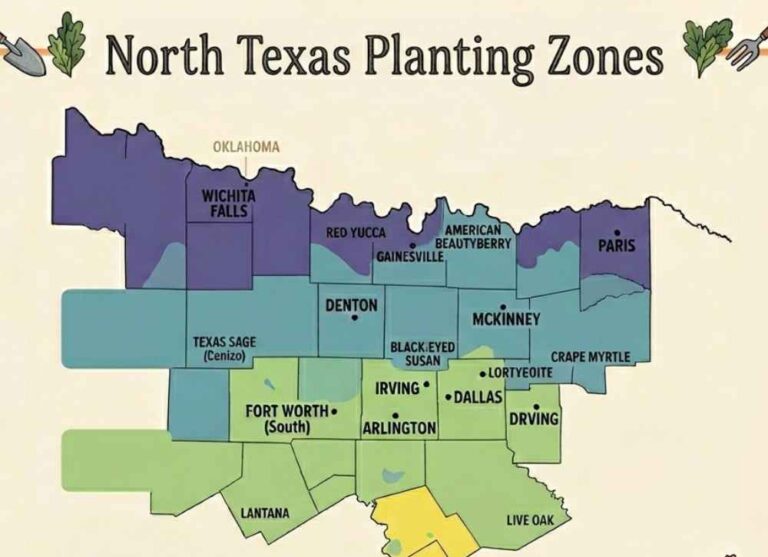
Because of these sudden shifts, gardeners must plan carefully. According to the latest USDA Plant Hardiness Zone Map, North Texas spans Zones 6b to 8b, which means growing seasons vary across the region.
The far north experiences much colder winters, while the central and southern regions enjoy milder temperatures and a longer growing season.
Understanding the Temperature Ranges of Planting Zone In North Texas
Planting zones are based on the average lowest winter temperatures, and these ranges gradually become warmer as you move south.
Zone 6b has winter lows between −5°F and 0°F, Zone 7a between 0°F and 5°F, Zone 7b between 5°F and 10°F, Zone 8a between 10°F and 15°F, and Zone 8b between 15°F and 20°F.
Since the region is mostly flat, there are no mountains to stop icy Arctic winds. This allows temperatures to drop very quickly, so knowing your exact zone helps you select plants that can survive real winter conditions.
The Coldest Part – Zone 6b
The coldest section of North Texas lies near the Oklahoma border and the northern Panhandle. Winters here can be harsh, with freezing winds and very dry air.
The soil is usually a mix of sandy loam and clay, and it loses moisture quickly. Gardeners in this zone should grow strong, cold-hardy plants, such as lettuce and garlic, that can go dormant during winter and return in spring.
Native grasses and American beautyberry are good choices because they naturally tolerate deep cold and dry conditions.
The Middle Region – Zones 7a and 7b
Moving southward toward Wichita Falls and the northern side of the Dallas and Fort Worth region, the climate shifts into Zone 7.
Winters are still cold, but the temperature usually stays between 0°F and 10°F, which is easier for many plants to handle.
The soil contains more clay, which holds water but becomes hard when dry, so adding organic matter is very helpful. Sun-loving plants that can survive light freezes, such as tomatoes, mealycup sage, coneflowers, and hardy herbs like rosemary, grow well in this zone.
The Warmest Areas – Zones 8a and 8b
Most people in North Texas live in Zones 8a and 8b, including Dallas and Fort Worth. These locations have milder winters, with temperatures generally ranging from 10°F to 20°F.
Urban areas often stay slightly warmer because buildings and roads store heat. The soil here is famous for its dark, nutrient-rich clay, often called Houston Black Clay.
Although it becomes very hard when dry, it can grow excellent plants when improved with compost. Heat-loving plants such as lantana, Texas sage, and Turk’s cap thrive in this zone and usually return each year after winter.
Last Frost Date in North Texas
The average last frost date in most parts of North Texas falls between mid-March and late March.
This is the safe time to plant warm-season vegetables and flowers outdoors. Planting earlier can be risky because a sudden late frost may damage young plants.
Simple Tips for Gardening Success
Improving the soil is the first step to success in North Texas. Mixing compost or other organic matter into heavy clay helps roots grow deeper and improves drainage.
During the extreme heat of July and August, a thick layer of mulch keeps the soil cool and prevents moisture from evaporating too quickly.
Choosing native or well-adapted plants is also a smart strategy because they can withstand both hot summers and unexpected winter cold.
The Key to Growing a Healthy Garden in North Texas
Gardening in North Texas becomes much easier once you understand your planting zone. A gardener in Zone 6b will grow very different plants from someone in Zone 8b, even within the same region.
By selecting plants according to your zone, following the frost dates, and improving the soil, you can create a strong and colorful garden that survives the area’s unpredictable weather and continues to thrive year after year.