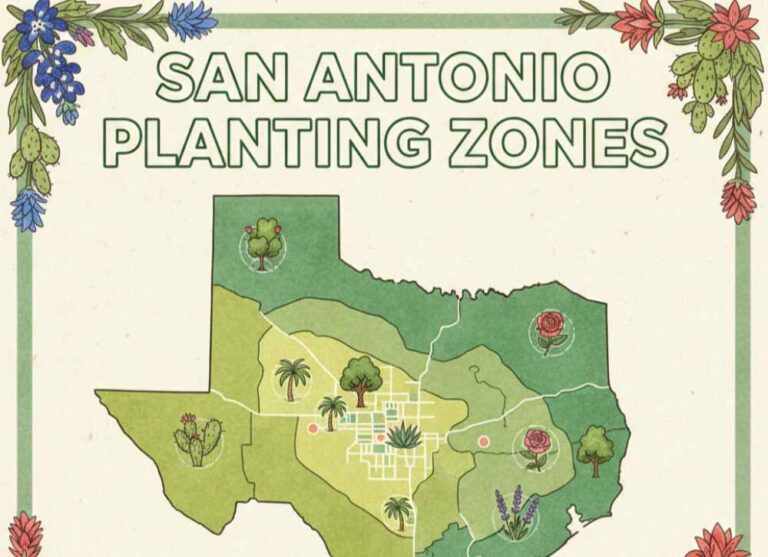
Because San Antonio is at a huge ecological crossroads, gardening there is a one-of-a-kind experience. If you go north, you will reach the Hill Country’s rough limestone. The ground becomes flat and sandy as you go south or east. These plains eventually lead to the Gulf Coast.
It’s hard to know what to plant because we’re locked between these two universes. The 2023 USDA Plant Hardiness Map, which is still the best one for the 2026 growing season, says that San Antonio has officially warmed up.
People who have lived in the area for a long time would remember that it was once a “Zone 8” city. However, the most recent data shows that the “Alamo City” has mostly moved into Zone 9. This change means that their winters are getting shorter and milder, while their summers are getting longer and hotter.
To have a successful garden in San Antonio today, you need to pick plants that can survive “big heat” and the occasional cold freeze in North Texas.
Understanding the Map: Zone 8b vs. Zone 9a
There are two separate growing zones in San Antonio because it is so big. The average annual extreme minimum temperature, or the coldest night of the year, decides what these zones are.
The “Urban Heat Island” effect is a big concern in San Antonio. During the day, all the concrete, asphalt, and buildings in the downtown area hold heat and let it go at night. This makes the city core much warmer than the wide ranch areas or the breezy hills to the north.
Gardening in Zone 8b: The Northern Hills and Suburbs
Stone Oak, Helotes, Fair Oaks Ranch, and Boerne are all neighborhoods.
People who live in the “Loop 1604 North” area are most likely in Zone 8b. In the winter, temperatures here usually drop to between 15°F and 20°F (−9.4°C and −6.7°C). This area is like some places in Dallas; however, your dirt is very different.
You don’t dig into dirt in North San Antonio; you typically delve into rock. The soil layer is quite thin and sits directly on hard limestone. This makes it hard for big trees to grow deep roots, and water drains away very rapidly.
Best Plants for Zone 8b:
- Texas Mountain Laurel: An evergreen that grows slowly and has purple blossoms that smell like grape soda.
- Agarita: A tough shrub that looks like holly and has red berries.
- Red Yucca: This plant is almost impossible to kill and enjoys the hills’ alkaline (high-calcium) soil.
Exploring the Subtropical Shift in Zone 9a
Neighborhoods include Brooks City Base, Downtown, The Missions, and Pleasanton to the south.
You enter Zone 9a when you go south of Highway 90 or toward the city center. This part of the world feels much more like the tropics. It doesn’t get much colder than 25°F (−3.9°C) in the winter. The climate here is very similar to that of Houston’s downtown area, but it isn’t as humid.
The ground shifts here, too. You’ll find more clay or sandy loam here, which holds moisture longer than the rocky north side.
The warm nights in the middle of summer are the worst part, not the cold. During July and August, the ground stays warm even after the sun goes down, which can be hard on many traditional garden plants.
Best Plants for Zone 9a:
- Pride of Barbados: These orange and yellow “flame” blooms love the heat of 100 degrees.
- Esperanza (Yellow Bells): A flower that blooms all summer long in South Texas.
- Firebush: This plant loves the hot Southside sun and attracts hummingbirds.
- Tomatoes: These red fruits also grow best in zone 9a of Texas.
Pro-Tips for Planting Zones of San Antonio Success
It’s not just about finding the right zone for a beautiful garden in San Antonio; you also have to deal with alkaline soil (high pH) and intense evaporation.
In San Antonio, the last freeze usually happens in the first week of March. Texas has a growing season of more than 260 days, which is over a month longer than cities in North Texas.
You need at least 3 inches of mulch because the sun is so intense. This works like a thermal blanket, keeping your plants’ roots cool when the ambient temperature reaches 100 degrees.
The soil doesn’t have much organic matter. Adding compost to thick clay soil helps break it up and adds “body” to rocky soil, helping it hold onto water.
When choosing plants, always prioritize native plants of the South Texas Plains. They are already “programmed” to deal with the cycles of heavy rain and long droughts.
You may have a beautiful, green yard that lasts through the hottest part of August and the occasional frost in January if you work with the Zone 9 reality instead of against it.