When tiny gnats won’t stop circling your plants, the first thought is usually, “What can I use at home to get rid of them? This is where you may also think about baking soda.
Like cinnamon, and garlic water, baking soda is also one of the ingredients everyone has heard about. Some gardeners swear by it, and others mix it with vinegar or soap to chase gnats away. Beyond these kitchen remedies, people also use biological methods, such as BTI, hydrogen peroxide, and nematodes.
When its comes to bakings soda, the hesitation begins…
“Does baking soda really kill gnats in plants?”
“Will it damage my soil?”
“Is it actually safe for my plants, or am I risking more harm than good?”
Because yes! Baking soda contains sodium, and sodium can affect plant health. But does it always? Not necessarily.
It depends on how you use it, where you use it, and what plant you’re growing. And this is exactly what we’re going to break down in this guide.
How Effectively Does Baking Soda Kill Gnats in Plants?
Does baking soda repel or actually kill gnats in plants? According to research, baking soda works against pests. Many gardeners have seen its performance in killing gnats, especially their larvae.
However, its effectiveness can vary depending on several factors, which we’ll discuss next. For best results, baking soda works even better when combined with other gnat-control methods, such as neem oil or sticky traps.
How Baking Soda Works Against Gnats in Plants?
Baking soda affects gnats in two ways: chemically and physically. Together, these effects make the environment difficult for them to survive in.
Chemically, baking soda is alkaline, with a pH of 8.3. It raises the soil pH and makes it more alkaline than gnats prefer.
This sudden shift is harsh for fungus gnat larvae, and they struggle to survive in a pH that no longer supports their growth.
At the same time, the fine grains of baking soda create a physical effect. As larvae move through it, the abrasive texture can damage their soft outer layer.
And because baking soda absorbs moisture, it pulls water from their bodies, causing them to dry out and eventually die.
Overall, the combination of an alkaline environment and the dehydrating effect effectively eliminates larvae.
Do You Know? Due to alkaline pH, baking soda is not only used to kill gnats but can also help reduce soil acidity and help in the growth of alakaline-tolerrant plants.
Larvae vs. Adult Gnats: Where Does Baking Soda Work Best?
Larvae (Most Effective)
Baking soda is most effective against gnat larvae because they live directly in the soil, the same place where you apply dry baking soda or any baking soda remedy.
When the soil’s pH shifts and the dehydrating effect begins, the larvae can’t survive. As a result, their growth and breeding cycle come to an end.
Adult Flying Gnats (Less Effective)
In comparison to larvae, adult gnats are much less affected by baking soda. However, if you use a baking soda solution as a spray and it hits them directly.
This alkaline mixture can affect their delicate wings and body, which may kill them. Still, its effect on adults is noticeably weaker compared to larvae.
Using Only Baking Soda to Kill Gnats Varies Based on Plant Type
For understanding “does baking soda kill gnats in plants, you need to know that baking soda can help reduce or kill fungus gnats, but using it alone doesn’t work the same way for every plant.
Its effectiveness depends largely on the type of plant and the soil’s current condition. While its alkaline nature can kill gnat larvae, it can also harm sensitive plants if used incorrectly.
Baking Soda’s Alkaline Nature & What Research Says
Research shows that when baking soda (sodium bicarbonate) is mixed with water, its pH rises to around 8.3. This makes it a strongly alkaline (basic) substance. As a result, it quickly reduces the soil’s natural acidity.
It shifts it toward a more alkaline state, which stops fungus growth and interrupts the life cycle of gnat larvae. However, the same chemical shift can also create some unintended side effects:
Possible Downsides of Using Baking Soda on Plants to Kill Gnats
- Nutrient Absorption Issues: When soil becomes too alkaline, plant roots can struggle to absorb essential nutrients such as phosphorus, iron, and calcium.
- Salt Build-Up (Sodium Accumulation): Baking soda contains sodium, and repeated use can cause salt to accumulate in the soil, leading to dehydration, slowed growth, or wilted plants.
- Leaf Burn: A strong or concentrated baking soda spray, especially under direct sunlight, can burn or scorch plant leaves.
Because of this mixed impact, it’s important to consider the plant type before using baking soda alone.
How Plant Type Affects the Use of Baking Soda to Kill Gnats
Using baking soda alone depends heavily on the plant’s sensitivity and the severity of the gnat infestation.
Sensitive & Acid-Loving Plants
Plants, for example, blueberries, azaleas, rhododendrons, and ferns, rely on acidic soil (pH 5–6) to properly absorb nutrients.
Adding baking soda makes the soil alkaline, disturbs nutrient uptake, and weakens plant growth.
So, avoid using baking soda (dry or spray) on these plants entirely. It can do more harm than good.
Strong & Alkaline-Tolerant Plants
Plants, for example, lavender, clematis, geraniums, tomatoes, peas, and asparagus, can handle, or even prefer, slightly alkaline soil. Even some plants, including lavender and basil themselves repel gnats.
When used carefully, baking soda can kill gnat larvae without damaging the plant.
For strong plants and light gnat infestations, a light dusting or a very diluted solution can work safely.
Combination is the Safe & Effective Use of Baking Soda to Kill Gnats in Plants
When the infestation is severe or the plant is sensitive, a single ingredient isn’t always enough. Combining methods often gives the best result, especially when there are so many gnats in your yard.
When Baking Soda Alone Can Work
- Low gnat population
- Strong, resilient plants
- Occasional, cautious use
When You Should Never Use Baking Soda Alone
- Heavy infestations
- Sensitive or acid-loving plants
- Soil is already leaning toward alkaline.
In these situations, combine baking soda with neem oil or water, and also use sticky traps and other physical methods.
How to Use Baking Soda to Kill Gnats in Plants? 2 Methods (Flies & Larvae)
As we’ve discussed, using only baking soda to kill gnats in plants totally depends on the type of plant you are treating and the gnat population.
For some plants that tolerate or prefer alkaline soil, especially if there is a normal gnat population, using baking soda alone can be a safe and effective option.
Do you know? Baking soda also helps control powdery mildew, a common fungal disease on plant leaves.
Now, let’s look at how to use baking soda properly to kill gnats while keeping your plants safe.
Two Main Ways to Use Baking Soda to Kill Gnats in Plants
There are two primary ways to apply baking soda against gnats, depending on whether you are targeting larvae in the soil or adult flying gnats.
Method 1: Using Dry Baking Soda (For Larvae)
This method works best for potted plants, where most gnat larvae live near the soil surface.
How to Apply?
Step 1 → Prepare the Soil:
- Gnats cannot survive in dry soil, so first, stop watering the plant and allow the soil to dry completely.
- If needed, gently scrape off the top 1 inch of soil, because most larvae live near the surface.
Step 2 → Sprinkle Baking Soda:
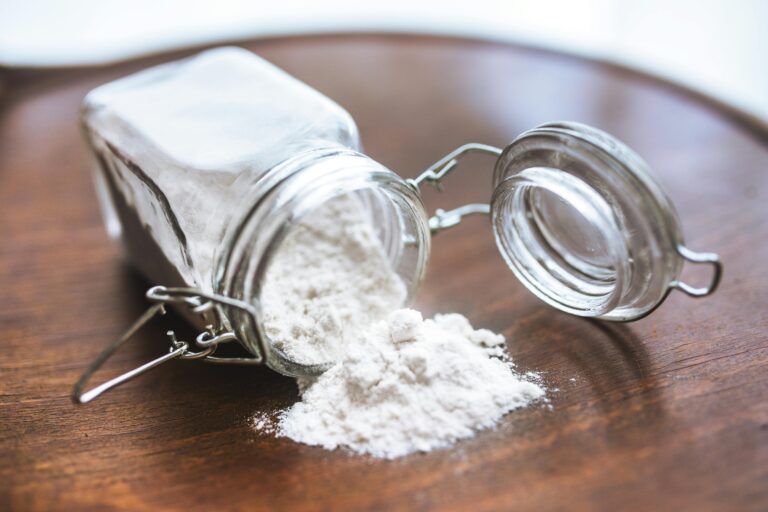
- Evenly dust a thin layer of clean, dry baking soda over the soil surface.
- The goal is to lightly coat the soil with white powder, avoiding a heavy application.
Step 3 → Light Watering:
- Spray a little water on the soil, enough to moisten the baking soda and help it settle into the soil. (should be just moist not wet)
Method 2: Baking Soda Solution Spray (For Adult Gnats)
While the most effective way to control adult gnats is to keep their breeding areas dry and clean, a direct baking soda spray can also help weaken flying gnats.
How to Apply?
Step 1 – Prepare the Spray Solution:
- In a clean spray bottle, add 1 liter (about 4 cups) of water.
- Mix in 1 teaspoon of baking soda and shake well until fully dissolved. This ensures the spray nozzle doesn’t clog.
Step 2 → Spray on Adult Gnats:
- Directly target adult gnats with the spray, focusing on areas where they rest, including under and around leaves.
Step 3 → Safety Precautions:
- Avoid spraying in direct sunlight to prevent leaf burn; late afternoon or cloudy days are ideal timing.
- Test the solution on a single leaf of sensitive plants and wait 24 hours to check for any negative reaction.
Tips to Use Baking Soda for Killing Gnats in Plants
- Determine plant type and use baking soda on plants that tolerate alkaline soil.
- Use small amounts, as too much baking soda can harm soil and plants. (see how to use it safely)
- Combine baking soda with neem oil, then place sticky traps on the plant to catch gnats.
How Much Time Does Baking Soda Take to Kill Gnats in Plants?
Baking soda does not kill gnats instantly; it works gradually. Initial results usually appear within 24 to 48 hours, as adult gnat numbers begin to drop while larvae fail to develop.
By the way, the speed and effectiveness depend on several factors: gnat population density, application method, soil moisture, plant type, and baking soda concentration.
Dry soil and proper concentration speed up results, while high moisture or low amounts can reduce effectiveness. On the other hand, environmental factors also play a role in plant growth and pest management.