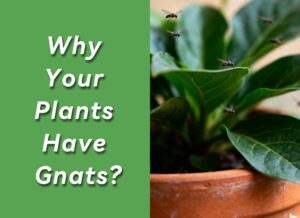
Fungus gnats are common in houseplants, seed trays, containers, and even your backyard. While the flying adults are annoying, the real damage happens underground. The larvae live in moist soil and feed on organic matter and fine plant roots, slowly weakening plants over time.
Beyond kitchen remedies like baking soda, cinnamon, and garlic water, people also use biological methods, such as BTI, hydrogen peroxide, and nematodes.
Most gardeners’ concern is, “Does neem oil kill gnats on plants?” So, the research-based answer is: Yes, neem oil does kill gnats on plants, but not in a harsh, instant way.
Neem oil disrupts the gnat’s life cycle, making it especially effective for long-term control rather than quick knockdown. (Chen, 2025)
Do you know? Neem oil comes from the neem tree and contains natural compounds that affect insects differently from chemical sprays. (Chemistry of Neem – Neem Foundation, n.d.)
Instead of killing on contact, it interferes with feeding, growth, and reproduction. This makes neem oil a practical option for gardeners who want to control gnats without harming plants, soil life, or indoor air quality.
How is neem oil effective in killing gnats?
Neem oil works because it contains azadirachtin, a natural compound that affects insects at multiple life stages.
It acts as a growth regulator, feeding deterrent, and repellent all at once. This multi-layered action is why neem oil is effective even though it works slowly.
Fungus gnats go through egg, larva, pupa, and adult stages. Neem oil interferes with this process and prevents new generations from taking over your soil.
Role in killing larvae
Larvae are the most important target when treating fungus gnats in plants. These tiny, clear worms live in the top few inches of soil and do most of the damage.
When neem oil is applied to soil, larvae ingest it as they feed. Once inside their system, neem oil:
- Reduces their appetite, so they stop feeding on roots.
- Disrupts molting, preventing them from growing into the next stage.
- Causes slow weakening and eventual death
Research shows that this type of growth disruption leads to very high larval control, often eliminating the majority of larvae over repeated applications.
Because larvae can’t mature, the infestation gradually collapses from the inside out. This is why neem oil works best when used consistently and focused on the soil, not just the leaves.
Role in killing adults (effective when combined with sticky traps)
Adult fungus gnats are harder to kill with neem oil alone. They don’t eat enough of it to be affected the same way larvae are.
However, neem oil still plays an important role. It has a strong natural smell that adult gnats dislike.
Treated soil becomes less attractive to egg-laying gnats, reducing the future population of gnats.
In simple terms, neem oil makes your plant pots a bad place for gnats to raise their next generation.
For best results, neem oil should always be paired with Vinegar traps and yellow sticky traps:
- Sticky traps catch flying adults right away.
- Neem oil stops larvae from developing in the soil.
This combination addresses both the visible and hidden problems, which is why it works better than either method alone.
How to Use Neem Oil to Kill Gntas? Soil Drenching Vs Spraying
To control fungus gnats successfully, you must treat the soil where they live and breed.
1- Soil Drenching (Most Effective)
Soil drenching is the most effective way to use neem oil against gnats because it reaches the larvae directly.
How to prepare the solution:
- Mix 1–2 teaspoons of cold-pressed neem oil per quart of water.
- Add a few drops of mild dish soap to help the neem oil mix evenly.
How to apply:
- Slowly pour the mixture over the soil.
- Thoroughly soak the top 2–4 inches of soil.
- Avoid overwatering or leaving standing water.
This method allows neem oil to interact with larvae as they feed, which is essential for breaking the gnat life cycle.
2-Neem Oil Spraying
Spraying neem oil is helpful, but it plays a supporting role rather than being the main treatment. Hutton, E.
Best uses for spraying:
- Lightly mist the soil surface.
- Spray the lower part of the plant stems.
- Spray the underside of pots and containers where gnats hide.
Spraying helps repel adult gnats and discourages egg-laying, but it won’t eliminate larvae deep in the soil on its own.
Tips for Using Neem Oil to Kill Gntas?
Using neem oil correctly makes a big difference in removing or killing gnats on plants and in soil.
- Use cold-pressed neem oil only.
Cold-pressed oil contains higher levels of active compounds that affect insect growth and feeding. - Mix fresh each time
Neem oil breaks down quickly in water. Fresh mixes work better than stored solutions. - Stay consistent
Apply neem oil every 7 to 10 days for at least 3 to 4 weeks. This timing helps catch newly hatched larvae before they mature in the soil and around the plants. - Control moisture
Fungus gnats thrive in constantly wet soil. So, allow the top layer to dry slightly between waterings to enhance neem oil’s effectiveness.
Remember! Neem oil works best as part of a routine, not a one-time fix. Do You Know, some plants naturally repel gnats.
Limitations to Consider and Mistakes to Avoid While Using Neem Oil to Kill Gnats on Plants
Neem oil is powerful, but it isn’t perfect. Beyond knowing “does neem oil kill gnats on plants,” you also need to know its limits to avoid frustration.
Using neem oil to eliminate fungus gnats also requires caution based on plant species, as its effectiveness and safety vary by plant type.
While hardy plants with waxy leaves handle it well, sensitive plants with thin or “hairy” foliage (like African Violets, Ferns, or Begonias) can suffer leaf burn or respiratory stress from the oily residue.
For the best results against gnats, it is more effective to apply a diluted neem oil solution as a soil drench to target larvae rather than a foliar spray.
However, you must always perform a patch test on a single leaf first and avoid placing treated plants in direct sunlight to prevent chemical scorching.
Limitations
- Not an instant solution
Neem oil does not kill adult gnats immediately. Results develop gradually over several days and weeks. - Best for fungus gnats specifically
Neem oil is most effective against soil-dwelling pests like fungus gnats and is recommended for increasing mortality rates in certain pests, but its impact on other insects, such as fruit flies, is limited, according to a study by Asad Ullah and colleagues. - Strong natural odor
Pure neem oil has a pungent smell that can linger indoors for a short time after application.
Mistakes
Neem oil can cause leaf burn if applied during hot daytime hours. Early morning or evening is safest.
Overuse can coat leaf surfaces and interfere with normal plant breathing.
Avoid neem oil on dehydrated plants, newly transplanted plants, or very young seedlings, as they’re more sensitive.
Gently, correctly use neem oil to kill gnats on plants, protecting plants and soil health.
How much Time does Neem Oil take to kill gnats?
Neem oil gradually removes gnats from plants by targeting the insect life cycle.
- First 24–48 hours: Larvae stop feeding and begin to weaken
- 3–7 days: Fewer adult gnats appear as fewer larvae mature
- 2–4 weeks: Most infestations are fully controlled as the reproductive cycle breaks
In heavy infestations, neem oil treatment may need to continue for up to 8 weeks, especially in warm, moist indoor conditions.