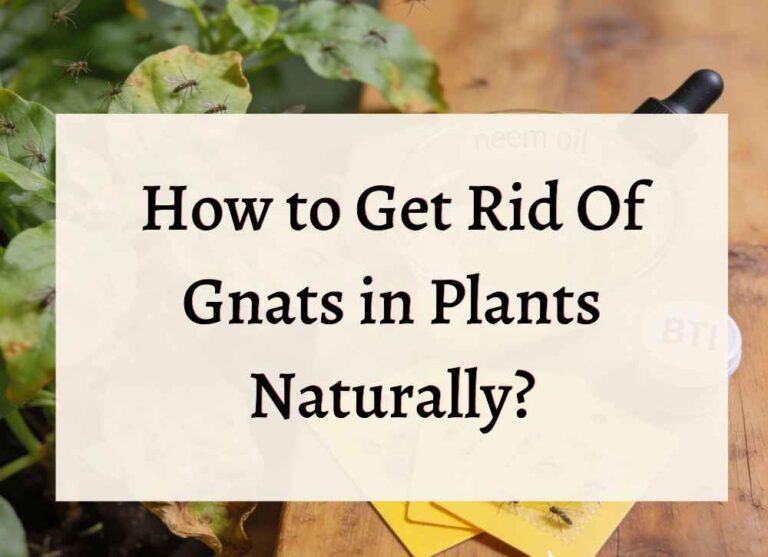
You water your plants like always, everything looks fine, and then suddenly, tiny black flies start hovering around the plants. At first, you ignore them. But within days, they’re everywhere in the yard.
While adult gnats might seem harmless, their larvae can quietly cause problems underground. It means they may harm plants.
And if you’ve already decided to get rid of them from your plants, it’s a wise decision. Whether your plants are indoors, grouped as houseplants, or sitting outside in a corner of your yard, where they’re placed matters.
Gnats show up for specific reasons, and understanding why they appear is exactly what tells you how to get rid of gnats in plants naturally.
Here, I will guide you through 10 effective, natural methods to eliminate these tiny flying gnats from your plants. Remember! One method alone usually isn’t enough, so combining a few techniques based on the gnat population works best.
Before applying multiple remedies to the same soil, take a moment to understand how they interact. Remember! Some methods can stress or harm plants when used together.
- Before You Try Any Gnat Control Method, Read This
- How to Get Rid of Gnats in Plants if They are Still Coming Back?
- Level 1: The "First Response" (Mild Issues & Prevention)
- Level 2: The "Home Remedies" (Active Infestations)
- Level 3: The "Deep Clean" (Serious & Stubborn Infestations)
- Use Yellow Sticky Traps or Vinegar Traps to Get Rid of Adult Flying Gnats
- How to Get Rid of Gnats in Plants: The One Ultimate Secret
Before You Try Any Gnat Control Method, Read This
Before trying any gnat-control method, there are a few basics you need to address first. Gnats have two problem stages: the flying adults you see and the larvae living inside the soil.
The adults are mostly annoying, but the real issue usually sits below the surface. This is why yellow sticky traps alone rarely solve the problem. Gnats are attracted by specific conditions, not by chance.
Basic Tips to Do Before Applying Any Method
Let the Soil Dry Out
Fungus gnats literally cannot survive in dry conditions. Their eggs and larvae need moisture to stay alive.
The single most effective “method” is simply to stop watering. Let the top 2 inches of soil dry; it’s like a desert for them, and they’ll die off naturally.
Prevent Overwatering to Keep Fungus Gnats at Bay.
Gnats don’t just appear out of nowhere; they are attracted to fungus and decaying organic matter caused by overwatering.
If you don’t change how you water, they will keep coming back, no matter what spray you use. Instead of pouring water on top of the soil, put your pot in a tray of water and let the roots soak it up from the bottom.
Even Store-Bought Soil Can Carry Gnat Eggs
Even store-bought bags of soil can contain gnat eggs. If you’re repotting, check the soil first, or keep the new plant away from your other plants for a week to make sure it’s “clean.”
New Plants Can Spread Gnats if You Don’t Isolate Them First
New plants are another common source, especially when they come with low-quality potting soil, so keeping them separate for a few days helps prevent spreading the problem.
How to Get Rid of Gnats in Plants if They are Still Coming Back?
If you’ve already improved your plant’s environment, like fixing your watering habits and clearing away debris, but those persistent gnats just won’t quit, it’s time to level up.
When a simple environment tweak isn’t enough, you need a “multi-pronged” strategy that combines biological treatments with effective home remedies.
The secret to winning this battle is understanding that one single method rarely does the trick. You have to attack them from two sides: kill the flying adults that you see and, more importantly, eliminate the larvae hiding in the soil.
However, combining treatments requires a bit of care; you need to know which methods work safely together to clear the infestation without shocking or harming your plants.
I’ve organized these biological and home remedies into three levels of intensity, so you can choose the right ‘weapon’ depending on how serious your gnat problem has become.
Level 1: The “First Response” (Mild Issues & Prevention)
1) Gnats-Repellent Plants
Why not start with plants that naturally repel gnats? Some plants release strong scents and natural compounds that confuse fungus gnats. These gnat-repellent plants make it hard for gnats to find moist soil or lay eggs.
Plants like basil, rosemary, marigolds, lemongrass, and citronella grass are especially helpful for mild gnat problems and prevention. They won’t kill every gnat instantly, but they make your plant area far less attractive, which is often enough when gnats keep coming back.
Quick Tip to Get Rid of Gnats from Repellent Plants?
- Keep them close to affected plants so the scent stays effective.
- Lightly touch or brush leaves to release more natural oils.
- Basil works well near houseplants, while marigolds are great around pots.
- Strong-scented plants like rosemary and mint can irritate sensitive skin, and fast spreaders (mint family) should be grown in containers.
- Read the detailed guide here….
2) Cinnamon
Cinnamon doesn’t kill fungus gnats directly. Instead, it works by altering the soil environment, making it harder for larvae to survive and discouraging adult gnats from laying new eggs.
It acts as a natural antifungal. Since fungus gnat larvae feed on fungi in moist soil, reducing that food source can slowly weaken their population.
At the same time, the strong scent creates a surface barrier that female gnats tend to avoid. This makes cinnamon more useful for mild issues and prevention rather than heavy infestations.
How to use cinnamon to Get Rid of gnats in Plants?
- Let the top 1–2 inches of soil dry out first.
- Lightly sprinkle ground cinnamon over the soil surface.
- Reapply after watering, as moisture reduces its effect.
- Also, pair with yellow sticky traps to handle flying adults.
- Read the detailed guide here….
3) Garlic Water
If you’re looking for a simple home remedy that works inside the soil, garlic is also worth trying. Garlic doesn’t wipe out fungus gnats completely, but it can help reduce larvae in the soil and make treated plants less attractive to flying adults.
Its strength comes from natural sulfur compounds that disturb gnats rather than instantly killing them. On its own, it’s slow, but when paired with yellow sticky traps, it helps control both stages of the gnat life cycle: larvae below and adults above the soil.
Garlic can damage plants if used too strongly or too often. It may also affect beneficial soil organisms, so avoid heavy or repeated use.
How to use garlic to Get Rid Of Gnats in Plants?
- Crush fresh garlic cloves to release their natural compounds.
- Use as a light soil treatment or diluted garlic water.
- Apply once a week, not daily.
- Always combine with sticky traps for flying gnats.
- Read the detailed guide here….
Level 2: The “Home Remedies” (Active Infestations)
Move to these methods if the gnats are consistently buzzing around your pots.
1) Vinegar Traps
Another simple, non-toxic way to tackle them is with vinegar traps. It doesn’t kill gnats on contact. Instead, it lures them in with its strong fermented smell, which adult gnats mistake for a food or egg-laying site.
Once they land in the liquid, adding a few drops of dish soap breaks the surface tension, causing them to sink and drown. Just add a few drops of dish soap, and they sink and drown.
How to Use Vinegar to Get Rid of Gnats in Plants?
- Fill a shallow bowl with apple cider vinegar + 3 drops of dish soap.
- Place beside your pots, not on the soil.
- Replace every 2–3 days for best results.
- Read the detailed guide here….
Like sticky traps, vinegar also catches flying adults. For larvae in the soil, combine with soil drenching methods, such as cinnamon, BTI, or garlic water.
2) Baking Soda
Baking soda is a simple home ingredient that can help control fungus gnats, especially their larvae in the soil.
It works in two ways: chemically, by making the soil more alkaline than gnats prefer, and physically, by dehydrating and abrading larvae as they move through it.
This combination interrupts their life cycle and gradually reduces their numbers. Baking soda is most effective against larvae, while adult gnats are less affected.
Its use should be limited to sensitive or acid-loving plants, as excessive application can harm roots, nutrient absorption, or leaf tissue.
How to Use Baking Soda to Get Rid Of Gnats in Plants?
- Lightly dust the soil surface and moisten slightly.
- Mix a small amount in water and spray on adult gnats, avoiding direct sunlight.
- Use sparingly, check plant type, and combine with other control methods for persistent infestations.
- Read the detailed guide here…
3) Neem Oil
Neem oil is a natural and effective solution for controlling fungus gnats, particularly their larvae, which thrive in moist soil and feed on plant roots.
Unlike chemical sprays, neem oil works gradually by disrupting the gnat life cycle, eventually weakening and killing them.
Neem oil also makes soil less attractive to adult gnats, helping prevent future infestations. For maximum effect, neem oil should be combined with yellow sticky traps or vinegar traps, which catch flying adults while the oil targets larvae in the soil.
How to Use Neem Oil to Get Rid Of Gnats in Plants?
- Mix 1–2 tsp neem oil into 1 quart of water with a few drops of mild soap, then pour over the top 2–4 inches of soil. Targets larvae directly.
- Lightly mist soil surface, lower stems, and pot undersides to repel adults and discourage egg-laying.
- Use cold-pressed neem oil, mix fresh each time, apply every 7–10 days for several weeks, and avoid direct sunlight or sensitive seedlings.
- Read Detailed Guide here…..
Level 3: The “Deep Clean” (Serious & Stubborn Infestations)
Use these “heavy hitters” when the gnats return in waves, and you need to kill the larvae in the soil.
1) Hydrogen Peroxide
Hydrogen peroxide is a powerful and widely used remedy for fungus gnats, especially the soil-dwelling larvae that damage roots.
It kills larvae on contact through a chemical reaction that overwhelms them, while also aerating the soil to support healthy root recovery.
Unlike other home remedies, hydrogen peroxide works quickly on larvae, making it an essential part of a gnat-control strategy.
How to Use Hydrogen Peroxide to Get Rid Of Gnats in Plants?
There are two ways to use hydrogen peroxide to kill gnats in plants;
1) Soil Drench (Most Effective):
- Mix 1 part 3% hydrogen peroxide with 4 parts water.
- Let the soil dry slightly before application.
- Pour over the top 2–4 inches of soil until it drains out the bottom.
- Listen for fizzing; this indicates the peroxide is working on larvae.
- Repeat weekly for 2–3 weeks until the infestation is under control.
2) Surface Spray (“Surface Shield” for Adults & Top Soil):
- Mix 1 tablespoon 3% hydrogen peroxide in 1 cup of water.
- Test on one leaf first, then spray stems, undersides of leaves, and soil surface.
- Apply early morning or evening to avoid leaf burn.
- Reapply every 3–5 days for consistent protection.
- Read the detailed guide here…
2) BTI (Bacillus thuringiensis israelensis)
For severe gnat infestations, BTI is the most reliable long-term solution. Unlike home remedies like baking soda or neem oil, BTI specifically targets fungus gnat larvae, preventing the next generation from developing.
It is highly effective against larvae. When ingested, it releases toxins that damage their digestive system. While BTI does not affect adult gnats, you will need to use yellow sticky traps or vinegar traps to control flying adults.
How to Use BTI to Get Rid Of Gnats in Plants?
- Choose your product→ Mosquito Bits or Mosquito Dunks for home use; Gnatrol WDG for professional use.
- Steep the granules in water for 30 minutes, or mix the powder as per instructions.
- Pour slowly over the top 1–2 inches of soil where larvae live.
- Reapply every 5–7 days for 2–3 weeks to catch newly hatched larvae.
- Read Detailed Guide here….
3) Beneficial Nematodes
For gardeners battling persistent fungus gnats, beneficial nematodes are a powerful biological ally. Specifically, Steinernema feltiae is highly effective at targeting fungus gnat larvae in the soil.
Nematodes actively hunt larvae in the soil using natural cues such as CO₂ and root secretions. They enter the larva’s body and release symbiotic bacteria that kill the pest within 24 to 48 hours.
It does not affect adult gnats. That’s why using yellow sticky traps alongside nematode treatments becomes crucial.
How to Use Nematodes to Get Rid Of Gnats in Plants?
- Choose the recommended species, Steinernema feltiae, ideal for soil-dwelling larvae and effective even in cooler soils down to 50°F.
- Mix nematodes in lukewarm water (50–75°F) according to the label instructions. Avoid chlorinated water.
- Pour or spray evenly over the soil surface, about 1–2 inches deep.
- Apply in early morning, evening, or on cloudy days; soil temperature should be 50–90°F.
- Keep soil moist for 3–4 days to allow nematodes to move and hunt larvae.
- For heavy infestations, reapply after 7–10 days to catch newly hatched larvae.
- Read the detailed guide here…
Use Yellow Sticky Traps or Vinegar Traps to Get Rid of Adult Flying Gnats
Most of the methods above focus on treating the soil, which is essential because that’s where fungus gnat larvae live.
But at the same time, you also need to deal with the flying adults. This is where yellow sticky traps or vinegar traps become useful, and why they can be used in mild, active, and even severe gnat situations.
Yellow sticky traps target adult fungus gnats by using their natural attraction to bright colors. When gnats fly toward the yellow surface, they land and get stuck, preventing them from laying more eggs in the soil.
By reducing the number of flying gnats, these traps give your soil-based treatments a much better chance to work.
How to use yellow sticky traps to Get Rid of Gnats in Plants
- Place traps at the soil level or just above it
- Use at least one trap per affected pot.
- Set them upright or lay them flat on the soil surface.
- Check weekly and replace when covered with insects or dust.
- Don’t forget about using soil drenching methods to kill larvae.
- Read the detailed guide here….
The Most Important Part: You Need to Know Before Trying Any Method
- Do not use hydrogen peroxide with nematodes together, as it acts as a soil sterilizer. It kills harmful pests but also kills beneficial nematodes.
- BTI works because it contains living bacteria. Hydrogen peroxide can damage or kill these bacteria, which reduces BTI’s effectiveness. So don’t use hydrogen peroxide with BTI to get rid of gnats in plants.
- Too much baking soda can change the soil’s pH and salt level. Nematodes need moist, balanced soil to survive, so excess baking soda may harm them.
- However, yellow sticky traps can be safely used with neem oil, BTI, cinnamon, or beneficial nematodes.
How to Get Rid of Gnats in Plants: The One Ultimate Secret
No single method, especially a home remedy, can solve a gnat infestation alone.
Why? Because gnats live in two different worlds. One method might kill the flyers, but it won’t touch the hundreds of larvae in the dirt.
Another might kill the larvae, but the adults will just fly away and lay more eggs tomorrow.
That’s why you must always combine two methods to target both life stages simultaneously. If you only treat the soil, the adults keep the cycle going.
If you only use traps, the larvae keep hatching. No matter which level of treatment you choose, whether it’s cinnamon, hydrogen peroxide, or BTI, you must pair it with yellow sticky Traps or vinegar traps.
The traps handle the “air war” while your other remedy handles the “ground war.”
Unless you attack the adults and the larvae simultaneously, you aren’t solving the problem; you’re just hitting the snooze button on it.