People often see fungus gnats buzzing around plants and even their entire yard, but when these annoying flies start to swarm only around your tomato plants, it feels incredibly strange! Right?
It’s a confusing sight. You have flowers, other vegetables, and lush greenery in your garden, yet the gnats have decided to throw a party specifically on your tomatoes. Why is that?
Let me tell you the secret: The tomato plant itself isn’t the magnet; it’s the soil environment and the surroundings you’ve created for it.
While some plants naturally repel gnats, but tomato do not repel and do not attract itself.
Until you understand the specific reason why your tomato’s home has become a “gnat nursery,” you can never truly get rid of them.
So let’s get started with why fungus gnats are around your plants and how to get rid of them without damaging your tomato plant.
- Why Are There So Many Gnats Around My Tomato Plants?
- How to Get Rid Of Fungus Gnats on Tomato Plants?
- Soil Drenching Methods to Get Rid of Fungal Gnats Tomato Plant Soil
- Organic Repellents: Targeted Solutions for Every Growth Stage
- Kitchen Remedies: Cinnamon & Baking Soda
- Mechanical Barriers & Traps: Catching the Survivors
- The Ultimate Solution to Get Rid of Fungus Gnats on Tomato Plants
Why Are There So Many Gnats Around My Tomato Plants?
As I’ve already mentioned, the plant itself doesn’t attract these pests; the environment does. But what kind of environment are we talking about?
Actually, tomato plants are unique because they need consistent water to bear juicy fruit. However, this is where most beginners make a critical mistake.
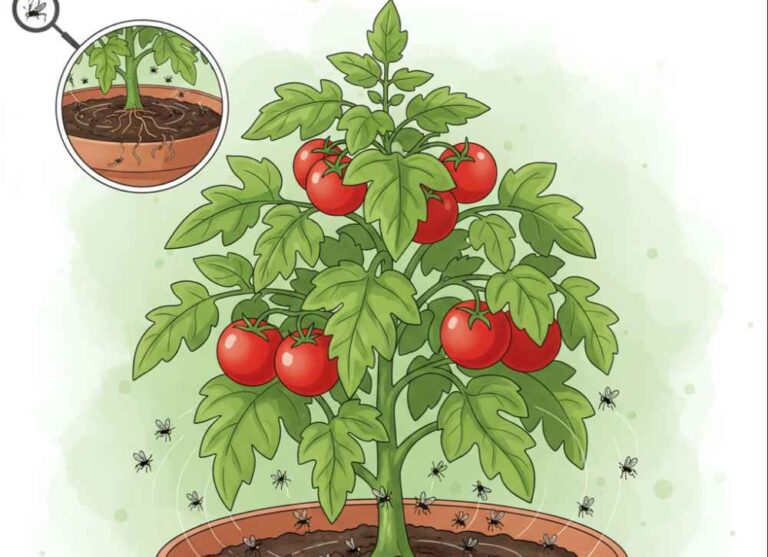
In an attempt to keep the plant “happy,” they overwater the tomato plant. This makes soil constantly wet and soggy, which becomes the ultimate breeding habitat for fungus gnat larvae.
The Vicious Cycle of Over-watering
When an overwatered tomato plant starts to struggle, it shows signs of distress like dropping leaves or yellowing foliage.
These fallen, decaying leaves on top of the wet soil become the primary food source for the larvae.
It’s not just about your tomato plant, either; nearby plant debris or even organic mulch can participate in this cycle.
Ultimately, overwatering is the “invitation card” that turns your healthy tomato pot into a fungus gnat nursery.
How to Get Rid Of Fungus Gnats on Tomato Plants?
First of all, you need to understand that the flying gnats you see are just the tip of the iceberg. The real damage happens underground, where the larvae live. a
These larvae are the ones eating your tomato’s root hairs, while the flying adults are mostly just an annoyance.
There are dozens of methods to kill gnats, but here is the truth: you will only see results when you combine soil drenching to kill larvae with surface traps to catch adults.
However, because tomatoes are sensitive and edible, “generic” pest control can often do more harm than good. Before choosing a method, you must consider the growth stage of your tomato plant:
- Tomato Seedlings: Highly sensitive. One wrong move with a strong drench can cause “Damping Off” or chemical burn.
- Young Tomato Plants: Need a balance of nutrition and protection as they establish roots.
- Mature Tomato Plants: Can handle more direct treatments such as hydrogen peroxide flushes or neem oil drenches. (Here’s the secret: mature plants often resist pests and disease when they are healthy.)
I am going to share the methods that are safe for tomato plants, ensuring your tomato harvest remains organic and healthy.
Soil Drenching Methods to Get Rid of Fungal Gnats Tomato Plant Soil
Before you start, please note that always apply soil drenching methods in the early morning or evening.
Applying these treatments under the harsh midday sun can stress the plant’s vascular system, especially if the tomato is already struggling with an infestation.
1) BTI
BTI is a naturally occurring bacterium. It is the safest “biological warfare” you can use because it only targets the digestive systems of gnat larvae. It won’t harm you, your pets, or your tomato’s growth.
- Best for: Any stage (Seedlings to Mature plants).
How to apply:
1) Soak BTI “bits” or “donuts” in your watering can for about 30 minutes to create a “biological tea.”
2) Drench the tomato soil thoroughly.
3) Repeat this every 5–7 days for three weeks to break the life cycle completely.
4) See the full BTI guide for fungus gnats
2) Hydrogen Peroxide
If your tomato plant is already showing signs of overwatering, such as yellowing leaves or drooping, Hydrogen Peroxide is a lifesaver.
It kills larvae on contact and instantly releases oxygen into the waterlogged soil to prevent root rot.
- Best for: Mature or established young plants. (Avoid using high concentrations on very tiny seedlings.
How to apply:
1) Mix 1 part 3% Hydrogen Peroxide with 4 parts water.
2) Wait until the top inch of your tomato soil is dry, then water the plant with this solution until it runs out of the drainage holes.
3) You’ll hear a “fizzing” sound, that’s the peroxide killing the larvae and fungus!
4) See the full guide on Hydrogen peroxide for gntas
3) Beneficial Nematodes
Think of these as tiny “bounty hunters.” These microscopic worms live in the soil and actively seek out gnat larvae to eat.
- Best for: Organic gardeners with multiple tomato pots.
How to apply:
1) Mix the nematode powder with room-temperature water.
2) Apply to moist soil (Nematodes need a little moisture to move around, unlike other methods that require dry soil).
3) Because tomatoes love warm soil, the nematodes will stay active and protect the roots for several weeks.
4) See the nematodes guide for fungus gnats.
Organic Repellents: Targeted Solutions for Every Growth Stage
If you want to keep your garden 100% organic, Neem oil and Garlic are your power couple. One disrupts the “insides” of the pest, while the other uses “scent warfare” to keep them away.
1) Neem Oil
Neem oil contains Azadirachtin, which stops gnat larvae from shedding their skin and growing into adults. For tomatoes, it also acts as a mild fungicide to prevent the very fungus the gnats eat.
Be extremely careful with seedlings, because they have a very thin “cuticle” (outer layer). Use a very weak dilution (0.5%) and avoid spraying under grow lights, or the leaves will burn.
However, you can use a stronger 1% solution for mature tomato plants.
How to Apply:
1) Mix pure Neem oil with a few drops of organic castile soap (to help it mix with water).
2) Soil Drench: Pour it into the soil to coat the larvae.
3) Foliar Spray: Mist the stems and soil surface to repel egg-laying adults
4) See the full neem oil guide for fungus gnats
2) Garlic Water
Gnats have a very strong sense of smell. The sulfur compounds in garlic are repulsive to them. If your tomato patch smells like a kitchen, the gnats will move elsewhere to lay their eggs.
Garlic is very gentle and safe for even the youngest tomato seedlings. It is a “repellent,” not a “killer,” so it won’t harm the plant’s biology.
How to Apply:
1) Crush 2-3 cloves of garlic and steep them in a liter of hot water overnight.
2) Strain the liquid and spray the top layer of the soil and the base of the tomato plant.
3) Reapply after every watering session, as the scent fades when the soil gets wet again
4) See the complete garlic guide for fungus gnats.
Kitchen Remedies: Cinnamon & Baking Soda
1) Cinnamon Powder
Fungus gnat larvae don’t actually eat your tomato roots first; they eat the fungus on the roots. Cinnamon is a natural fungicide.
How to Use?
Simply sprinkle a visible layer of Ceylon cinnamon across the surface of your tomato pot. It stops the fungus from growing, effectively starving the larvae. See the complete cinnamon guide for fungus gnats.
2) Baking Soda
Baking soda can help kill fungal spores, but use it sparingly on tomatoes! Tomatoes prefer slightly acidic soil (pH 6.0 to 6.8), and baking soda is alkaline.
How to Use?
Mix 1 teaspoon in a liter of water and lightly mist the soil surface only. Do not soak the roots with it. See the complete baking soda guide for fungus gnats.
Mechanical Barriers & Traps: Catching the Survivors
Even if you kill the larvae in the soil, the flying adults are still looking for a place to land and lay another 200 eggs. To break the cycle, you have to catch the “breeders” and block their access to the damp soil.
1) Yellow Sticky Traps
Fungus gnats are naturally attracted to the color yellow. These traps are essential because every female fly you catch is hundreds of eggs that won’t end up in your tomato roots.
→ Hang them or stick them on small wooden skewers right at the soil level of your tomato plants.
It’s a passive, chemical-free way to monitor how bad your infestation is. If the trap is full, you know you need to keep drenching the soil.
See the complete yellow sticky traps guide for fungus gnats.
2) The Vinegar Trap
While vinegar is great for trapping gnats, never pour vinegar directly onto your tomato soil. Tomatoes are sensitive to acidity, and vinegar can act as a weedkiller.
1) Fill a small bowl with Apple Cider Vinegar and a drop of dish soap.
2) Cover it with plastic wrap and poke small holes in the top.
3) Place the bowl next to your tomato pots. The gnats will crawl in and drown, leaving your tomato’s soil pH untouched.
See the complete vinegar guide for fungus gnats.
3) The Coarse Sand Barrier
Gnats need soft, moist organic matter to lay eggs. If you cover your tomato soil with a 1/2-inch layer of coarse sand or perlite, you create a “desert” on top. The adults can’t reach the moist soil to lay eggs, and newly hatched larvae can’t crawl out.
Note: Only do this once you have treated the soil larvae with BTI or Peroxide; otherwise, you might trap the larvae inside with your plant’s roots!
⚠️ Important Note for All Soil Drenching Methods
Do not mix different soil drenching methods at the same time. If you use Hydrogen Peroxide, it will kill the “good” Beneficial Nematodes, and combining too many liquid treatments can drown your tomato roots.
Pick one drenching method for the larvae and pair it with sticky traps for the adults to keep your plant safe.
The Ultimate Solution to Get Rid of Fungus Gnats on Tomato Plants
The secret to winning the war against gnats is balance. You must fix your overwatering habits to stop the larvae from breeding in the first place.
However, be careful not to let your soil get bone-dry, as underwatering your tomato plants can also kill your harvest.
The goal is to keep the soil moist for the roots but dry on the surface for the gnats. By using the right drenching method and a smart watering schedule, you can enjoy a healthy, gnat-free garden.
Grid
Can You Winter Sow Tomatoes? A Zone-by-Zone Guide to Timing It Right
Can You Grow Tomatoes Indoors in Winter?

How to Overwinter Tomato Plants? Step-by-Step Guidance
Can Tomato Plants Survive Winter?

How Often to Water Tomato Plants in Texas (Region-by-Region Guide)