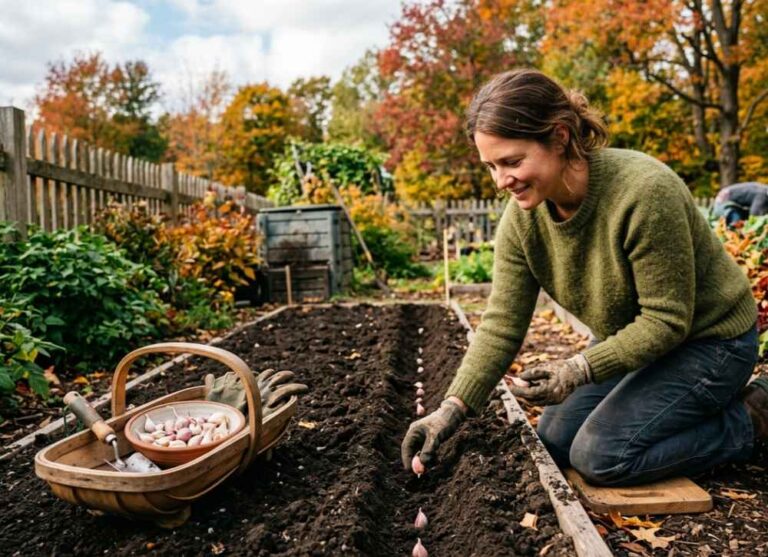
There’s something deeply satisfying about pushing cloves into cool autumn soil, knowing they’ll quietly work underground while winter passes above.
I used to think garlic was complicated: timing, spacing, mulching. It felt like too much to get right. Maybe you’ve hesitated too, unsure if you’d just waste good cloves.
But here’s what I’ve discovered: garlic is surprisingly forgiving, and fall is exactly when it wants to go in the ground.
Plant individual cloves pointy-end up, about six weeks before your first hard frost, and let nature take care of the rest.
- Can Garlic Be Planted In The Fall?
- Why Does Garlic Need To Be Planted In The Fall?
- When To Plant Fall Garlic?
- Where To Plant Garlic In The Fall?
- How To Prepare Garlic For Fall Planting?
- How To Plant Garlic In The Fall?
- Do You Water Garlic After Planting In Fall?
- When Does Fall Planted Garlic Sprout?
- When To Fertilize Fall Planted Garlic?
- Should You Mulch Garlic In The Fall?
- FAQ's
Can Garlic Be Planted In The Fall?
Absolutely, garlic can definitely be planted in the fall, and it’s actually the best time to do it. Most experienced gardeners consider autumn planting essential for growing quality bulbs.
Garlic needs cold weather to develop properly, a process called vernalization. Without those chilly winter months, the bulbs never form the way they should.
When you plant in the fall, the cloves grow roots before the ground freezes. This gives them a serious advantage before you plant garlic in the spring.
Why Does Garlic Need To Be Planted In The Fall?
The cold period acts like a signal telling garlic it’s time to form bulbs. Skip the winter chill, and the plant just grows leaves without ever bulbing up.
Fall-planted garlic also gets a much longer growing season, around 8 to 9 months total. Spring planting simply doesn’t give the plant enough time before summer heat arrives.
That established root system from fall means the plant hits the ground running in spring. It can focus on leaf growth and bulb development instead of scrambling to catch up.
When To Plant Fall Garlic?
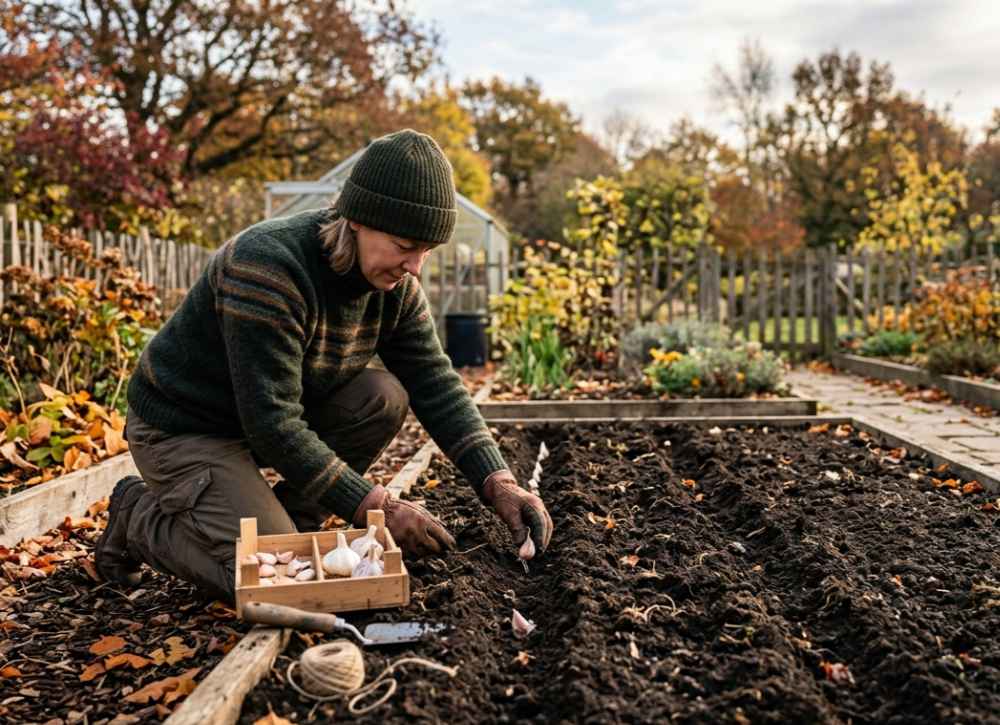
For sowing garlic cloves in fall, the ideal planting window is about 4 to 6 weeks before your ground freezes solid. This gives cloves enough time to root without sprouting leaves that winter could damage.
For most gardeners, this means planting sometime between mid-September and late November. Your exact timing depends entirely on where you live and how quickly winter settles in.
In colder regions like the northern US, Canada, and similar climates, aim for mid-September to mid-October. You need those extra weeks before the deep freeze arrives.
Warmer areas with mild winters can wait until late October through November. Some southern gardeners even plant into early December without any issues.
A good rule of thumb is to plant when soil temperatures sit around 10°C. The ground should still be workable but cool enough that cloves won’t push up green shoots before winter.
Where To Plant Garlic In The Fall?
Garlic isn’t picky about space, so you’ve got plenty of options for where to grow it. Almost any spot with decent soil and sunlight can work.
Traditional garden beds are the most common choice for planting garlic. Just make sure the area gets at least 6 hours of direct sunlight daily.
Raised beds work wonderfully because they offer better drainage and warmer soil. Garlic hates sitting in waterlogged ground, so raised beds solve that problem easily.
Containers and pots are perfect if you’re short on yard space. Choose pots at least 8 inches deep and make sure they have drainage holes at the bottom.
You can tuck garlic into empty spots between other plants or along garden edges. It doesn’t need much room, just about 4 to 6 inches between each clove.
Even a sunny balcony or patio can become a garlic-growing space with the right containers. Windowboxes work too if they’re deep enough for root development.
How To Prepare Garlic For Fall Planting?
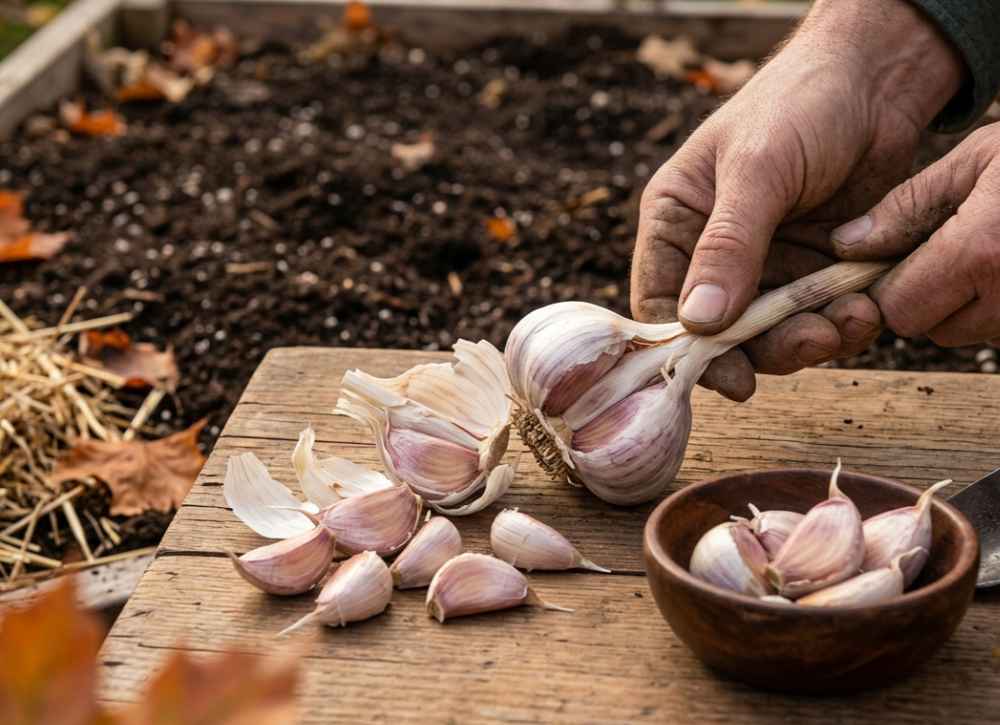
Start by selecting your best bulbs, the fattest and healthiest ones you can find. Avoid any with soft spots, mold, or signs of disease.
Break bulbs apart into individual cloves just a day or two before planting. Doing it too early dries them out, too late, and you’re rushing.
Keep the papery skin on each clove intact since it protects against rot. Only remove the loose outer layers from the bulb itself.
Some gardeners soak cloves in a mix of water and baking soda for a few hours before planting. This helps prevent fungal issues without harsh chemicals.
Sort your cloves by size because bigger cloves produce bigger bulbs. Save the tiny ones for cooking and plant only the chunky outer cloves.
What Garlic Do You Plant In The Fall?
Hardneck varieties are your go-to choice for fall planting in cold climates. They handle freezing winters like champions and produce those curly scapes in spring.
Softneck types suit gardeners in milder regions where winters stay relatively gentle. They store longer but struggle when temperatures plunge too low.
Popular hardneck options include Rocambole, Porcelain, and Purple Stripe varieties. Each brings different flavor profiles from mild and nutty to sharp and spicy.
Softneck varieties like Silverskin and Artichoke dominate grocery stores for good reason. They’re dependable producers with longer shelf life after garlic harvest.
Skip the supermarket bulbs for planting since they’re often treated to prevent sprouting. Get seed garlic from nurseries or reputable online suppliers instead.
How To Plant Garlic In The Fall?
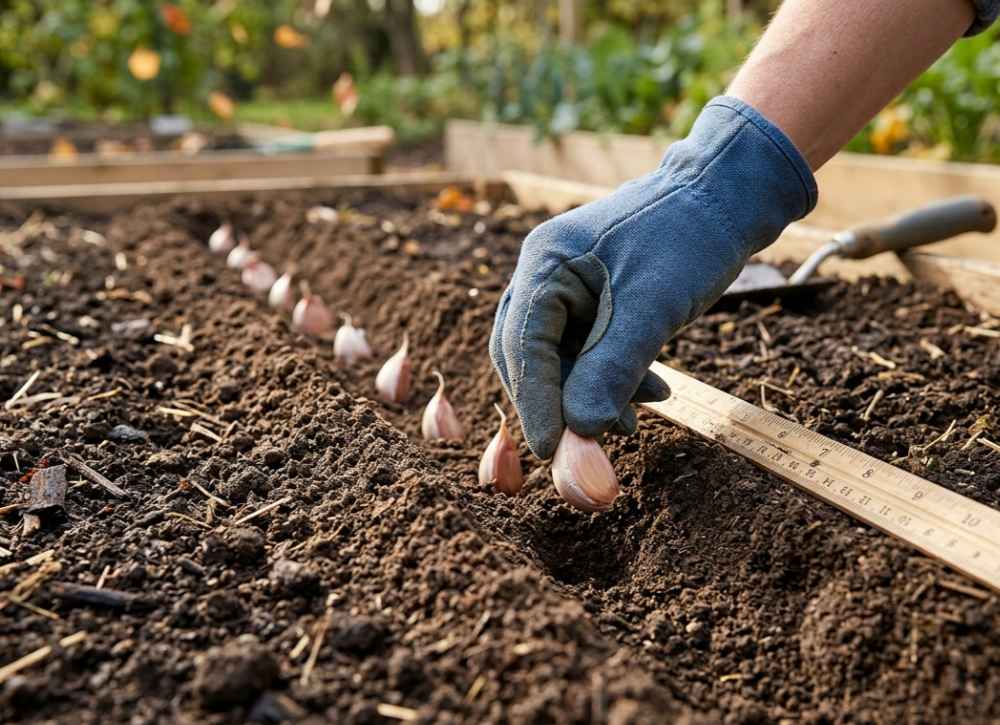
Fall planting has a few quirks that differ from standard garlic planting methods. See 5 methods to plant garlic, but stop!! Also, read the following tips to keep in mind while planting garlic in the fall.
Mulching is non-negotiable for fall-planted garlic since bare soil exposes cloves to freeze-thaw damage. Apply 4 to 6 inches of straw or shredded leaves after garlic planting.
Point the flat root end downward and the pointy tip facing up. Flip it wrong and the clove wastes energy correcting itself underground.
Water once after garlic planting to settle the soil around cloves, but then ease off. Soggy ground heading into winter invites rot faster than anything else.
Mark your rows clearly because you won’t see any growth for months. Come spring, you’ll forget exactly where you planted without markers.
How Far Apart Do You Plant Garlic In The Fall?
Hardneck garlic varieties need more elbow room than softnecks since they produce larger bulbs. Space hardneck cloves about 6 inches apart in all directions.
Rocambole and Porcelain types are particularly bulky growers, so don’t crowd them. These big producers suffer most when fighting neighbors for nutrients.
Purple Stripe varieties can handle slightly tighter spacing, around 5 inches apart. They’re more compact but still need breathing room for proper bulb expansion.
Row spacing matters too since you’ll need access for spring weeding and scape harvesting. Keep rows at least 10 to 12 inches apart for hardneck varieties.
When harvesting garlic, first see the sign so you can harvest garlic at the right time.
How Deep To Plant Garlic In The Fall?
Hardneck garlic going into cold-winter ground needs deeper garlic planting for frost protection. Set cloves 3 to 4 inches deep, measured from the tip.
Porcelain varieties with their large cloves can go slightly deeper, around 4 inches. Their size handles the extra soil weight without struggling to emerge.
Rocambole types prefer the shallower end at about 3 inches deep. They’re vigorous sprouters that push through soil easily in spring.
In regions with brutal winters, err toward deeper planting for extra insulation. That additional inch of soil acts like a blanket against severe freezing.
Do You Water Garlic After Planting In Fall?
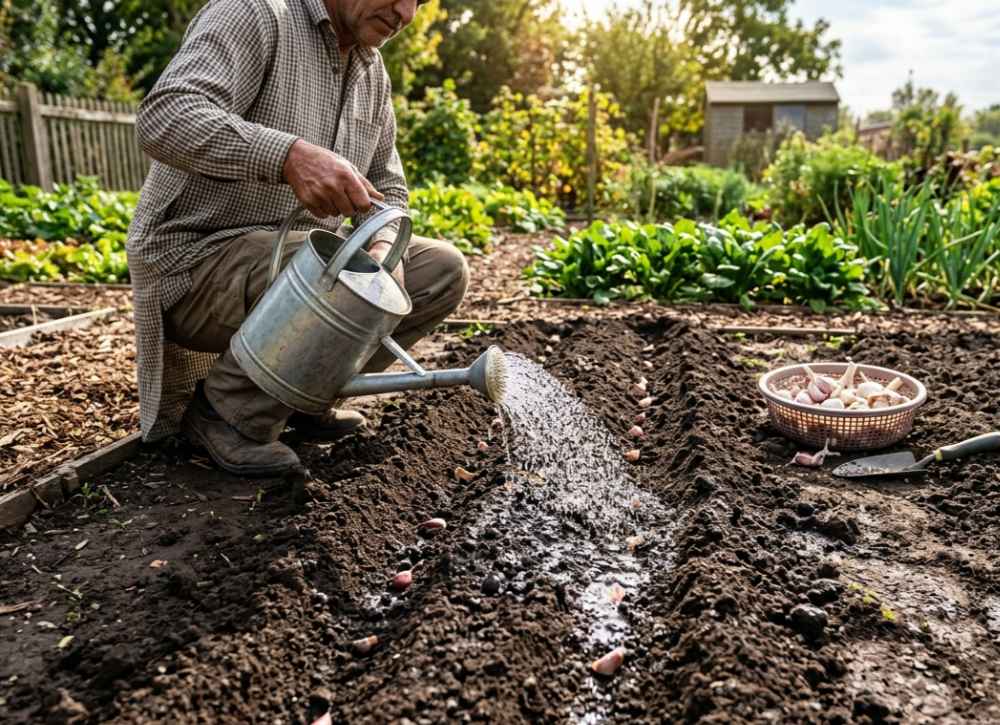
Water your garlic once right after you put it in the ground. This helps the soil settle and gets the roots started.
After that, you probably won’t need to water much at all. Fall usually brings enough rain to keep things moist.
If it stays dry for two weeks or longer, give the bed a light drink. Don’t let the soil dry out completely before winter hits.
Stop watering once the ground starts freezing regularly. Wet soil in winter causes cloves to rot underground.
Too much water is actually worse than too little during the fall. Keep soil damp but never soggy, and your garlic will be fine.
When Does Fall Planted Garlic Sprout?
Most fall-planted garlic sends up small green shoots within 4 to 8 weeks after planting. Don’t panic if you see leaves poking through before winter.
Those early sprouts can handle frost and light snow without any trouble. A few inches of growth before the ground freezes is completely normal.
In milder climates, garlic might keep showing green tops all winter long. This looks worrying, but the plant knows what it’s doing.
Colder regions often see no growth above ground until spring arrives. The cloves are busy growing roots down below instead.
Once the soil warms up in early spring, shoots push through quickly. You’ll see strong green spikes within days of the last hard frost.
When To Fertilize Fall Planted Garlic?
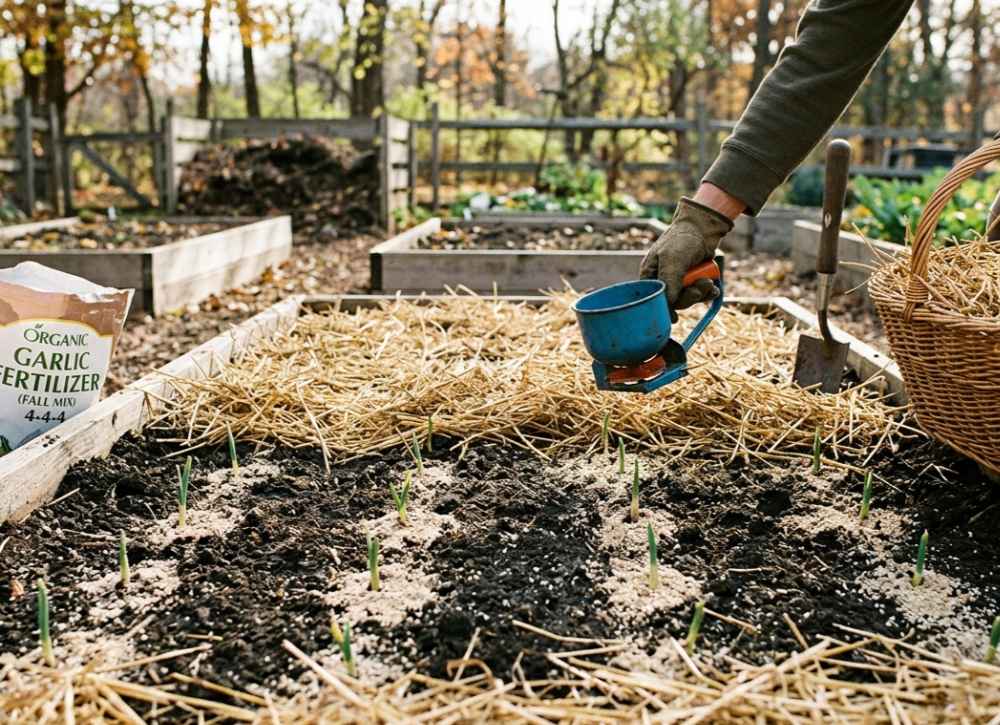
Skip the fertilizer right at garlic planting time since garlic doesn’t need much food while rooting. Let the cloves settle in without extra nutrients pushing weak growth.
Your first real feeding should wait until early spring when green shoots appear. That’s when garlic starts actively growing and actually uses the nutrients.
Give another dose about a month later as leaves grow taller. This second feeding supports bulb development happening underground.
Stop all garlic fertilizing once you spot scapes curling on hardneck varieties. Late feeding pushes leaf growth when energy should go toward bulb sizing.
What Fertilizer For Garlic In Fall?
Work compost or aged manure into your bed a few weeks before planting. This slow-release approach feeds the soil without burning fresh cloves.
Avoid high-nitrogen synthetic fertilizers in the fall since they encourage tender growth. Soft new shoots get destroyed by the winter cold easily.
Bone meal mixed into planting holes gives roots a phosphorus boost for establishment. It won’t cause leafy growth that freezes back.
Blood meal works great for spring feeding when nitrogen demand kicks in. Save it until you see active growth rather than applying in the fall.
A balanced organic fertilizer with lower nitrogen numbers suits fall soil prep best. Look for something like 3-4-4 rather than 10-10-10.
Should You Mulch Garlic In The Fall?
Mulching fall-planted garlic is one of the smartest moves you can make. It protects cloves from the freeze-thaw cycles that heave them out of the ground.
Straw is the favorite choice among garlic growers for good reason. It stays loose, lets water through, and pulls away easily in spring.
Shredded leaves work just as well and cost you nothing. Just avoid matted whole leaves that smother the soil underneath.
Apply 4 to 6 inches of mulch after the ground gets cold but before it freezes hard. Too early and you trap warmth that confuses the cloves.
Pull some mulch back in spring when shoots start pushing through strongly. Leave a thin layer to keep weeds down and moisture in.
FAQ’s
What Can I Plant With Garlic In The Fall?
Garlic grows happily alongside spinach, kale, and lettuce since they share similar needs. Avoid planting near beans or peas because they stunt each other.
Can You Plant Garlic In Pots In The Fall?
Containers work perfectly fine as long as pots are 8 inches deep with drainage holes. Place them in a sheltered spot since potted garlic freezes faster than ground-planted cloves.
Can You Plant Garlic Too Early In The Fall?
Planting too early in warm soil pushes leafy growth that winter kills off. Wait until soil cools to around 50°F which rules out early September for most areas.
How Late Can You Plant Garlic In The Fall?
Plant anytime until your shovel won’t dig into frozen ground anymore. Late planting gives smaller bulbs but something beats nothing.
Is It Ok For Garlic To Sprout In Fall?
A few inches of green growth before winter is completely normal and handles frost fine. Just mulch well and shoots will bounce back strong in spring.
Can You Plant Sprouted Garlic In The Fall?
Sprouted kitchen cloves work great if you plant them gently with shoots pointing up. They often root faster than non-sprouted ones.
Can You Plant Garlic Seed In The Fall?
Garlic doesn’t make true seeds and those scape bulbils take 2 to 3 years for full bulbs. Stick with cloves for next summer’s harvest.
When To Uncover Fall-Planted Garlic?
Pull mulch back when green tips push through as soil warms above 40°F in spring. Remove gradually and leave a thin layer for weed control.
Garlic Planting Time is Different in Different Areas, That’s why GardenChains Has Created Detailed Research Based Guides.
When to plant garlic in Alaska?
When to plant garlic in Texas? Plant garlic in spring in Texas!!
When to plant garlic in Florida?
When to plant garlic in Georgia?
When to Plant garlic in zone 5?
Explore More Garlic Growing Guides
Harvesting & Storing Garlic
| Full guide to harvesting and storing garlic | How to tell when garlic is ready to harvest |
| When to harvest garlic in Florida | When to harvest garlic in Texas |
| When to harvest garlic in Georgia | When to harvest fall-planted garlic |
| When to harvest spring-planted garlic | How long garlic takes to grow |
When & Where to Plant Garlic
| The best time to plant garlic in your area | How and when to plant garlic in the fall |
| When to plant garlic in Florida | When to plant garlic in Texas |
| When to plant garlic in Georgia | When to plant garlic in Massachusetts |
| When to plant garlic in Colorado | When to plant garlic in Zone 5 |
Growing & Garlic Basics
| How deep and far apart to plant garlic cloves | Five easy steps to plant garlic |
| Can you plant garlic in spring? | Can you plant garlic in spring in Texas? |
| Can you plant garlic in summer? | Is garlic a perennial or annual? |
| How to grow garlic in Alaska |