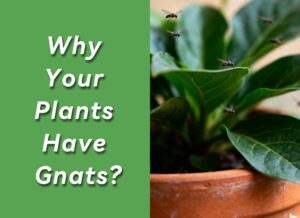
While the tiny gnats buzzing around your plants or overall in the yard are a nuisance, the real danger lurks beneath the surface.
It is the fungus gnat larvae that do the actual damage, silently feasting on your plant’s delicate root system and stunting its growth. Do you know, there may be different techniques to get rid of gnats in plants and the overall yard.
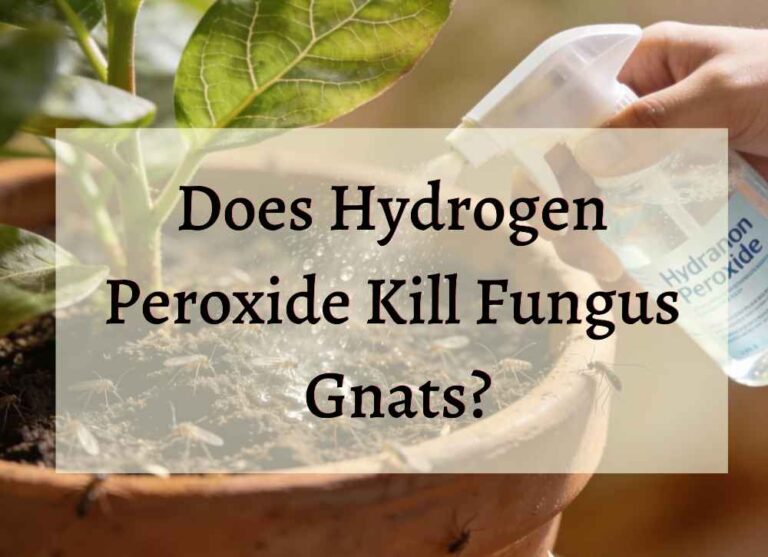
If you are looking for a way to halt this underground destruction, hydrogen peroxide is one of the most effective and widely used remedies among gardeners worldwide.
And if you are concerned about “does hydrogen peroxide really kill fungus gnats in plants,” then the short answer is: Yes!
Hydrogen peroxide is highly effective at eliminating fungus gnat larvae on contact while simultaneously aerating the soil to help your roots recover.
While alternatives like neem oil, baking soda, cinnamon, garlic water, nematodes, and BTI are commonly used to combat gnats, they are often not a complete solution on their own.
You have the above soil drenching methods with yellow sticky traps or vinegar traps. Because combining different treatments based on the gnats’ population is the only way to ensure that no life stage of the pest survives.
Does Hydrogen Peroxide Kill Fungus Gnats? Larvae vs. Adult Gnats
When dealing with a gnat infestation, it’s important to know exactly what you are fighting.
Fungus gnats aren’t just a nuisance; their larvae live in your plant’s moist soil and feast on fungi, organic matter, and even delicate plant roots.
Worse yet, both the crawling larvae and flying adults can spread diseases to your plants.
Based on scientific insights, here is how hydrogen peroxide measures up against them:
Effectiveness on Gnat Larvae (The Root of the Problem)
While there isn’t a “gnat-specific” scientific study yet, researchers have studied how hydrogen peroxide affects similar insects, like mosquito larvae.
Hydrogen peroxide works by inducing a condition called “oxidative stress.” Think of it like an internal chemical reaction that overwhelms the insect’s natural defenses.
In studies on mosquito larvae, even a very small amount of hydrogen peroxide was enough to kill half the population overnight.
Because gnat larvae are very similar to mosquito larvae, hydrogen peroxide is a very promising tool for cleaning your soil. It attacks the larvae where they hide, making it a “go-to” remedy for protecting plant roots.
Effectiveness on Adult Gnats (The Flying Pests)
Many people wonder if they can just spray adult gnats out of the air with hydrogen peroxide. Surprisingly, science doesn’t yet have a clear answer for this.
Currently, there is no direct research proving that hydrogen peroxide kills adult gnats instantly when sprayed on them.
Interesting research shows that if larvae are exposed to very low, non-lethal doses of peroxide, they can grow into stronger adults.
These “survivor” gnats were found to be more resistant to other common bug sprays and chemicals.
Because peroxide is much better at killing larvae in the soil than catching adults in the air, it is best used as a soil drench.
For the flying adults, you are better off using sticky traps alongside your peroxide soil treatment.
How to Use Hydrogen Peroxide to Kill Gnats?
Method 1: Soil Drenching
Soil drenching is the most effective and practical method because it delivers the solution directly to where the larvae live.
As a soil drench, it specifically targets and destroys the larvae and eggs hidden in the potting mix.
Mix 1 part (3%) Hydrogen Peroxide with 4 parts fresh water.
Step 1: The Drought Phase.
Stop watering for a few days. The soil should be thirsty so it absorbs the peroxide mixture like a sponge, reaching every hidden larvae.
Step 2: The Fresh Mix.
Hydrogen peroxide loses its “spark” quickly once mixed. Blend your solution right before you plan to pour.
Step 3: The Saturating Pour.
Water your plant until the solution flows freely from the drainage holes.
Step 4: The Sound of Success.
Listen closely. You will hear a fizzing or crackling sound. This is the oxygen being released as the peroxide dissolves the larvae and sterilizes the soil.
Step 5: The Recovery.
Since peroxide also removes some “good” bacteria, once the gnats are gone (usually after 3 weekly treatments), refresh the soil with a little organic liquid fertilizer to bring life back to the roots.
Method 2: The “Surface Shield” (Foliar & Top-Soil Spray)
While drenching goes deep, the spray handles the flying adults and the mold they love to eat. However, because it primarily treats the soil, it works best as part of a dual-attack strategy: use the peroxide to wipe out the larvae, and combine it with other methods (like sticky traps) to catch the flying adults.
Mix 1 tablespoon of 3% Hydrogen Peroxide into 1 cup of water.
Step 1: The 48-Hour Test.
Some plants are more sensitive than others. Spray one leaf and wait two days to ensure there is no “leaf burn.”
Step 2: The Sunless Window.
Only spray during the “Golden Hours, early morning or just as the sun sets. Spraying during peak sunlight can turn the droplets into tiny magnifying glasses that scorch your leaves.
Step 3: The 360-Degree Mist.
Don’t just spray the top. Use a fine mist spray bottle to coat the stems and the undersides of the leaves.
Step 4: The Soil Cap.
Lightly mist the top layer of the soil. This creates a temporary “shield” that discourages adult gnats from landing to lay new eggs.
Step 5: The Repeat Cycle.
Re-apply every 3–5 days. Since gnats hatch in cycles, consistency is your best friend.
Limitations to Consider and Mistakes to Avoid While Using Hydrogen Peroxide to Kill Gnats on Plants
While diluted 3% hydrogen peroxide is generally safe for most houseplants when used as a soil drench, certain species with sensitive or thin foliage, such as Peace Lilies, Begonias, and African Violets, can experience leaf burn if treated with a foliar spray.
The key is strictly adhering to the recommended 1:4 dilution ratio (one part peroxide to four parts water) to avoid damaging the root systems of any plant type.
Hydrogen peroxide doesn’t distinguish between harmful organisms and helpful soil microbes. Overuse can reduce beneficial bacteria and fungi that support plant health.
That’s why treatments should be occasional, not routine. After the infestation is under control, allowing the soil to recover naturally or using gentle soil amendments can help restore balance.
Another common mistake is using higher concentrations. Stronger solutions can damage roots, slow growth, and stress plants. More is not better here.
Finally, hydrogen peroxide won’t fix poor growing conditions. If the soil stays constantly wet, gnats will return. Adjusting watering habits and improving drainage is just as important as treating the soil.
How Much Time Does Hydrogen Peroxide Take to Kill Gnats?
Hydrogen peroxide works almost immediately against larvae. Once the solution contacts them, they are typically killed on the spot.
Many gardeners notice fewer adult gnats within a few days because fewer larvae are maturing into flying insects.
However, eggs and pupae may still be present after the first treatment. That’s why it usually takes two to three weeks of repeated applications to completely eliminate an infestation.
With consistent treatment and better watering habits, hydrogen peroxide can be a fast, effective, and plant-friendly solution for fungus gnats. And if your garden already has gnat-repellent plants, it will be easier to control these annoying flies.