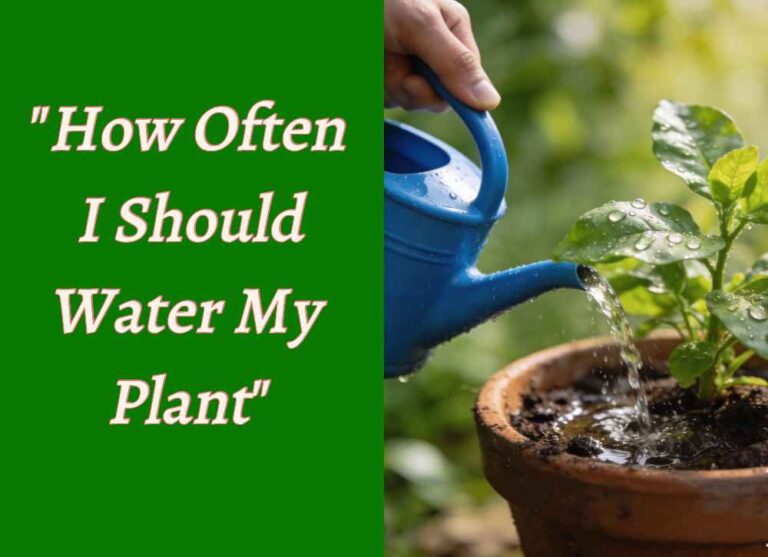
Whenever you search for “how often I should water my plants,” almost every online source says the same about watering plants:
“Just give water when the soil feels dry and stop when it’s still moist,”
And honestly, they’re not wrong.
But if watering is really that simple, then why do so many plants still turn yellow, drop leaves, or stop growing?
The truth is: behind this “simple watering rule” lies an entire logical system.
Soil doesn’t dry randomly. It dries because of sunlight, heat, wind, pot size, soil type, and even the plant’s own lifestyle.
Every small change around a plant quietly affects how quickly its soil loses moisture, and that’s exactly what determines how often you should water your plants.
In this guide, we’ll break it down in the easiest, most practical way. After reading this post, you will be able to identify in just 30 seconds whether your plant is thirsty or not.
“How Often Should I Water My Plants?” 3 Main Factors You Need to Know
By understanding the following hidden factors, watering suddenly becomes less confusing and much more natural for you. You stop guessing, and you start observing “how often I should water my plants”.
These types of tiny shifts make a huge difference in how healthy your plants stay. Because the truth is, no plant follows a fixed watering schedule.
And if you’re giving the same amount of water to every plant, you’re accidentally setting them up for stress. Understand the following factors and subfactors before your plant faces water stress.
Note: First, understand the following factors, and use the table of contents to move directly to the exact point, “how often I should water my plant.”
I have added internal links that prove the explanation, especially for complex factors…
Environmental Conditions Decide How Fast Your Plant’s Soil Dries Out
1) Season / Weather
In cooler months, the soil holds moisture longer because shorter days and lower temperatures slow evaporation.
And when winter rains begin, the soil remains moist for even longer, often requiring little watering for days or even weeks.
On the other hand, the summer season, with its intense heat, can quickly dry the soil. If heavy summer rains occur, they create extra humidity, which often leads to pest and disease issues.
Autumn brings winter, and spring leads into summer, and every shift changes how the soil holds moisture. The point is that each season has its own variations in different areas.
So, we can’t say everyone should water their plants the same way.
2) Sunlight Intensity
Sunlight intensity varies with the season, which directly affects soil conditions. Long, intense summer days dry the soil quickly, while short, weak winter days slow both soil drying and the plant’s photosynthesis process.
Different climates also alter this pattern: tropical regions stay bright for most of the year, while colder areas receive far less light.
And because sunlight affects how fast the soil dries and how actively a plant photosynthesizes, it naturally becomes a key factor in how often your soil loses moisture and how frequently you should water your plants.
3) Temperature
Sunlight and temperature are directly connected; the stronger the sunlight, the higher the temperature. In summer, due to intense sunlight and high temperatures, the soil dries quickly.
During winter, weaker sunlight and lower temperatures make the soil dry more slowly. Temperature changes also directly affect the plant’s growth and photosynthesis.
4) Humidity
Humidity is often low during winter, so the soil dries slowly but steadily. In summer, especially after rain, humidity increases, slowing soil drying.
High humidity can keep the soil moist longer, while low moisture causes it to dry faster.
Overall, humidity is a key environmental factor that directly affects how your soil behaves and the amount of water your plants require.
5) Airflow / Ventilation
Airflow helps remove the layer of humidity that forms above the soil during evaporation. Additionally, higher temperatures warm the air, further increasing evaporation.
It means that airflow, temperature, and sunlight work together to accelerate soil drying, giving you a clear indication of how often you should water your plants.
Soil Type and Pot Size Control Moisture Holding Capacity of the Soil
1) Soil Type
Soil type plays a big role in deciding how often you should water your plants. Sandy soils drain quickly, so they dry out quickly and need more frequent, smaller waterings.
Clay soils, on the other hand, hold water for a long time, allowing you to water them less often. Loamy soils fall between these two extremes, with moderate drainage and moisture retention.
Remember, the soil type sets the stage, but you also need to match watering to your plant’s actual needs. For example, a cactus will require much less than a fern.
2) Drainage System
A proper drainage setup is key to keeping your plant watering schedule on track. It also affects your plant watering routine. For exmaple;
A pot or bed with good drainage allows excess water to flow out easily, preventing waterlogging and helping the soil dry at a steady pace.
Poor or blocked drainage traps water, keeping the soil too wet and reducing the need to water your plants, but it also risks root damage.
3) Pot Size & Pot Material
The pot itself makes a big difference in how your soil holds water. Small pots dry out quickly because they have less soil, so you need to water more often.
Bigger pots retain moisture longer, meaning you need to water less frequently. The material matters too. Porous pots, such as unglazed terracotta, allow water to escape more quickly and soil dries sooner.
Non-porous pots, such as plastic or glazed ceramic, hold water longer, so you don’t need to water as often. WAIT!…. I am going to tell you the exact formula of a plant watering schedule.
4) Indoor or Outdoor placement
Where your plant is growing also plays a role in how fast the soil dries and when it needs water. Since outdoor plants get direct sunlight and wind, they lose moisture quickly and demand more water.
Indoor plants thrive in a calmer, more stable environment with gentle light or grow lights, so they use water slowly and don’t need watering as often.
Of course, there’s no strict rule on how much or how often you should water your plants, as it depends on plant preferences, soil type, and all the factors we are explaining.
Your Plant Type Determines Its Water Drinking Speed
1) Plant Type (tropical, succulent, herbs)
A plant’s watering preference doesn’t stay fixed; it shifts with the season. Even though tropical plants generally prefer more moisture and desert plants prefer drier soil, both adjust their needs as the weather changes.
In summer, every plant uses water faster because heat, sunlight, and airflow dry the soil quickly; the only difference is that a tropical plant still needs slightly more water than a drought-tolerant plant.
But in winter, when sunlight is weak and the soil dries slowly, even moisture-loving plants don’t want the same amount of water they needed in summer.
So, plant type matters in deciding how often you should water your plants, but their watering needs always rise or fall depending on the season and how the soil reacts.
2) Growth Stage (seedling, mature, dormant)
The growth stage of any plant strongly shapes how often you should water your plants.
Seedlings have tiny, shallow roots, so they require frequent, small waterings to keep the topsoil slightly moist.
Mature plants with deeper root systems need less frequent, deeper watering so moisture reaches the lower soil layers.
3) Root Health
Another key factor is root health, which determines how quickly the soil dries and how often your plant actually needs water.
Strong, fibrous roots absorb moisture efficiently, drawing water from the soil steadily. It helps the soil dry naturally and signals when the plant is ready for its next deep drink.
Weak, damaged, or rotting roots absorb water very slowly, resulting in the soil remaining wet for extended periods. Watering again at this stage only worsens root damage, slows soil drying, and puts the plant under more stress.
4) Plant Size
Each plant has different leaf size and structure, which directly control the transpiration rate of the plant (transpiration rate means “how fast a plant uses water”).
And ultimately, it decides how quickly the soil dries and how often you should water your plants. For exmaple;
Larger plants with large, broad leaves transpire much faster, which causes their soil to dry out quickly and increases their watering frequency.
In contrast, plants with thick, fleshy leaves or needle-like foliage lose moisture slowly and can go much longer between waterings.
How Often Should You Water Your Plants? The Ultimate Watering Formula
After considering all the above factors, here comes the real answer to your question, “How often should I water my plant?”
Basically, watering a plant is simpler than it seems once you know what to look for.
Now, I will say the same thing as others, “check soil condition”, because all the factors that we’ve observed from environmental conditions to plant type, they all come down to one main thing: checking the soil.
Just the difference is that we’ve understood all the factors deeply, so we can water our plants more efficiently.
And do you know, I also got another most important point for you? You should also consider a plant stage, because I’ve found this factor to be like a unique weapon.
Anyway, let’s talk about how to check if your plant needs water or not.
1) Check the Soil First
Feel the top 1 or 2 inches. If it’s dry, give water. If it’s still moist, don’t water yet. This is the most practical signal for when a plant actually needs water. Here, explore the difference between moist and wet.
2) Think about the plant’s stage:
- Seedlings: Small, delicate roots mean they need light but frequent waterings. Avoid overwatering so roots don’t rot.
- Mature plants: Deep, strong roots can handle less frequent but deeper waterings, ensuring all roots are reached.
Always remember that all the factors, plant type, growth stage, pot, and environment, mainly tell you how fast the soil dries. By checking the soil and combining these hints, you naturally find the right watering routine for any plant.
Real Life Example About How Often You Should Water Your Plants
Sometimes, with so many factors affecting your plant’s water needs, it’s easy to get confused.
Don’t worry, this real life example will help you see exactly how these factors work together.
Suppose I have a tropical fern in my backyard, sitting in a medium sized terracotta pot filled with loamy soil.
It’s a sunny day, there’s good airflow around the plant, and the top layer of soil is starting to feel dry.
The fern is still in its seedling stage, with delicate, spreading roots and soft, broad leaves that lose water quickly.
I check the soil and find the top couple of inches dry, so it’s time to water lightly and frequently.
The pot is outdoors, exposed to sunlight for most of the day, and the plant’s leaves are actively transpiring.
Since it’s a seedling with fragile roots, I avoid deep watering and instead give small amounts, just enough to moisten the top soil.
Over the next few days, I will monitor the soil regularly and water again whenever the top layer starts to dry.
It keeps the plant hydrated without overwhelming its roots, matching the seedling’s natural water needs.
See how all the factors come together to create this watering routine?
Trust me, when you follow this logic, the watering schedule you develop will actually work for your plants, not just in theory but in real life.
8 Common Watering Mistakes You Need to Avoid
1) Watering mature plants in the middle of a hot summer afternoon causes rapid evaporation and leaf burn.
2) Seedlings in small pots lead to root rot because fragile roots sit in constantly wet soil.
3) Ignoring pot drainage, which keeps the soil soggy and confuses when the plant actually needs water.
4) Watering tropical plants too shallowly, not reaching deep roots, reduces their hydration efficiency.
5) Skipping frequent checks of soil moisture, assuming all plants in the same environment need the same routine.
6) Watering indoor plants with poor airflow without adjusting for slower soil drying causes prolonged wet soil.
7) Giving deep watering to small seedlings that cannot handle full soil saturation, stressing their young roots.
8) Relying solely on calendar-based watering instead of adjusting to real-time soil dryness, sunlight, and plant stage.
Still “How Often Should I Water My Plants?”???
Still asking, “How often should I water my plants?”
Don’t worry, you’re not alone. Understanding watering isn’t just about following a schedule; it’s about noticing how your plant and soil behave.
Once you grasp the factors behind watering, everything becomes clearer. You start to see patterns rather than guess. By observing these factors and applying a simple logic system, watering becomes intuitive.
You’ll know exactly when your plant needs a drink, without overwatering or under-watering. Trust the process and your observation skills.
Okay! You can comment here, and I will guide you, or you can also contact me. Thank You! Take care of yourself and your plants.