For fungus gnats that often look buzzing in the overall yard, experts always recommend using yellow sticky traps alongside other methods. These are highly effective, but they only trap flying adult gnats.
When adult gnats are lured to the bright yellow surface, they become permanently trapped, which immediately reduces new egg-laying. However, these traps do not affect the eggs or larvae residing within the soil.
For complete control, you must pair these traps with soil-based treatments to target the larvae where they live and become harmful to plants. However, some plants themselves naturally repel gnats.
Soil-based treatments include kitchen remedies such as neem oil, baking soda, cinnamon, and vinegar, as well as specialized methods such as hydrogen peroxide.
Focusing only on the soil leaves the flying adults free to lay even more eggs. This is exactly why knowing how to use yellow sticky traps for fungus gnats and how they actually work is a game-changer.
Why Are Gnats Attracted to Yellow Color? Larve vs adults
It might seem like a simple color choice, but there is actually a scientific reason behind it. Adult fungus gnats are “positively phototactic,” which is a fancy way of saying they are naturally programmed to move toward bright lights and colors.
According to experts at EcoPeat Supply and Canna, many flying pests are instinctively drawn to bright yellow surfaces. This is likely because the color mimics natural plant cues, such as flowers or the way light reflects off healthy leaves.
Research also highlights that female gnats are especially attracted to yellow. They fly toward the traps thinking they’ve found a perfect spot to lay eggs, only to get stuck instead.
As noted by the UC IPM (University of California Integrated Pest Management), you’ll often see adult gnats hovering near windows or lamps because of their love for light. Yellow traps simply use this instinct to trick them.
Why do Yellow Sticky Traps not work for larvae?
While the adults love the bright lights, the “baby” gnats (larvae) stay in the dark. Fungus gnat larvae are actually blind.
They live deep in the moist soil, moving only toward food, like plant roots and fungi, rather than color or light.
This is why yellow traps are a perfect tool for catching the flying adults, even though the larvae remain hidden underground.
How Yellow Sticky Traps Work for Fungus Gnats?
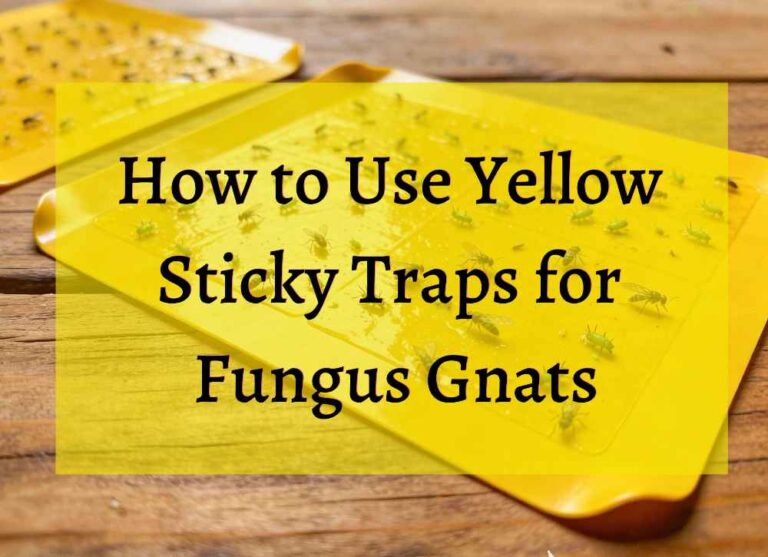
Yellow sticky traps work by using a gnat’s natural behaviors, their attraction to light, and their need to lay eggs against them. The goal is to capture as many adults as possible so they can’t reproduce.
For fungus gnats, place the traps right at the soil surface, or even lying horizontally across the pot.
Orienting traps this way is important because it captures the female gnats as they emerge from the soil.
When a gnat flies towards the bright yellow card, it lands and gets permanently stuck in the strong glue.
Sources like Planet Natural mention that placing standard 3×5-inch (or larger) cards flat on the soil will capture a large number of egg-laying adults in an infested area.
These traps don’t just kill gnats; they also help you track how bad your problem is. If a trap fills up overnight, you know you have a heavy infestation that needs more treatment.
How to Use Yellow Sticky Traps for Fungus Gnats? Step-By-Step
1) Prepare the traps:
If the yellow sticky cards are larger than your pots, trim them into smaller sections so each plant can have its own trap. Once cut, remove the protective paper layer to expose the adhesive yellow surface.
2) Position the traps correctly:
There are two proven placement methods for the best results:
Upright placement:
- Insert the sticky card (or a cut piece) into the potting soil using a stake, clip, or holder.
- Make sure both sides of the trap remain exposed and that the lower edge sits at soil level or slightly above it.
- Avoid direct contact with leaves. This position allows flying adult gnats to land easily on the trap as they move around the plant.
Flat placement:
- Place the sticky card directly on top of the soil, adhesive side facing up.
- Some growers remove the backing from only one side and lay the card flat across the soil surface.
- This setup helps catch adult gnats as they emerge from the soil or crawl before taking flight.
- Research shows both vertical and horizontal placements are effective, though flat placement is especially useful for intercepting egg-laying females.
3) Trap coverage:
Use at least one sticky trap for each affected pot or plant. In larger growing spaces, such as greenhouses, multiple traps should be distributed evenly, typically several per 10 to 25 square feet, to cover areas where gnats are most active.
4) Monitor and replace regularly:
Inspect traps at least once per week. If a trap becomes crowded with insects, dust, or debris, replace it promptly to maintain its effectiveness.
Extension service guidelines recommend changing or cleaning traps during each inspection because full traps can no longer capture new insects.
Continue replacing traps weekly or more frequently until adult gnat activity drops to nearly zero.
Limitations and Cuations
- Yellow sticky cards catch flying adult gnats only. Eggs and larvae living in the soil are not affected, so sticky traps alone cannot fully solve a gnat problem.
- To stop the life cycle, sticky traps should be combined with other methods, such as letting soil dry out, using BTI products, or applying beneficial nematodes that target larvae.
- Because the traps are bright yellow, they can attract insects other than fungus gnats. When used outdoors, they may capture beneficial insects, and in rare cases, even small reptiles.
- Sticky traps work best inside homes, greenhouses, or near affected plants. They should not be placed randomly in gardens or yards where helpful insects are active.
- High-quality, double-sided yellow sticky cards with strong adhesive work more effectively and last longer than thin, single-sided traps.
- Most professional sticky traps are non-toxic and safe for plants, but the glue is extremely strong. Keep traps out of reach of children and pets to avoid skin, hair, or eye contact.
- The bright yellow color can stand out among plants. Some users trim the cards or hide them behind foliage for a cleaner look.
- Homemade traps can be made by applying sticky substances to yellow paper or cards, but store-bought traps usually perform better due to stronger adhesives and longer durability.
How Long do Yellow Sticky Traps Take for Fungus Gnats?
Once yellow sticky cards are placed near infested plants, adult fungus gnats are often captured very quickly.
Many growers notice visible results within the first one or two days, as flying gnats are naturally drawn to the traps and get stuck soon after emerging.
That said, eliminating the problem requires patience. New adults can continue to appear over time as they emerge from the soil, so traps should remain in place until activity noticeably declines.
In more serious cases, consistent trapping combined with proper soil management may be needed for two to three weeks to significantly reduce the population.
Sticky traps are most effective for quickly reducing adult numbers, but lasting results depend on addressing the source of the problem beneath the soil surface.