As winter approaches, many plants enter dormancy, particularly deciduous trees. But it doesn’t mean your garden is taking a break or that there is no chance to connect with nature.
During winter, reduced sunlight reduces photosynthesis because temperatures start to drop, days begin to shorten, and most plants go into dormancy.
Particularly if the temperature is below 0 °C. Plants such as tomatoes, eggplants, and peppers cannot withstand frost and may die.
However, some plants remain alive but delay their growth, such as cilantro, cabbage, and spinach.
That’s why knowing how to prepare the garden for winter is legitimate, and you must be ready for that. So, your garden stays protected until your first frost date.
- Winter Season is not the Same Everywhere (You know)
- Prep Step 1: Clean and Organize Your Garden
- Here's how You Should clean and organize my garden before winter;
- Prep Step 2: Test Soil and Enhance Nutrient
- How to prepare garden soil for winter?
- Prep Step 3: Make a Greenhouse and Raised Beds
- How to Prepare Greenhouse and Raised Bed for Winter?
- Prep Step 4: Plant Winter Crops
- Follow these considerations before planting winter crops.
- Grow More Plants through their Vegetative Parts!
- Winter Plant Care: Watering, Fertilizing, and Pests or Disease
- Step 5: Protect the Whole Gardens During Winter?
- Basic Tips to Protect Sensitive Plants from frost
- How to Prepare Vegetable Garden For Winter?
- How to Protect Flowers From Winter?
- How to Protect Perennials from Winter?
- How to Protect Wildflowers from Winter?
- FAQ's on how to prepare garden for winter
Winter Season is not the Same Everywhere (You know)
The intensity of the winter season varies from place to place. Because of this, garden preparation also changes based on how cold your area gets.
The US Department created gardening zones using minimum temperature levels so people can easily understand winter intensity. These zones help you prepare your garden for winter according to your local climate.
| Zones 1–3 | -50°F to -30°F | Northern North America (coldest areas) |
| Zones 4–6 | -25°F to 0°F | Northern U.S. & Central Canada |
| Zones 7–9 | 0°F to 20°F | Southern U.S. (Texas, Tennessee), Western U.S. (California, Arizona) |
| Zones 10–13 | 20°F to 40°F | Southern U.S., Southern California, Hawaii, Tropical areas |
In seasonal gardening, your preparation depends on how strong the winter season is in your area. At the same time, environmental factors also affect plant growth, so understanding your climate is really essential.
How to Prepare the Garden for Winter? Detailed Guide Step-byStep
During winter, you need to;
- Protect soil with mulch and reduce watering.
- Cover sensitive plants or move them indoors.
- Plant winter crops and manage fertilizing.
- Prune trees and shrubs and grow new spring plants.
- Prepare the garden for spring and summer during late winter.
But how to do it step-by-step? That’s precisely what you will discover in this content. Before we move forward, keep in mind that this content explains the garden preparation journey from late autumn to late winter. These are the easy steps below on how to prepare garden for winter.
Prep Step 1: Clean and Organize Your Garden
Before 20 days of winter, your garden may look scattered with yellow leaves, dry stems, and weeds. As winter comes, the fallen leaves, dead annuals, and mold formed from excessive moisture add to the carton.
As the weather changes, many sensitive annuals go dormant or die completely, while weeds, such as Cleaver and Alfalfa, start to take their place. So, whenever you think about how to prepare the garden for winter, you first need to clean it.
Here’s how You Should clean and organize my garden before winter;
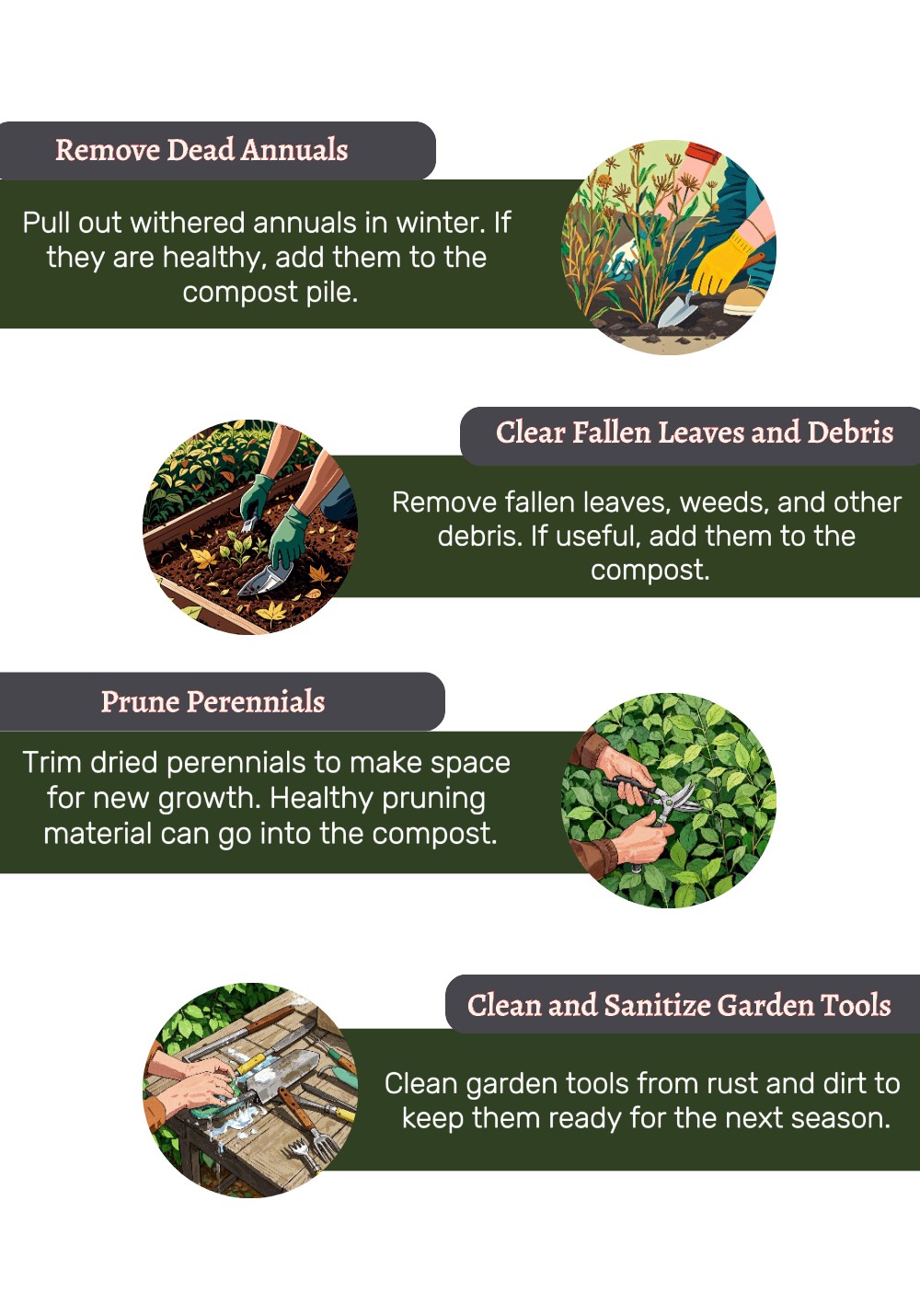
Remove dead annuals, such as zinnias, petunias, and marigolds, which will die back completely in the cold, especially in zones 1 to 5. The same rule applies in zones 3-9 (moderately cold areas).
However, some annuals may survive for a long time or re-sprout from seed in zones 10 to 13 (warm areas, such as southern Florida and parts of California).
Clean all debris, weeds, and fallen leaves hidden in the soil. Pull out useless weeds and herbs by the roots and prune dried perennials like Lavender, Salvia, and Russian Sage.
Also, separate rusty and broken tools! Clean and sanitize well that is worth more utilizing.
Prep Step 2: Test Soil and Enhance Nutrient
The second step in how to prepare the garden for winter is soil preparation. In the fall season, soil moisture and temperature fluctuations highly affect its condition.
Warm days and chilly nights harden the soil, especially when there is a lack of moisture. Sandy soil dries out quickly, clay soil becomes hard, and loamy soil remains relatively balanced.
Additionally, in cold areas, soil hardens more rapidly, while in warm or tropical places, soil moisture dries quickly due to fast evaporation.
Therefore, you must prepare the garden soil for winter to make it fertile and soft; otherwise, it will harden more.
How to prepare garden soil for winter?
First, to protect the plant’s roots from rotting, keep the garden soil moist, not wet.
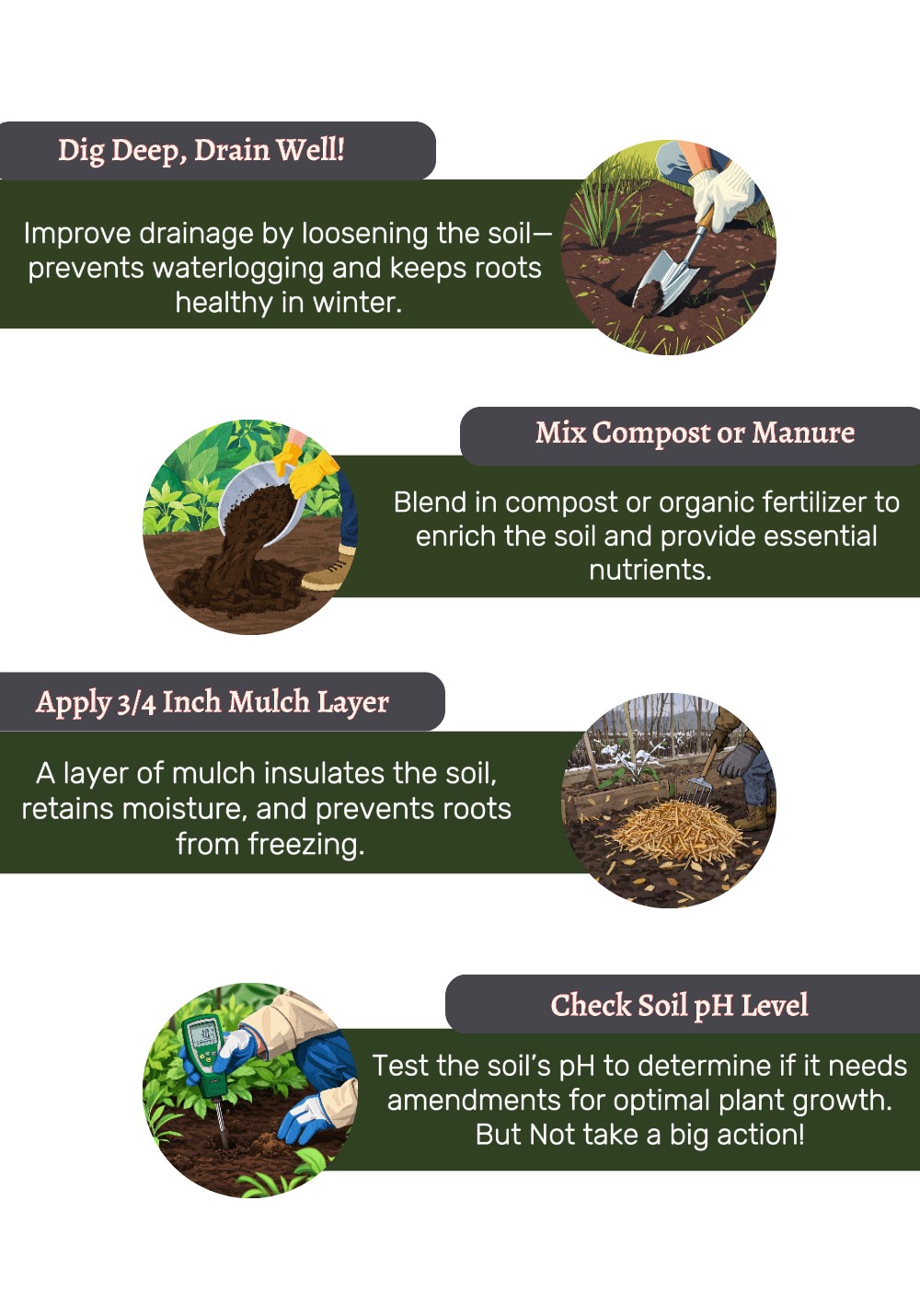
If water is stagnant anywhere in your garden soil, lightly dig it to improve drainage, but avoid too much digging. Then, mix compost or rotted manure into the soil to make it fertile and provide nutrients.
Do not add too much because it breaks down slowly in the winter. Also, use organic mulch, such as wood chips or dry leaves, to keep soil warm and preserve its quality.
Soil preparation in pots or containers:
If the potting or container soil has become too hard, instead of replacing it completely, just remove the top layer and add fresh soil and compost. And if there is extra potting soil left, store it in a safe place for reuse.
If you have bought bulk soil in winter for the spring gardening projects, storing it is very crucial to maintain its health and microbes system. Learn how to store bulk garden soil!
Prep Step 3: Make a Greenhouse and Raised Beds
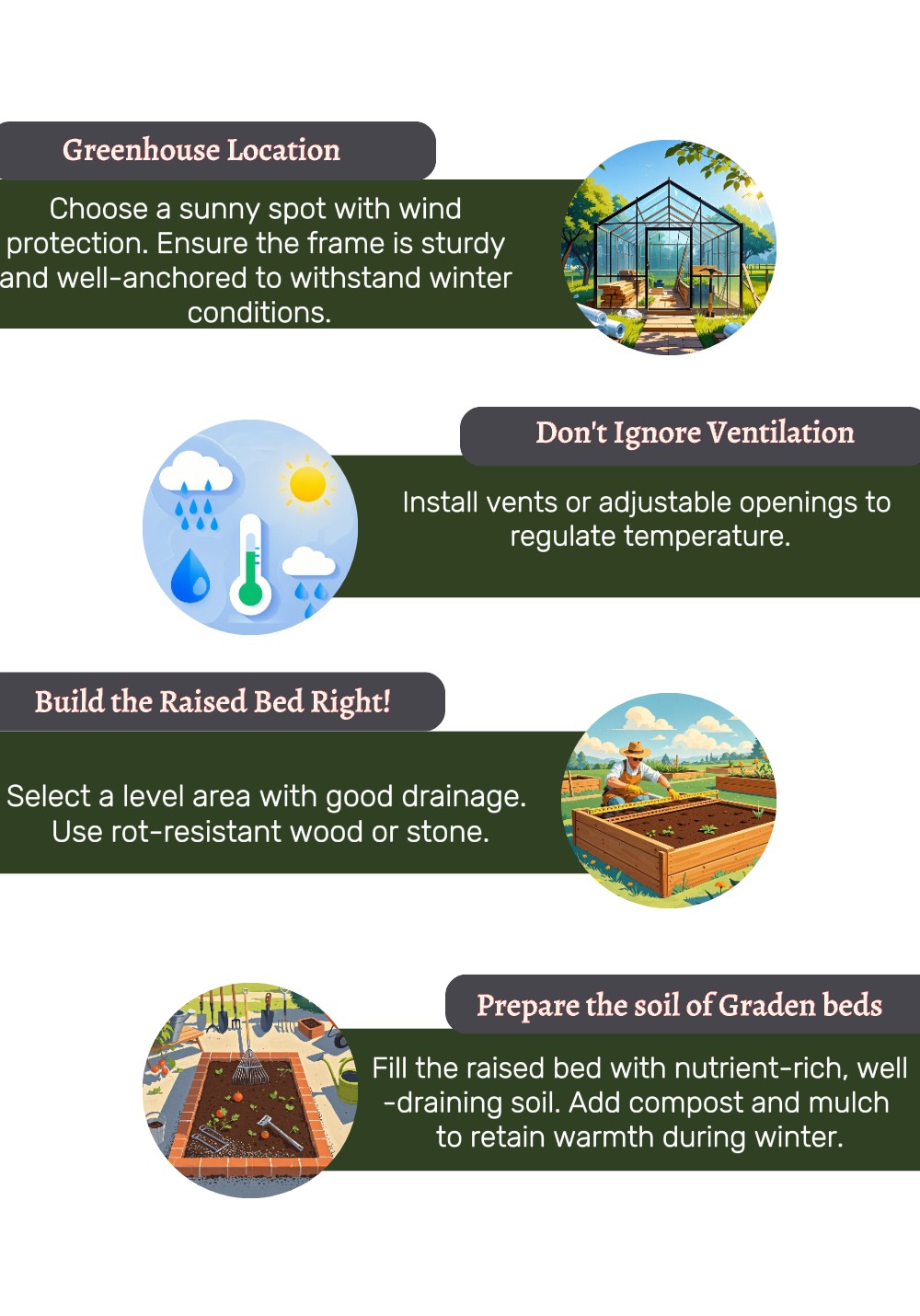
Before or during winter, you also need to manage the growth of winter crops, especially in rainy and cold areas, such as the Pacific Northwest (Washington, Oregon). Greenhouses and raised beds are effective solutions for such areas (cold and rainy).
If you already have these horticulture setups, check them and complete the necessary repairs. However, if you want a new setup of greenhouses and raised beds, get ready as soon as possible so that the soil has time to establish itself.
How to Prepare Greenhouse and Raised Bed for Winter?
Greenhouse
For a greenhouse setup, look for a place where light reaches properly. Repair its frame so that it can withstand strong winds and snow.
If you are in cold areas, use insulation sheets or transparent plastic. Also, keep some windows open for ventilation to control air and humidity.
As soon as you start planting winter crops in the greenhouse, create an ideal growing environment inside it.
The alternative of a Greenhouse: Build a small polytunnel or cold frame, an easy and budget-friendly solution to protect plants from the cold.
Raised Beds
For a raised bed setup, choose a place where water does not accumulate. Keep them 6 to 8 inches above the ground to protect plant roots from rot disease.
Use wood, brick, or other sustainable materials to build raised beds to keep them strong and long-lasting. Also, ensure a proper drainage system in a raised bed to avoid water accumulation during rainfall.
Prepare the soil in advance for winter crops in the raised bed so you can start planting as soon as winter arrives. Move to the soil preparation!
Prep Step 4: Plant Winter Crops
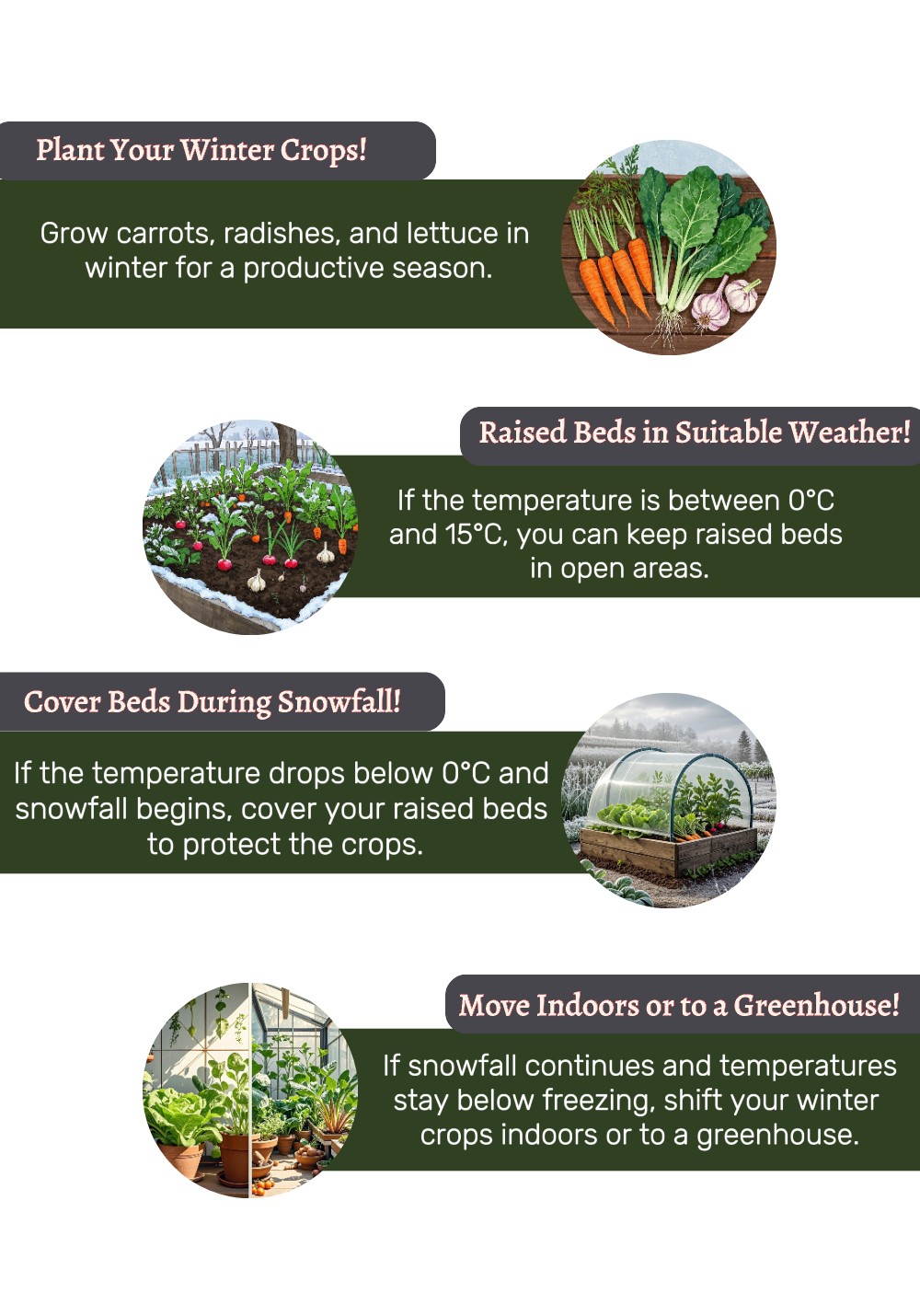
Beyond knowing how to prepare the garden for winter, also plant winter crops to take advantage of this cold season, so your garden stays evergreen year-round.
Winter crops, such as carrots, garlic, spinach, lettuce, and radish, can be easily planted in open gardens, greenhouses, or cover beds, depending on the local climate conditions.
Here are detailed growing guides on the following winter crops;
Follow these considerations before planting winter crops.
- Adjust the location for planting winter crops according to your local weather intensity.
- Consider the minimum temperature range! Outdoor space is perfect when the temperature is above 0C.
- If the sun rises occasionally during winter, use raised beds so plants can get natural sunlight.
- During intense cold, cover them with a floating row cover, poly sheet, or cold frame, especially if the garden beds are filled with sensitive plants.
- However, if the temperature continues dropping to -9C, a greenhouse or indoor setup will be an effective solution.
- Remember to use a mulch layer around winter crops.
- Building garden beds indoors is also the best option if the snowfall is heavy.
Always try to plant crops that can tolerate intense cold, such as;
| Crop Name | Minimum Temperature Tolerance (°C / °F) |
| Garlic | -18°C / 0°F |
| Spinach | -18°C / 0°F |
| Kale | -18°C / 0°F |
| Onions | -18°C / 0°F |
| Carrots | -9°C / 15°F |
| Beetroot | -9°C / 15°F |
| Broccoli | -12°C / 10°F |
| Cabbage | -12°C / 10°F |
| Cauliflower | -12°C / 10°F |
| Leeks | -18°C / 0°F |
| Parsnips | -18°C / 0°F |
| Radishes | -12°C / 10°F |
| Turnips | -12°C / 10°F |
| Brussels Sprouts | -12°C / 10°F |
| Lettuce | -9°C / 15°F |
| Peas | -9°C / 15°F |
| Chard | -9°C / 15°F |
| Rutabaga | -7°C / 20°F |
| Silverbeet | -12°C / 10°F |
| Spinach | -18°C / 0°F |
The key step of how to prepare the garden for winter includes managing the water system. Here’s how to prepare an irrigation system for winter.
Grow More Plants through their Vegetative Parts!
Growing new plants through cutting propagation seems a tough process. Right? But it is possible, you just need to provide an ideal environment for them during winter.
Hardwood cutting is considered more effective for winter than other cutting types. This method usually happens from late fall to late winter, and works in the spring.
Winter season is considered best time to take hardwood cutting of most trees and shrubs, including figs, willow, lilac, blackberry, roseberry, and forsythia.
Winter Plant Care: Watering, Fertilizing, and Pests or Disease
Watering
Water excess or deficiency is harmful to plants during winter. Too much water causes root rot, while little water weakens the plant, especially vegetables with roots.
It is better to water the plant in the afternoon, but before, check the soil condition. In rainy areas, water carefully. If it is a dry area, keep checking the soil moisture.
Apart from this, the use of mulch also makes a big positive difference in maintaining soil moisture. Here are 4 signs that will help you know whether your plant really needs water or not.
Fertilizing
Vegetable growth slows down in winter, and over-fertilizing can be detrimental. Over-fertilizing root vegetables like carrots and radishes will only grow leaves, but the roots will remain weak.
Therefore, it is important to provide a balanced fertilizer that is low in nitrogen and high in potassium so that the roots become strong. If the soil is already fertile, additional fertilizer is not needed.
However, natural fertilizers like compost or rotted manure can provide nutrients slowly and work better in winter.
Winter Pests and Diseases
Even in winter, some pests can attack plants, especially aphids, and slugs, which damage the leaves by eating them. High humidity can also lead to fungal and root diseases.
The solution is a spray of neem oil or soapy water, which keeps the insects under control. It is important to keep the plants at a proper distance so that there is good airflow and the humidity is not too high.
If the temperature is very low at night, it is beneficial to cover the plants with a row cover. After rain, also, check the plants like cabbage and lettuce to avoid mildew.
Step 5: Protect the Whole Gardens During Winter?
After preparing the garden for winter, as winter starts, think about the protection of sensitive plants, including trees, shrubs, and perennials.
Move pots and container plants indoors! Depending on the frost intensity, plants already established in open garden soil require more protection.
So, let’s move to protect the garden during winter to prepare the whole garden for the next growing season (spring and summer).
Basic Tips to Protect Sensitive Plants from frost
Mulching
Mulch acts as a blanket for the soil, especially during the winter. Mulch for winter, such as straw, dried leaves, wood shavings, and wood chips protects the soil from sudden freezing, retains moisture, and preserves the roots from extreme cold.
In severe winters, apply a mulch layer of about 4 to 6 inches thick, while in mild winters, 2 to 3 inches is sufficient.
If the sunlight starts to increase, it is necessary to remove the mulch so that the soil does not absorb too much moisture and the roots can avoid rotting.
If the cold weather persists and snow begins to fall, keep the mulch in place, but remove it in spring.
Frost Cloth or Sheet
Use sheet or frost cover treatment during heavy snowfall and cold winds, if the temperature drops too much at night, cover the plants with a plastic sheet or frost cover.
- Row Cover → Vegetables, Strawberries
- Cold frame → Potted Plants, Seedlings
- Plastic Sheet → Fruit Trees, Shrubs
- Floating Row Cover → Herbs, Root Crops
- Garden Fleece → Vegetables, Berries
- Heavy frost Cloth → Trees, Bushes
When the sun is shining during the day, remove the covering material. The vegetables and newly planted flowers are more sensitive and should be covered more.
In outdoor beds, place the cover directly on the ground, while for potted plants, wrap it tightly around the plant to protect the roots and leaves, or move potted plants indoors.
Wind Protection
If you have an open garden, use a jute or wood breaker to reduce the intensity of the winds and erect a wooden or mesh barrier around large trees or shrubs to reduce winter intensity.
If the wind continues to blow, move potted plants to a safer place to prevent them from breaking or drying out.
Moving Indoor
Moving sensitive plants indoors is another effective solution to protect them, especially potted plants. Low indoor temperatures may affect tropical and some tender plants, so use LED grow lights.
Furthermore, when temperatures moderate, allow plants to adjust in the open air before being placed back outside to protect them from sudden shock of temperature.
How to Prepare Vegetable Garden For Winter?
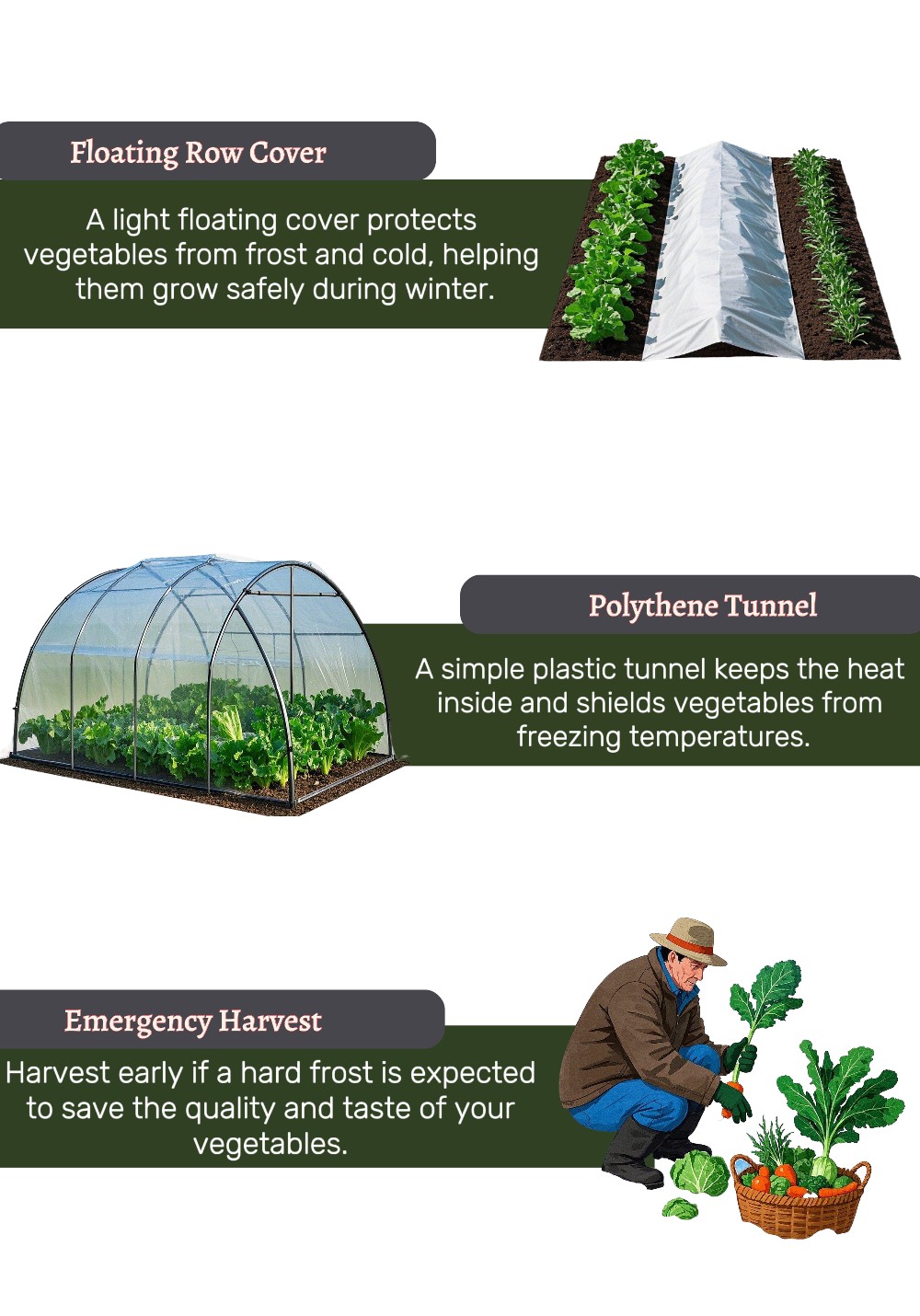
By the way, you can easily protect your vegetables planted in pots or containers by shifting them indoors. However, additional protection is needed for outdoor delicate vegetables during intense frost.
A floating row cover is especially great for row-grown vegetables. It is a lightweight cloth, that is laid directly on the vegetables, it protects them from frost and wind. It is better to remove it during the day so that it can get air and light. Yes, if it is snowing, then you can leave it.
Polythene tunnels are more effective for growing vegetables despite the cold because they not only prevent heat but also control rainwater, decreasing the risk of root rot. They create a warm environment around the vegetables, but it is important to control the humidity inside.
Harvest leafy vegetables (lettuce and spinach) immediately to protect them from snow. However, vegetables with roots (radish and carrot)can be preserved through a thick layer of mulch.
How to Protect Flowers From Winter?
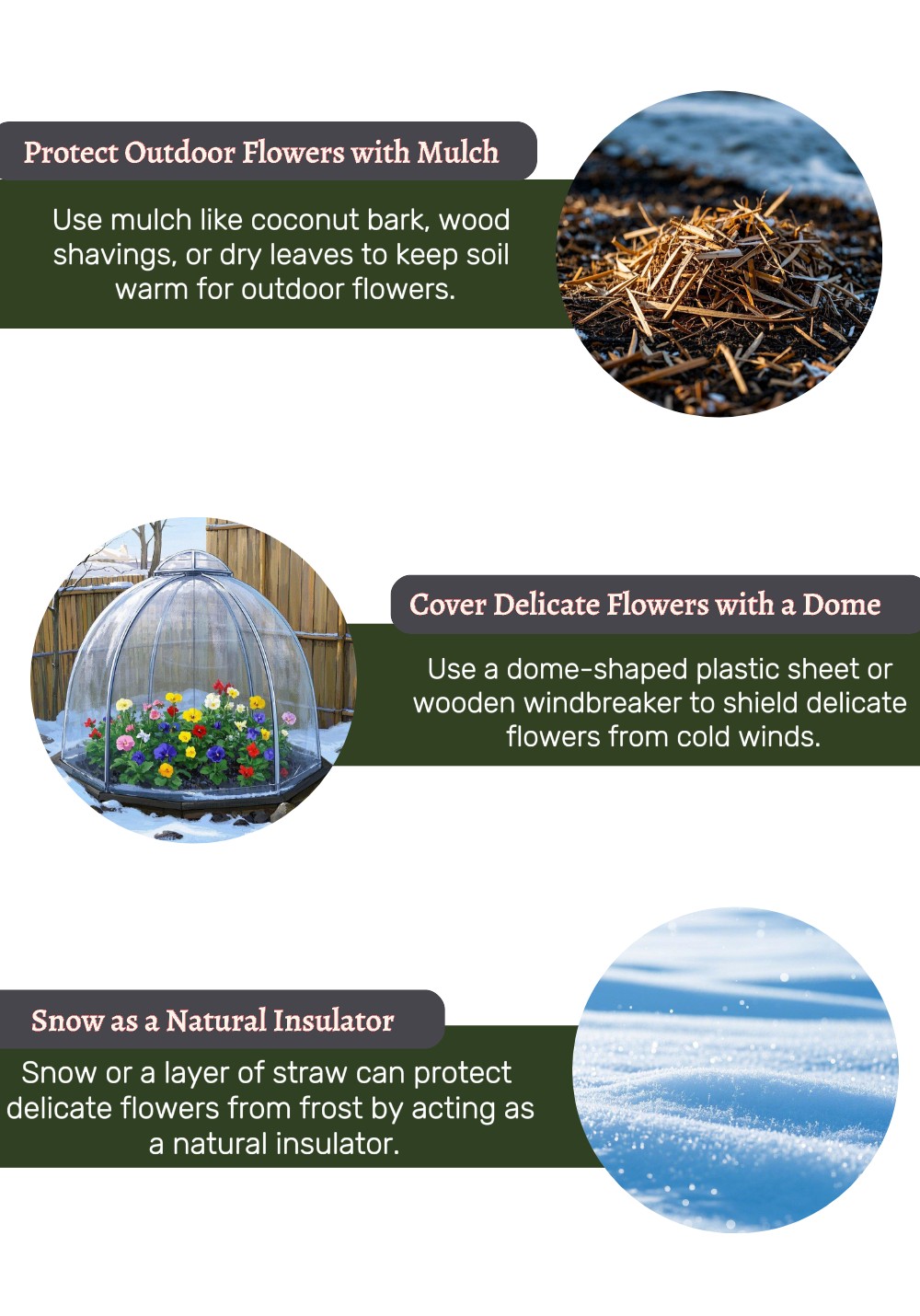
Flowers planted in containers or pots, such as Orchids and Geraniums should be moved indoors in a lighted place.
However, for flowers that have been established in outdoor soil, especially perennials, such as Chrysanthemum and Tulips, heavy mulch (coconut bark, wood shavings, or thick layer of dry leaves) are effective solution.
Use a dome-shaped sheet of clear plastic or windbreakers (wooden or bamboo wall) to protect delicate flowers, such as Pansies and Begonias during cold.
Do You Know? Snow can work as an insulator for some delicate flowers, such as Hellebores and Snowdrops. It naturally protects such plants from below and shields the roots from severe frost. Therefore, if there is no natural snow and a risk of severe frost exists, it will be useful to cover the plants with a light layer of straw or dry leaves.
How to Protect Perennials from Winter?
There are some specific considerations to protect perennials from cold because their roots remain under the soil for more than 2 years. If not cared perennials properly during winter, their growth slows down for the upcoming growing season.
Common perennials like Delphinium and Peony take benefit from a heavy mulch (a thick layer of straw, dry leaves, and bark).
Some delicate perennials, such as Lavender and Rosemary may require a frost blanket or strong frost cloth to shield them during chilly winds or snowfall.
As we have already discussed above, soil works natural insulator for some perennials, such as Hellebores and Snowdrops which a flowering perennials, and stay safe under the snow.
How to Protect Wildflowers from Winter?
Wildflowers are generally hardy, but some sensitive species require winter protection. To protect wildflowers over winter, applying mulch with ash, natural grass mulch, and burying seeds in the ground are all useful methods.
Some wildflowers, such as Milkweed, Lupine, and Bluebonnet drop seeds in the winter, are buried in the snow or ground, and grow again in spring.
Let these seeds grow on their own so that they can undergo natural “cold stratification” and become more powerful in the spring.
Apart from this, such wildflowers also grow only after enduring severe cold, so planting them in late autumn or winter would be the best strategy.
Final Thoughts: How to Prepare Garden For Winter
How to prepare the garden for winter is not just a question but a gardener’s wisdom and dedication. Gardeners are already on the right path, who know and feel how and why to prepare the garden before winter.
The whole process includes learning which plant requires more attention, whether it is vegetables, flowers, perennials, or wildflowers, for each, mulch, protective cloth, less water, and tricks like natural snow have distinct and different importance.
So, if you prepare your garden for winter at the right time, your garden will not only be safe but will also return green, fresh, and beautiful in spring. Don’t delay and start now (fall or early winter).