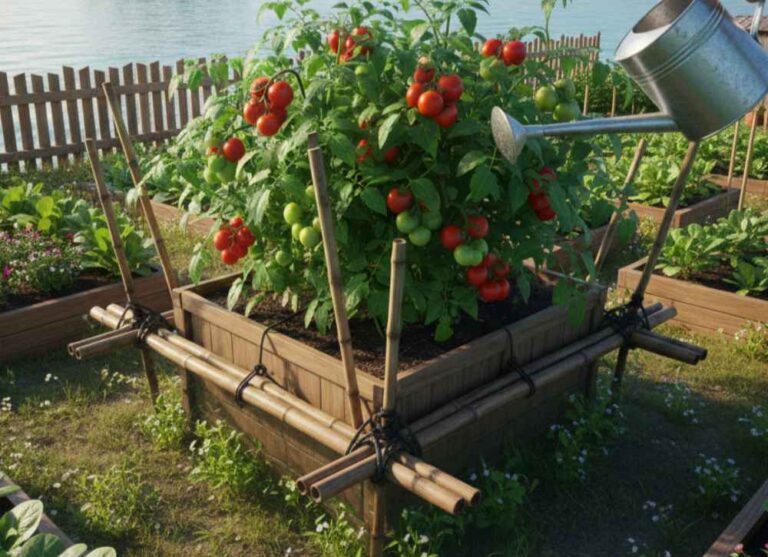
It is a common mistake to see a drooping tomato plant and immediately reach for the watering can. However, when a tomato plant is overwatered, it begins to drown because the roots can no longer breathe.
The most obvious sign is a plant that looks limp and heavy even though the soil is completely saturated. Unlike a thirsty plant that feels brittle, these leaves will feel soft, mushy, and may develop small water blisters.
You will notice the foliage turning a pale yellow, usually starting at the bottom and moving upward. As the roots struggle, the stems lose their strength and begin to sag under their own weight.
In containers, the lack of space means water pools quickly, leading to rapid wilting if drainage is poor. In garden soil, heavy rains often cause yellow spotting and stalled growth as the roots sit in stagnant water.
While it is true that a tomato likes more water than most garden plants, knowing the signs of excess moisture is the only way to protect your future harvest.
By understanding what does an overwatered tomato plant look like, you can quickly identify the damage and see what will happen after that if the roots continue to drown.
- What Do Overwatered Tomato Roots Look Like
- What Do Overwatered Tomato Seedlings Look Like
- What Do Overwatered Tomato Leaves Look Like
- What Do Overwatered Tomato Stems Look Like
- What Do Overwatered Tomato Flowers Look Like
- What Do Overwatered Tomato Fruit Look Like
- How Do You Know If You Are Overwatering Tomatoes? Practical Signs You Are Overwatering Tomato Plants
What Do Overwatered Tomato Roots Look Like
To see what’s really going on, you’ll need to take a peek under the surface, which is easy to do by gently tilting the plant out of its pot or carefully digging near the base with a trowel.
Healthy roots should be bright white and firm, but if you’ve been overwatering, you’re going to see a very different and much messier picture.
Here is what you should look for when checking those roots:
- Color Changes: Instead of a healthy white, the roots will look dark brown or even black as they start to die off.
- Texture: The roots will feel limp, mushy, or slimy to the touch rather than having a nice, “crunchy” firmness.
- Structural Failure: Because the tissue is decaying, the root mass might literally fall apart in your hands or break away from the tomato plant.
- The Smell Test: In severe cases of rot, the soil and roots will give off a foul, swampy odor that is hard to miss.
Presentation of gnats larvae: When the soil stays wet, gnats around plants lay their larvae in damp soil, especially near rotting roots. These larvae are harmful to plants because they feed on decaying material and can damage healthy tomato roots. Here’s how to get rid of gnats in plants.
It’s a confusing situation because your tomato looks thirsty and starts to droop, making you want to grab the hose. In reality, the roots are so waterlogged that they’ve actually stopped working and can’t “drink” anymore.
What Do Overwatered Tomato Seedlings Look Like
When it comes to baby tomato seedlings, things happen fast because their tiny systems are much more delicate than a full-grown tomato plant.
If you’ve accidentally flooded your seedling trays, the first thing you’ll notice is the little guys collapsing or wilting, even though their soil is still soaking wet.
To figure out if your seedlings are struggling, keep an eye out for these specific signs:
- Soft Leaf Curling: The tender new leaves will start to curl inward and droop, feeling soft to the touch rather than firm and upright.
- Stalled Growth: If your “babies” simply stop getting taller and look stuck in time, their roots have likely stopped functioning due to the extra water.
- The “Damping-Off” Effect: This is the most dangerous sign, where the stems shrivel right at the soil line, causing the seedling to topple over and die.
- Color Fading: You might see the leaves turn a pale, washed-out green or yellow before they even have a chance to mature.
Checking on your little tomato plants is easy, just look at where the stem meets the dirt. If that spot looks pinched or the soil feels like a wet sponge, your seedlings are likely drowning.
Actually, their tiny roots just aren’t strong enough to handle all that extra moisture before they’ve had a chance to get settled.
What Do Overwatered Tomato Leaves Look Like
When you look at the leaves of an overwatered tomato, they tell a very specific story. While you might expect them to look “full” from all that water, they actually end up looking tired, pale, and weak.
Here is a quick checklist of what to look for on the foliage:
- The Color Fade: You’ll usually see the bottom leaves turn yellow first. This happens because the roots are too drowned to send up the nutrients the leaves need to stay green.
- The “Soft Wilt”: The leaves will droop and sag, but they won’t feel crunchy. If you touch them, they feel soft and limp, which is the big giveaway that there is too much water.
- Downward Curling: Instead of reaching for the sun, the leaves will often curl under or fold downward. It’s the plant’s way of reacting to the fact that its roots can’t find any air.
- Water Blisters (Edema): You might see tiny bumps or “pimples” on the leaves. These are actually little blisters where the tomato plant tried to store too much water and the cells literally burst.
- Spots and Mold: If the leaves stay wet for too long, you might notice yellow or brown spots forming, or even a bit of green algae growing on the soil surface.
Basically, if the leaves look pale, feel soft, and are curling toward the ground while the dirt is still wet, your tomato plant is definitely struggling with too much moisture.
What Do Overwatered Tomato Stems Look Like
When looking at a struggling tomato plant, don’t forget to check the main support structure: the stem. Healthy stems should feel strong and rigid, but overwatering can quickly turn them into a spongy mess.
Here is what to look for when inspecting the stems:
- Weak and Limp: The main stem might droop or sag, unable to hold the tomato plant up. If you give it a gentle squeeze near the bottom, it will feel soft or spongy, full of excess water.
- Discoloration at the Base: The area right where the stem meets the soil is crucial. Constant dampness can cause it to turn brown, darken, or even grow a white/green crust of algae or mold.
- Actual Stem Rot: In very advanced cases, the tissue at the base will feel like mush. If you were to cut into it, you would find rotten, brown material inside because the stem has started to decay.
What Do Overwatered Tomato Flowers Look Like
When a tomato plant is struggling with too much water, it basically goes into survival mode and stops thinking about making fruit. Since the roots are working so hard just to stay alive, the tomato plant decides it doesn’t have the energy to spare for flowers.
If you’re wondering why your plant isn’t blooming like it should, look for these signs:
- Missing Blossoms: You might notice your tomatoes is all green leaves and no flowers. When the roots are swollen and waterlogged, the tomato plant often puts a “total halt” on growing new buds.
- Flower Drop: Even if the tomato plant manages to grow a few flowers, they might just fall off before they ever turn into tomatoes. This happens because the tomato plant is too stressed and overwhelmed by the moisture to keep them attached.
- Wilted Buds: Any flowers that do show up might look weak, pale, or wilted instead of bright and open.
What Do Overwatered Tomato Fruit Look Like
When your tomato plant finally starts producing fruit, overwatering can quickly ruin the harvest you’ve been waiting for. Instead of those perfect, shiny tomatoes, you’ll start seeing some pretty obvious physical damage as the tomato plant tries to handle all that extra liquid.
Here is what happens to the fruit when the tomato plant has had too much to drink:
- Cracking and Splitting: This is the most common sign. When the tomato plant sucks up too much water too fast, the inside of the tomato grows quicker than the skin can stretch, causing it to literally pop and crack open.
- Blossom-End Rot: You might notice a sunken, black, leathery spot right on the bottom of your tomatoes. Because the roots are drowning, they can’t move calcium through the tomato plant properly, which causes the base of the fruit to actually die off.
- Bland Flavor: If your tomatoes seem watery or tasteless, it’s likely because the excess water has diluted all those delicious sugars and acids that give a tomato its “kick.”
- Slow Ripening: You might see green tomatoes just sitting there for weeks without changing color. When the vine is stressed by water, it stops focusing on ripening and just tries to stay alive.
Basically, if your fruit looks misshapen, has black spots on the bottom, or is covered in cracks, the tomato plant is telling you it’s overwhelmed. It’s a sad sight, but these blemishes are the clearest evidence that the roots are struggling with too much moisture.
How Do You Know If You Are Overwatering Tomatoes? Practical Signs You Are Overwatering Tomato Plants
To figure out if you are giving too much water to your tomato plants, you need to look at the environment around them. It is often a mix of small clues that confirm your tomato is actually drowning rather than thirsty.
Here is how you can tell if your watering habits have gone too far:
- Soggy Soil: The soil stays wet or looks like a swamp long after you finish watering.
- The Wilting Trick: Your tomato plant looks slumped over, but the soil still feels damp to the touch.
- Bad Smells: You notice a sour or musty odor coming from the dirt, which means there is no air left.
- Surface Growth: Green algae or white mold starts growing on top of the soil or the edges of the pot.
- Tiny Flies: You see little black gnats buzzing around the base, as they love breeding in wet mud.
- Fruit Cracks: Your tomatoes are splitting open or developing dark, leathery spots on the bottom.
According to the experts at Utopia, if your leaves are wilting while the soil is moist, the problem is almost certainly too much water. Catching these signs early is the best way to change your routine and save your harvest.
More About Tomatoes in Different CLIMATE
Tomato planting time and water requirements vary significantly based on your area and regional climate. That’s why GardenChains has provided detailed planting guides tailored to your local environment.
If you live in one of these regions and want to know the best time to start your tomatoes and how to manage them, these guides are for you: