Trench layering is considered one of the most effective vegetative propagation techniques used by gardeners and horticulturists. Multiple new plants can be produced from a single parent plant through this method.
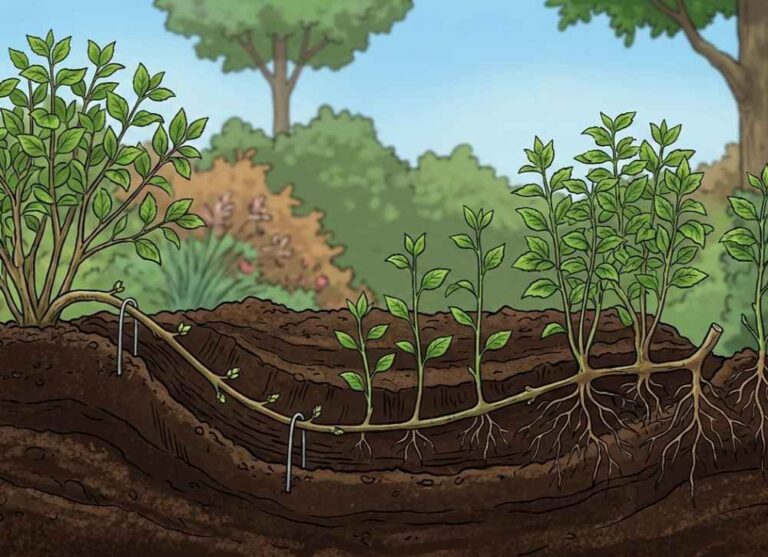
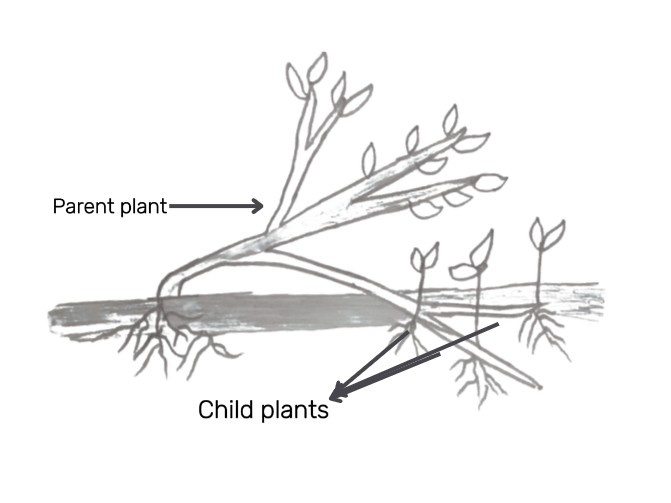
In this technique, a portion of a stem or branch is buried in a trench while it remains attached to the parent plant. Roots and shoots develop from the buried section, and independent plants eventually form.
This layering propagation method has been practiced for centuries because it utilizes the plant’s natural ability to produce adventitious roots. Water and nutrients are continuously supplied to the developing stems by the parent plant throughout the rooting process.
How to Use Trench Layering Propagation for New Plant Growth
Step 1) Select the Parent Plant
A healthy and vigorous parent plant should be selected for trench layering. The plant must be free from diseases and pests to ensure successful propagation.
Plants that are one to three years old are typically preferred for this technique. Flexible stems are required, so young but well-established plants are considered ideal.
Step 2) Prepare the Parent Plant (Stooling)
During the dormant season, the parent plant should be cut back to within 2.5 to 5 centimeters of the ground. This process is called stooling, and multiple vigorous shoots are encouraged to grow from the base.
Late winter or early spring is considered the best time for this preparation. Strong and flexible new growth is produced when the plant is cut back properly.
Step 3) Allow New Shoots to Develop
The new shoots should be allowed to grow throughout spring and into early summer. A length of approximately 30 to 60 centimeters should be achieved before layering.
Flexibility is required in the shoots so they can be bent without breaking. Patience is essential during this growth phase for optimal results.
Step 4) Dig the Trench
A shallow trench should be dug approximately 5 to 10 centimeters deep near the parent plant. The trench must be extended outward from the base to accommodate the shoots.
Loose, well-draining soil should be provided at the bottom of the trench. Proper drainage is considered essential for root development.
Step 5) Lay the Shoots in the Trench
The selected shoots should be gently bent down into the trench in a horizontal position. Wire pins or landscape staples can be used to hold the shoots firmly in place.
The shoots must remain attached to the parent plant at their base. This connection is maintained so nutrients continue to be supplied during rooting.
Step 6) Cover with Soil
The shoots should be covered with soil, with the tips left exposed or allowed to emerge naturally. The buried portions are kept in darkness to trigger root formation.
Adventitious roots are formed at nodes along the buried stem when light is blocked. This darkness-induced rooting is considered a key principle of trench layering.
Step 7) Maintain Moisture and Add Soil
The soil should be kept consistently moist but not waterlogged throughout the growing season. As new vertical shoots emerge, additional soil should be mounded around them.
This process is called hilling, and it encourages more roots to form along the developing shoots. Regular attention is required to ensure proper moisture levels.
Step 8) Separate and Transplant
After one full growing season, the layered shoots develop independent root systems. The buried stem should be carefully uncovered in late autumn or early spring.
Each rooted shoot should be cut and separated from the original stem. The new plants can then be transplanted to their permanent locations immediately.
Common Uses and Examples of Trench Layering
Commercial Rootstock Production
Trench layering is widely used to produce clonal rootstocks for fruit trees. Apple rootstocks such as M9, M26, and MM106 are commonly propagated using this method.
Thousands of genetically identical rootstocks can be produced from a single mother plant by nurseries. These rootstocks are then used for grafting commercial fruit varieties.
Propagation of Difficult-to-Root Species
Woody ornamental plants that resist other propagation methods are often propagated through trench layering. A continuous nutrient supply is provided by the parent plant while roots are being developed.
This technique is considered especially valuable for rare or valuable specimen plants. Higher propagation success is achieved compared to traditional cutting methods.
Hedge and Windbreak Establishment
Dense hedges and windbreaks are often created by gardeners and landscapers using trench layering. Plants such as hazel, willow, and privet can be easily propagated using this technique.
Multiple new plants can be produced quickly and economically using this method. Costs are significantly reduced when long hedge rows are established.
Preservation of Heritage Varieties
Old or heritage plant varieties are often preserved through trench layering. This technique produces clones that are genetically identical to the parent plant.
The exact characteristics of valuable heirloom cultivars can be maintained using this method. Genetic variations that might occur through seed propagation are avoided.
Home Garden Propagation
Favorite plants can be multiplied by amateur gardeners without specialized equipment. No rooting hormones, misting systems, or controlled environments are required for this technique.
Basic gardening tools and patience are the only requirements for success. This accessibility is considered one of the main advantages of trench layering.
Plants That Can Be Propagated by Trench Layering
Fruit Tree Rootstocks
Apple rootstocks, including M9, M26, MM106, and MM111, are commonly propagated using trench layering. Dwarfing and semi-dwarfing varieties are produced through this method.
Pear rootstocks based on Quince A and Quince C are also propagated this way. Plum and cherry rootstocks such as St. Julien A and Colt are similarly reproduced.
Deciduous Shrubs
Hazel, both ornamental and nut-producing varieties, is easily propagated through trench layering. Gooseberry and currant plants, including black, red, and white varieties, are also suitable.
Forsythia and dogwood, including red-twig and yellow-twig varieties, respond well to this technique. Privet and spirea are commonly propagated for hedging and ornamental purposes.
Ornamental Trees
Willow species, including weeping willows, can be successfully propagated through trench layering. Poplar varieties such as Lombardy poplar are also reproduced through this method.
Linden and magnolia, particularly deciduous varieties, can be propagated this way. These trees are valued for their ornamental qualities in landscapes.
Climbing and Vining Plants
Grape vines, both wine and table varieties, are commonly propagated through trench layering. Kiwi plants, including hardy and fuzzy varieties, are also suitable for this technique.
Wisteria and honeysuckle, popular climbing ornamentals, respond well to this method. These vining plants develop strong root systems when trench-layered.
Other Notable Plants
Cotoneaster, elderberry, and smokebush are successfully propagated using trench layering. Purple-leaved cultivars of smokebush are particularly valued for propagation.
Viburnum species, especially deciduous varieties, are also commonly reproduced this way. A wide range of woody plants can be multiplied using this reliable technique.
Grid
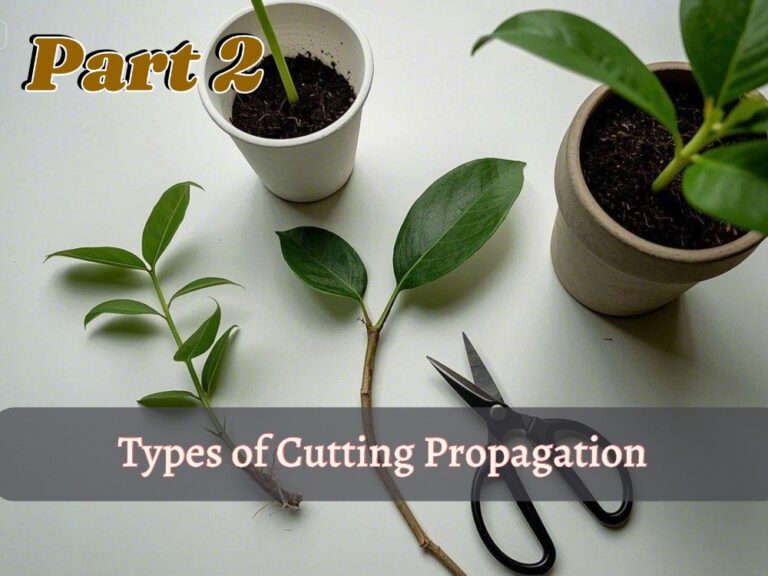
Part 2: Types of Cutting Propagation: Garden Chains

How to Check Plant Ability for Cutting Propagation

Part 1: What is Cutting Propagation: A Vegetative Propagation

What is the Ideal Environment for Cutting Propagation?

Layering Propagation with 6 Incredible Types (Images)