Gardening in East Texas feels like being in a completely different world compared to the rest of the state. While gardeners in North Texas deal with dry winds and sudden ice storms, those in East Texas enjoy thick forests and more rainfall throughout the year.
According to the 2023 USDA Plant Hardiness Map for the Texas growing season, East Texas has become warmer, now mostly in Zone 8 or 9.
This means that while the area remains humid and green, summers are stretching longer, and winters are becoming even gentler than before.
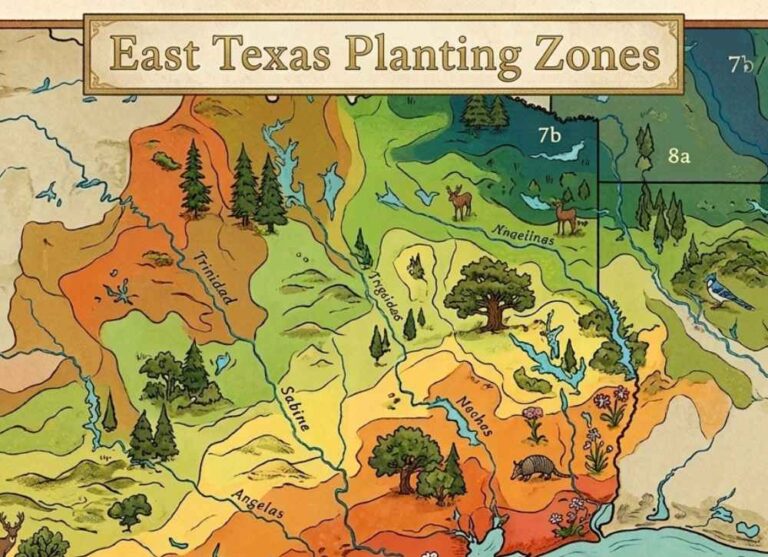
The Humid Zones of East Texas: 8a, 8b, and 9a
East Texas is divided into three planting zones that indicate how cold it gets during the winter months. These zones, which are 8a, 8b, and 9a, are heavily influenced by the warm, moist air that blows in from the Gulf of Mexico.
Much like the weather in Houston, the air in East Texas feels very heavy because it holds so much moisture. This high humidity is wonderful for plants that love water and wet conditions, but it can also lead to more insect problems and fungal diseases if you are not careful.
Another helpful feature of this region is the large number of trees. These forests act like a natural blanket, keeping the ground a bit warmer and more sheltered than the wide-open prairies found near Dallas.
Gardening in the Piney Woods: Zone 8a and 8b
The northern and central parts of East Texas, including cities such as Tyler, Longview, and Texarkana, are in Zone 8. In Zone 8a, the coldest winter temperatures usually range from 10°F to 15°F.
In Zone 8b, winter lows stay a little warmer, ranging from 15°F to 20°F. The soil in this area is the well-known East Texas Red Dirt. It has a sandy texture and contains a lot of iron, which gives it a reddish-orange color.
This soil is naturally acidic, unlike the rocky, limestone-rich ground found around Austin. This makes the Piney Woods region a perfect place to grow plants that do not like lime in the soil, such as azaleas, camellias, and blueberries.
These plants thrive in sandy soil because their roots can spread easily through it, and the generous rainfall keeps them healthy and happy year-round.
The Subtropical Fringe: Zone 9a
As you travel toward the southern edge of East Texas, near cities like Beaumont and Lufkin, you enter Zone 9a. In these areas, the winters are very mild, with temperatures rarely dropping below 20°F to 25°F.
The climate here feels somewhat similar to San Antonio’s, but with much more rainfall year-round. The soil stays very moist due to the high rainfall, which can exceed 50 inches annually.
Because it stays so warm and wet for most of the year, you can successfully grow tropical-looking plants like elephant ears, hibiscus, and even some types of palm trees. The biggest challenge for gardeners in Zone 9a is mold and mildew that can develop on plant leaves, as the air holds so much moisture.
Success in the Green East
The secret to growing a beautiful garden in East Texas is learning how to manage all that moisture. Since the last frost of spring usually passes by mid to late March, you have a very long growing season to enjoy your favorite vegetables and flowers.
Because the soil is sandy, it does not hold onto nutrients as well as clay soil does. This means adding plenty of organic compost to your garden beds is very important to keep your plants well-fed and healthy.
Because of high humidity, space plants to improve airflow and keep leaves dry, preventing disease.
If you focus on growing acid-loving plants and keep a close watch for pests, your East Texas garden can become one of the lushest and greenest spots anywhere in the state.