Central Texas is often referred to as the heart of the state because it is where the flat plains gradually transition into beautiful rolling hills.
The landscape, climate, and soil are very different from those in North Texas, and this has a big effect on gardening.
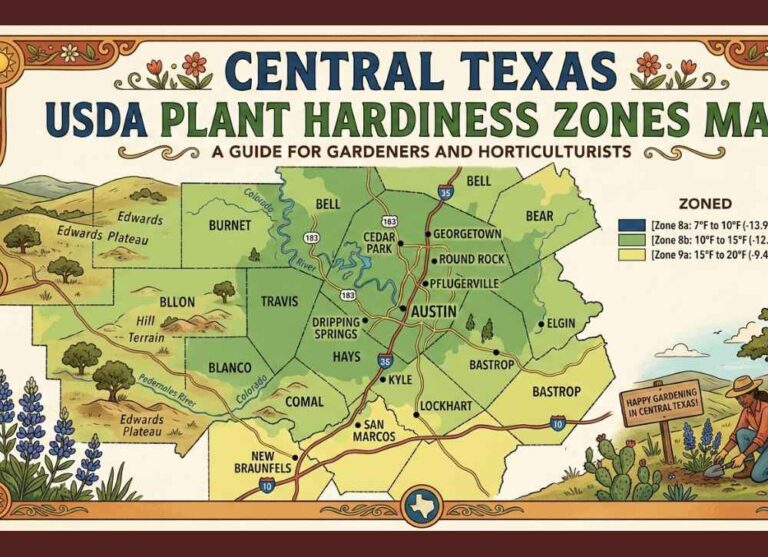
According to the latest update of the USDA Plant Hardiness Zone Map, most of Central Texas now falls into Zone 8b and Zone 9a.
This means winters are usually short and mild, while summers are long, hot, and sometimes dry. For gardeners, this creates a long growing season but also a need for heat-tolerant plants.
The Two Main Planting Zones: 8b and 9a
Central Texas sits between the colder north and the warm coastal south, so its planting zones reflect this middle position.
These zones are based on the average lowest winter temperatures.
- Zone 8b: 15°F to 20°F (−9.4°C to −6.7°C)
- Zone 9a: 20°F to 25°F (−6.7°C to −3.9°C)
Large cities like Austin create a small “heat island” effect. Roads, buildings, and concrete store warmth during the day and release it at night, which keeps urban areas slightly warmer than the surrounding countryside.
This helps protect many plants from light frost and allows gardeners to grow more heat-loving varieties.
Gardening in the Hill Country – Zone 8b
The northern and western parts of Central Texas, known as the Hill Country, mostly fall into Zone 8b.
Winters here are cool but not extreme, and temperatures usually stay between 15°F and 20°F.
The real challenge in this area is not the cold, it is the soil. The ground is often very shallow and sits on top of solid limestone rock rich in calcium carbonate, which keeps the soil alkaline and different from the drier, rockier conditions found further out in West Texas.
Because of this, water drains quickly, and plants can dry out fast.
Gardeners in this region do best with drought-tolerant and rock-loving plants.
Texas mountain laurel and red yucca are excellent choices because they naturally grow in rocky soil and need very little water once established.
Raised beds and adding organic matter can also help create better growing conditions for vegetables and flowers.
Gardening in the Warmer Areas – Zone 9a
As you move south or closer to large cities, you enter Zone 9a. Winters here are very mild, and temperatures rarely fall below 20°F to 25°F.
The growing season is long, and frost is much less common. The climate may feel slightly more humid than the Hill Country, but it is still drier than the coastal humidity found around Houston or in East Texas.
The soil in this zone is usually a mix of clay and limestone, which makes it alkaline — the opposite of the acidic soil found in East Texas, where plants like azaleas and blueberries thrive instead.
Because the weather stays warm for most of the year, gardeners can grow bright, tropical-looking plants, such as tomatoes.
Pride of Barbados and esperanza are perfect for this region because they love intense heat and continue blooming even during the hottest summer days.
Central Texas Cities and Their USDA Zones
Because “Central Texas” covers a wide area — from the Hill Country in the west to the I-35 corridor cities — the exact zone shifts from town to town. Here is a quick reference so you can pin down your own spot.
| City / Area | USDA Zone | Average Winter Low |
|---|---|---|
| Waco | 8a to 8b | 10°F to 20°F |
| Killeen | 8a | 10°F to 15°F |
| Temple | 8a to 8b | 10°F to 20°F |
| Georgetown | 8b | 15°F to 20°F |
| Round Rock | 8b | 15°F to 20°F |
| Austin | 8b to 9a | 15°F to 25°F |
| San Marcos | 8b to 9a | 15°F to 25°F |
| New Braunfels | 9a | 20°F to 25°F |
The pattern is simple: the closer you get to San Antonio and the I-35 corridor south of Austin, the milder your winters get. If your town is not listed, match it to the nearest city above.
Last Frost Date in Central Texas
In most parts of Central Texas, the average last frost happens in early March. This is the ideal time to plant warm-season vegetables, annual flowers, and other frost-sensitive plants. Planting earlier can be risky if a late cold front arrives.
For a full breakdown of frost windows across the entire state, see our guide to the Texas growing season and frost dates.
Central Texas Planting Calendar
The real reason people look up their zone is to know what to plant and when. Here is a simple seasonal guide for Zones 8a to 9a.
| Season | What to Plant |
|---|---|
| Late Winter (Jan–Feb) | Start tomatoes and peppers indoors; plant onions and potatoes outdoors as the last frost nears |
| Spring (Mar–Apr) | Beans, squash, cucumbers, corn, and warm-season herbs |
| Summer (May–Aug) | Okra, southern peas, sweet potatoes, and other true heat lovers |
| Fall (Sep–Oct) | A second round of tomatoes, lettuce, garlic, and root crops as it cools |
| Winter (Nov–Dec) | Cool-season greens, cover crops, and protecting tender perennials from cold snaps |
Because Central Texas sits in the state’s middle ground, timing your planting around both the spring frost and the peak summer heat matters just as much as picking the right zone. If you want to try planting outside these windows, our guide on what to plant in September in Texas covers the fall transition in more detail.
Simple Tips for Gardening Success in Central Texas
Soil improvement is the first step to a healthy garden. Since much of the soil is alkaline and rocky, adding compost helps plants absorb nutrients more easily and improves moisture retention.
Water management is also very important because the thin, rocky ground dries out quickly in summer. Learning to spot the obvious signs your plant needs water early can save a struggling plant before it’s too late.
A thick layer of mulch keeps the roots cool, reduces water loss, and protects the soil during days when temperatures rise above 100°F.
Choosing plants that are naturally adapted to the Texas sun makes gardening much easier.
Native and drought-tolerant plants not only survive the heat but also require less maintenance and watering.
The Secret to a Thriving Central Texas Garden
Central Texas offers a long growing season and mild winters, which is a big advantage for gardeners.
Once you understand whether you are in Zone 8b or 9a, improve your soil, and follow the frost dates, you can grow flowers, vegetables, and landscape plants almost year-round.
By working with the climate and selecting heat-loving plants, your garden can stay colorful and productive even through the hottest Texas summer.
FAQs
What USDA zone is Central Texas in?
Most of Central Texas falls in Zone 8b, with warmer pockets near Austin and San Antonio shifting into Zone 9a.
Is Austin Zone 8b or 9a?
Austin straddles both. The city’s urban heat island effect often pushes it toward the warmer end of 9a, while the surrounding countryside stays closer to 8b.
When is the last frost in Central Texas?
Typically early March, though a late cold front can still bring a light freeze into that window.
What is the hardest part of gardening in Central Texas?
Rocky, alkaline, fast-draining soil is the bigger challenge here, not the cold. Raised beds, compost, and drought-tolerant natives solve most of it.
Explore More Texas Gardening Guides
Texas Planting Zones by Region & City
| Statewide overview of Texas planting zones | Warm, tropical South Texas zones |
| Cold-snap prone North Texas zone | Humid, mild East Texas zone |
| Arid, alkaline West Texas zone | Transitional Central Texas zone |
| Zone guide for Dallas | Zone guide for Fort Worth |
| Zone guide for Houston | Zone guide for San Antonio |
| Zone guide for Austin | Full Texas growing season & frost dates |
Growing a Lawn in Texas
| Full guide to planting grass in Texas | Choosing the best grass for Texas |
| When to plant Bermuda grass | When to plant St. Augustine grass |
| When to plant Zoysia grass | When to plant Buffalo grass |
| When to plant rye grass | When grass starts growing in Texas |
| How often to water grass in Texas | When to fertilize grass in Texas |
| How to get rid of grass burrs |
Fruit Trees & Peaches in Texas
| The top fruit trees for Texas | When to plant peach seeds in Texas |
| When to plant a pear tree in Texas | When to plant fig tree cuttings in Texas |
| When peach season hits Fredericksburg | When to plant loquat seeds in Texas |
Vegetables & Herbs in Texas
| When to plant tomatoes in Texas | How often to water tomatoes in Texas |
| Is it too late to seed tomatoes in zone 9a? | When to plant lettuce in Texas |
Growing Garlic in Texas
| Full guide: when to plant garlic in Texas | Can you plant garlic in spring in Texas? |
| When to harvest garlic in Texas |