You picked a plant, bought it, put it in the ground, and it died before winter even ended. This happens a lot in Massachusetts, and most people blame the weather. But the real problem is not knowing your planting zone before you start.
Massachusetts has more than one zone. The zone in the Berkshires is very different from the zone on Cape Cod. If you plant something rated for a warmer zone in a colder part of the state, it will not survive.
The good news is that once you know your zone, picking the right plants becomes simple. According to plantingzonesbyzipcode.com, Massachusetts has 6 USDA planting zones, ranging from zone 5a to zone 7b, with average annual minimum temperatures from -20°F to 10°F. That is a big range, and it means what works in one part of the state may completely fail in another.
Knowing your zone saves you money and effort. It also means your garden actually grows instead of struggling every season.
What Is the Planting Zone for Massachusetts
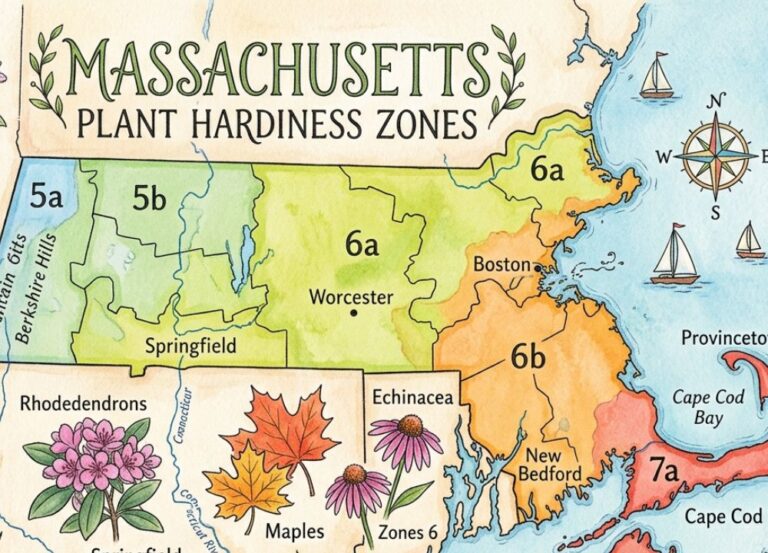
Massachusetts is not a single-zone state. According to gardenia.net, Massachusetts spans inland hills, river valleys, and a long, ocean-moderated coastline, and based on the 2023 USDA Plant Hardiness Zone Map, it ranges from zone 5a to 7b. That range is driven by elevation, distance from the ocean, and urban heat in cities like Boston.
The colder zones sit in the west, and the warmer ones run along the coast. The further east you go, and the closer you get to the Atlantic, the milder the winters tend to be.
What Planting Zone Is Massachusetts Map
The USDA releases an official map that shows every planting zone across the country, including Massachusetts. The zones in the current version were created using climate data from 1991 to 2020, which makes it more accurate than the older 2012 version that used data from a cooler period.
You can use the interactive version on the USDA website by entering your zip code. This gives you the exact zone for your address, not just a general region. It is the most reliable way to know exactly where you stand before buying any plant.
Planting Zones by Region in Massachusetts
Massachusetts covers a lot of ground for a small state. Each region has its own climate pattern, and that shows clearly in the zones. Going from west to east is almost like traveling through different growing seasons.
The biggest factor is elevation in the west and ocean influence in the east. Both shape winter lows, which is exactly what USDA zones are based on.
What Planting Zone Is Eastern Massachusetts
Eastern Massachusetts sits close to sea level and close to the Atlantic. East of Worcester and Lowell, almost to the coast, you find zone 6b nearly everywhere, with the most extreme average winter temperature falling between -5 and 0°F. The ocean plays a big role here, keeping temperatures from dropping as low as they do inland.
This zone is forgiving for a wide range of plants. Perennials, shrubs, and many fruiting plants do well here without too much winter protection.
What Planting Zone Is Western Massachusetts
Western Massachusetts is the coldest part of the state. The majority of Western Mass is in zone 5b, meaning the average lowest temperature falls between -15 and -10°F, and winter comes early and stays late compared to the rest of the state.
Gardeners here need cold-hardy plants that can handle a shorter growing season. The elevation in the Berkshires is the main reason this region stays colder than anywhere else in the state.
What Planting Zone Is Northern Massachusetts
Northern Massachusetts runs along the New Hampshire border. Greater Boston and the South Shore sit in zones 6b to 7a, but as you move north toward New Hampshire, you find more 6a mixed in. It is slightly colder than the Boston area but milder than the Berkshires.
This part of the state works well for zone 6 plants. You can grow most common perennials, vegetables, and ornamentals without much trouble.
What Planting Zone Is Southern Massachusetts
Southern Massachusetts, particularly near the coast, benefits from warmer winter temperatures. Zone 7a runs along most of the Massachusetts coastline in the southeast part of the state, with an average minimum temperature of 0 to 5°F. The proximity to the water keeps hard freezes less frequent here.
This opens up options for slightly more tender plants that would not survive further inland. South-facing spots near the coast can push conditions even a little warmer.
What Planting Zone Is Central Massachusetts
Central Massachusetts is the middle ground of the state, literally and zone-wise. Central Massachusetts is mostly zone 6a, with some 5b in the north and a hint of 6b in the south, with zone 6a clinging to the Connecticut River and cutting a warmer path north all the way to Greenfield.
It is a reliable zone for most gardeners. You can grow a solid range of vegetables, native plants, and hardy perennials through most of the year.
What Planting Zone Is South Eastern Massachusetts
Southeastern Massachusetts sits in one of the warmer corners of the state. Boston and the South Shore fall into zones 6b to 7a, with coastal cities like Quincy sitting in the same range. The closer you get to the coast, the more the ocean moderates winter cold.
Gardeners in this region can take advantage of longer frost-free periods. It is a good spot for growing plants that struggle in colder inland areas.
What Planting Zone Is South Coast of Massachusetts
The south coast stretches from New Bedford toward the Rhode Island border. The south coast of Massachusetts falls into zones 7a and 7b, some of the warmest zones in the state, where the surrounding ocean reduces temperature extremes and leads to fewer deep freezes and a longer frost-free season.
This part of the state allows for plants that are rarely seen elsewhere in Massachusetts. Gardeners here can experiment with slightly tropical or tender varieties that need mild winters to survive.
Planting Zones by City in Massachusetts
Knowing your region is a start, but city-level data is more useful for practical gardening. Urban areas, coastal spots, and inland towns all behave differently even within the same region.
Here is a closer look at some specific Massachusetts cities and what zone they actually fall in.
What Planting Zone Is Boston Massachusetts
Boston is one of the warmer cities in the state. Boston is primarily in USDA zone 6b, with average annual minimum temperatures from -5°F to 0°F, and coastal Boston neighborhoods extend into zone 7a. The urban heat island effect also bumps temperatures up slightly compared to surrounding suburbs.
This means Boston gardeners can grow plants rated for zones 6 and 7 with confidence. Many perennials, ornamental shrubs, and even some borderline tender plants do well here.
What Planting Zone Is Cape Cod Massachusetts
Cape Cod is surrounded by water on most sides, and that shows in its zone. Cape Cod falls in USDA zones 7a and 7b, where zone 7a covers most of the Cape, including Barnstable, Hyannis, Falmouth, and Sandwich, while zone 7b covers the outer Cape towns like Provincetown, Chatham, and Wellfleet.
These are the warmest zones in all of Massachusetts. Gardeners on the Cape can grow plants that would never survive the Berkshire winters, making it a unique growing environment for the state.
What Planting Zone Is Pittsfield Massachusetts
Pittsfield is located in Berkshire County, in the heart of western Massachusetts. Pittsfield sits in zone 5b, where average annual minimum temperatures range from -15°F to -10°F, making it one of the colder cities in the state.
Gardeners in Pittsfield need to choose cold-hardy varieties and plan for a shorter season. Planting too early or choosing the wrong zone rating can easily cost you an entire crop or planting.
What Planting Zone Is Hardwick, Massachusetts In
Hardwick is a small town in central Massachusetts, in Worcester County. Central Massachusetts, where Hardwick sits, is mostly zone 6a, with some 5b in the northern parts of the region. Hardwick itself sits in zone 6a based on its elevation and location in the county.
This is a solid mid-range zone with decent growing conditions. Most vegetables, perennials, and fruit trees rated for zones 5 to 6 will do well here with normal care.
FAQ’S
Does Massachusetts have one planting zone or multiple?
Massachusetts has 6 different USDA planting zones. They range from zone 5a in the western highlands to zone 7b along the outer Cape Cod and islands.
What zone is Boston in for planting?
Boston is mainly in zone 6b, with some coastal neighborhoods reaching zone 7a. Urban heat and proximity to the ocean keep winters milder than inland areas.
Which part of Massachusetts is the warmest growing zone?
The outer Cape Cod, Martha’s Vineyard, and Nantucket are in zone 7b, the warmest in the state. The ocean surrounding these areas prevents deep winter freezes.
How do I find my exact Massachusetts planting zone?
The easiest way is to enter your zip code on the official USDA Plant Hardiness Zone Map at planthardiness.ars.usda.gov. It gives you a zone specific to your address.
Has the Massachusetts planting zone changed recently?
Yes. The 2023 USDA update showed that much of Massachusetts has moved into warmer zones, with many areas shifting into zones 6a to 7a compared to where they fell on the older 2012 map. Winters have been getting milder on average across the state.