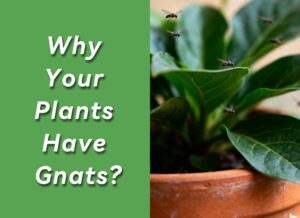
Gnats around plants or in the yard are more than just a nuisance. They thrive in moist soil and organic matter, which makes gardens and houseplants ideal homes for them.
Many plants naturally help control gnats due to their chemical composition. These plants release essential oils and airborne compounds that interfere with gnats’ perception of their surroundings, navigation, and reproduction.
Maybe you’ve used vinegar, neem oil, or baking soda to repel gnats around your plants, but there are also other natural options that repel gnats. And these options are plants themselves.
Yes! Some plants repel gnats by confusing their senses. Others reduce egg-laying in the soil. A few plants take a different approach, physically trapping and digesting gnats.
Together, these plants offer a natural, science-backed way to manage gnat problems without harsh chemicals. Before moving forward, explore here whether they are harmful to plants.
5 Most Effective Plants That Repel Gnats Naturally
1) Rosemary
Rosemary is one of the most reliable plants for repelling gnats. The leaves release strong-smelling oils that do two smart things.
First, that powerful scent drives away adult gnats by confusing their sense of smell. Second, if a gnat lands on the plant or in the nearby soil, the oils can actually harm the insect.
In fact, studies on rosemary oil prove it works in the air and on contact. Tests have shown that this oil can reduce the number of insects that survive. It even stops them from laying as many eggs.
2) Mexican Marigolds
Mexican Marigolds manage gnat populations by releasing “volatile organic compounds,” which are natural airborne chemicals that act as a deterrent.
These compounds create a distinct, pungent scent that interferes with the sensory receptors of many flying insects, causing them to actively avoid the area.
While data on gnats is limited, marigolds are scientifically recognized for discouraging a broad range of pests through the same chemical mechanism.
Their biological properties offer a reliable way to reduce insect activity in both indoor and outdoor environments.
This strong odor does more than just mask attractive scents; it creates an environment that is physically unsuitable for insects to settle or reproduce. This is why marigolds are often planted around garden borders and entry points.
3) Citronella Grass
Citronella grass is widely recognized for its insect-repelling ability. Its effectiveness comes from a combination of natural compounds released into the air.
These compounds interfere with the olfactory receptors insects use to locate moisture, food, and hosts.
Scientific research shows that citronella-related compounds remain active in the air for hours, especially in warm conditions.
When gnats cannot properly detect their surroundings, they lose orientation and leave the area.
4) Lemongrass
Lemongrass works in a very similar way to citronella grass. It releases citrus-based compounds that disrupt how insects navigate and settle.
Studies show that these compounds remain effective for several hours, which explains why lemongrass provides longer-lasting protection than many mild herbs.
In gardens, lemongrass also helps reduce insect pressure more broadly. This makes it a good companion plant near vegetables and herbs where gnats tend to gather.
5) Basil
Basil is especially effective against fungus gnats. Its essential oils have been shown to repel adult insects and reduce larval survival in soil.
This makes basil helpful not just for chasing gnats away, but for interrupting their life cycle. Gardeners often notice fewer gnats when basil is placed near houseplants.
This aligns with research showing that basil oils affect both adult insects and developing larvae.
5 Moderately Effective Plants That Repel Gnats
1) Lavender
Lavender releases aromatic compounds that many insects find overwhelming. These compounds interfere with insect sensory systems, making it harder for gnats to remain in the area.
Lavender has shown repellent effects against several small insects, which supports its role as a supportive gnat deterrent. It works best when combined with other stronger plants rather than used alone.
2) Peppermint
Peppermint produces strong vapors that act as both a repellent and irritant to insects. These vapors make it uncomfortable for gnats to remain nearby.
Research on peppermint oil shows reduced insect activity and egg-laying in multiple pest species. This explains why peppermint often works well indoors, where scents remain concentrated.
3) Spearmint
Spearmint contains compounds similar to those in peppermint, though in lower amounts. These compounds help mask soil odors that attract gnats. While it is not as strong as peppermint, it still helps reduce gnat interest.
4) Lemon Balm
Lemon balm releases citrus-scented compounds similar to citronella and lemongrass. These compounds interfere with insect navigation and feeding behavior.
Its scent confuses flying insects, making it harder for gnats to locate moist soil or organic matter.
5) Catnip
Catnip contains compounds that strongly repel not only gnats but also many insects. These compounds send a clear avoidance signal to gnats, making treated areas less attractive to them.
Catnip is widely recognized for its insect-repelling properties, which is why even small plants can reduce gnat activity.
Keep in mind that catnip is safe for humans, but cats may react strongly to it.
5 Least Effective / Supportive Plant List That Repels Gnats
1) Citrosa Geranium (Mosquito Plant)
Citrosa geranium releases repellent compounds only when its leaves are crushed or brushed. This limits its effectiveness as a passive repellent.
Research suggests its impact is much weaker than that of true citronella grass or oils. It works best as a supporting plant rather than a primary solution.
2) Bay Laurel
Bay laurel contains aromatic oils with known insect-repelling properties. These oils release slowly, which provides mild protection in enclosed spaces.
There is limited direct evidence of strong gnat control, but its chemical profile suggests some supporting benefits.
3) Sage
Sage releases volatile compounds that can deter insects, especially when leaves are bruised or dried. These compounds help mask attractive odors.
Direct evidence against gnats is limited, so sage works best alongside stronger plants.
Sage contains thujone and should be used in moderation.
4) Chrysanthemums
Chrysanthemums are known for producing natural insect-killing compounds.
However, most of these compounds remain inside the plant and are not released into the air in large amounts.
This makes living chrysanthemums less effective for active gnat control.
5) Pennyroyal
Pennyroyal has very strong repellent properties, but it also carries serious safety risks.
Its oil is highly toxic and can cause severe harm if misused. Because of this, pennyroyal is not recommended for home gnat control.
Active Control (Carnivorous) to Repel Gnats
Carnivorous plants provide direct biological control by capturing and digesting gnats. This is especially useful for fungus gnats that breed in soil.
1) Butterworts (Pinguicula)
Butterworts trap gnats using sticky leaf surfaces. Once an insect lands, it becomes stuck and is slowly digested by enzymes.
2) Sundews (Drosera)
Sundews use sticky droplets to capture insects. Their tentacles often curl around prey, increasing digestion efficiency. (eol.org)
3) Pitcher Plants
Pitcher plants lure gnats with nectar and visual cues. Insects fall into the digestive fluid and cannot escape.
4) Bladderworts (Utricularia)
Bladderworts trap tiny insects and larvae using vacuum-like bladders. They are especially effective in wet environments. (NIH, PubMed)
5) Cobra Lily (Darlingtonia californica)
Cobra lilies confuse insects with false light windows. Gnats eventually fall into the digestive fluid.
Note: these plants are sensitive and better suited for experienced growers. (KQED)
6) Venus Flytrap (Dionaea muscipula)
Venus flytraps snap shut when trigger hairs are touched. Adult gnats are easily captured and digested.
These plants use chemical signals and digestive enzymes to extract nutrients from insects, which helps them thrive in poor soil. Note: Venus flytraps require specific care and are sensitive to chemicals.
Where to Place Your Plants to Repel Gnats Effectively
Strategic placement of these plants is key because gnats usually stay close to damp soil. You should place your plants exactly where the gnats are most active.
- Follow the 12-Inch Rule: Keep repellent plants like Rosemary or Basil within 12 inches of your other houseplants to make sure the protective scent is strong enough.
- Create a Marigold Barrier: Place Marigolds in a circle around larger pots; their roots release a natural guard that stops gnats from laying eggs in the soil.
- Set Up Kill Zones: Place Sundews and Butterworts directly next to or on top of infested soil so they can catch gnats as soon as they crawl out.
Tips to Make Your Plants Stronger for Gnats Repelling
You can actually help your plants release more of their natural bug-fighting powers with just a few small changes in how you handle them.
- Brush the Leaves: Gently rub or shake the leaves of Rosemary and Basil every day to release more of their hidden oils into the air.
- Crush Lemongrass Tips: If you have Lemongrass, lightly crush the ends of the leaves during bug season to boost its citrus scent.
- Let the Soil Dry: Let the top 2 inches of soil on your repellent plants dry completely, as gnats are attracted to moisture.
- Clean Your Sundews: Regularly clear away the dry shells of old bugs from Sundews so their leaves stay sticky enough to catch new gnats.
- Water from the Bottom: Use a tray to water your plants from the bottom so the surface soil stays dry and unattractive to mother gnats.
Soil Improvements
The soil surface is where gnats live and breed. Changing the soil texture can prevent them from ever getting started.
- Add a Rough Topping: Cover your soil with sand, gravel, or small rocks to create a physical wall that gnats cannot dig through.
- Treatment for larvae and adults: For larvae treatment, use home remedies such as neem oil, or garlic water, and some biological methods such as hydrogen peroxide, BTI, and nematodes. For adult flying gnats, use yellow sticky traps.
- Force Them to Move: By making the soil hard to reach, you force the gnats to fly toward your nearby carnivorous “trap” plants.
Important Safety and Care Cautions
- Some plants, such as Pennyroyal and Chrysanthemums, can be poisonous to dogs and cats if ingested.
- The strong oils in Rosemary and Mint can sometimes irritate sensitive skin or eyes.
- Peppermint, Spearmint, and Lemon Balm spread very fast and can take over your entire garden if not kept in a container.
- Avoid touching the “mouths” of Venus Flytraps, as this wastes their energy and can kill the plant.
- Carnivorous plants need wet soil to live, but remember that wet soil is exactly what attracts gnats, and dig your tropical plants away from it.
- Plants work best as a shield to keep gnats at bay; they might not be strong enough to stop a large infestation alone.
- Some plants, like Venus Flytraps, go to sleep in the winter and will stop catching bugs until spring.
- Even if a plant like Basil is usually edible, don’t eat it if you bought it from a flower shop that uses chemical pesticides.
- If you use concentrated essential oils instead of the living plant, always mix them with water to avoid strong chemical reactions.