Few things feel more annoying for plant lovers than sitting with a cup of coffee and suddenly seeing a tiny black fly flying around your face.
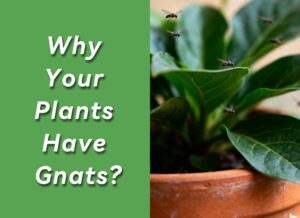
These small pests are known as fungus gnats. They often seem to show up without warning, flying near your Pothos or sitting in the wet soil of your Monstera.
Fungus gnats are very common in indoor plants and open areas like backyards, especially where the soil stays moist and has lots of organic matter.
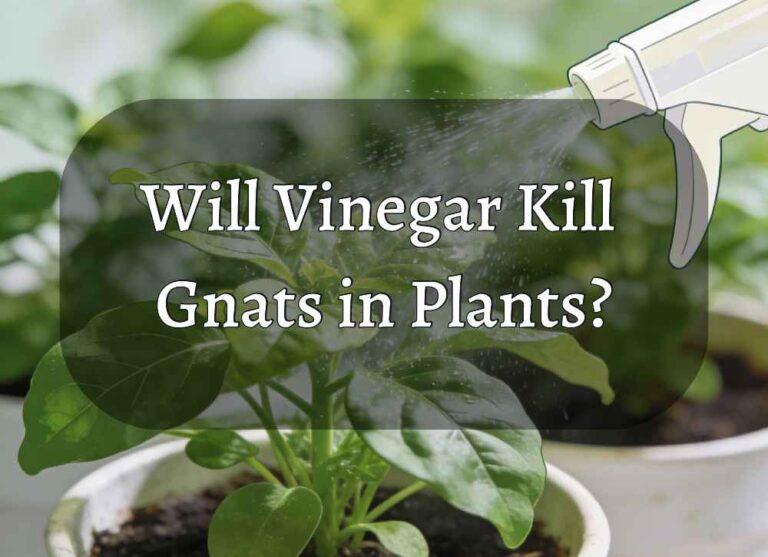
Beyond biological methods, such as BTI, hydrogen peroxide, and nematodes, many gardeners also turn to their kitchen pantry and ask about various home remedies, such as baking soda, cinnamon, garlic water, or neem oil. Similarly, today, the question is: Will vinegar kill gnats in plants?
The short answer is: Yes, vinegar can kill gnats, but only if used as a trap. It is not recommended to directly spray vinegar on a plant’s leaves or soil. Vinegar contains acetic acid, a compound known to affect plant tissue when used incorrectly.
To protect your indoor plants, it’s essential to understand how vinegar works, why it attracts gnats, and why it should be part of a comprehensive pest-control plan.
- Does Vinegar Really Kill Gnats? (The Truth)
- The Science of the Vinegar Trap: How It Works to Kill Gnats in Plants
- Step-by-Step Guide: How to Set Up Your Vinegar Trap to Kill Gnats in Plants
- Comprehensive Control: What to Use Alongside Vinegar to Kill Gnats
- Safety Guidelines for Using Vinegar Near Houseplants
Does Vinegar Really Kill Gnats? (The Truth)
Spraying a vinegar-water solution directly onto the soil or the leaves of your plant is a dangerous myth. Vinegar does not work by poisoning gnats on contact. Instead, it functions mainly as a lure.
Fungus gnats are naturally attracted to the smell of fermentation because it signals decaying organic matter and fungal growth, exactly what their larvae feed on in soil. (discover, are gnats harmful to plants?)
The Danger to Plants:
The biggest issue with vinegar is its acidity. Vinegar is mostly acetic acid, and even household vinegar is strong enough to disrupt soil chemistry.
Most houseplants prefer a soil pH near neutral. When vinegar is poured into soil, it can rapidly lower pH levels, burn delicate root hairs, and block nutrient absorption.
Research on different vinegars shows that while very weak dilutions may sometimes stimulate root growth, stronger concentrations quickly become harmful.
Higher acidity has been shown to reduce root length, stop growth, and damage plant tissues.
Spraying vinegar on leaves can also remove the protective waxy layer, leaving foliage vulnerable to burn spots, dehydration, and leaf drop.
The Science of the Vinegar Trap: How It Works to Kill Gnats in Plants
If vinegar doesn’t poison gnats, how does it kill them? The answer lies in smell and simple physics.
The Lure:
Fungus gnats are naturally attracted to smells that come from fermentation.
Apple cider vinegar is made by fermenting apple sugars, which produce natural acids and smells very similar to those found in places where gnats like to lay their eggs.
To adult fungus gnats, apple cider vinegar smells like the perfect place to eat and reproduce.
The Physics of Surface Tension:
Normally, tiny insects can sit on water because the water has a thin surface layer that supports them.
This layer is called surface tension. Dish soap breaks this layer right away.
When dish soap is added to vinegar, it removes that surface layer.
So when a gnat touches the liquid, its wings get wet and heavy.
The gnat can’t stay on top, sinks into the liquid, and drowns.
Without soap, many gnats would land on the vinegar and easily fly away again.
Effective Vinegar Trap Recipes
Depending on what you have at home, these variations work well because they all rely on fermentation smells and sugars, which gnats strongly respond to.
Best Option (Apple Cider Vinegar):
- Pour about half an inch of raw, unfiltered apple cider vinegar into a shallow bowl.
- Add 3 drops of liquid dish soap.
- Do not stir too much; light mixing is enough to stop insects from sitting on the liquid.
If You Only Have White Vinegar:
- White vinegar does not have a sweet smell, so gnats are less attracted to it.
- Mix ½ cup white vinegar with 1 tablespoon sugar and add 3 drops of dish soap.
- The sugar helps attract the gnats.
Using Alcohol Instead:
- Old beer or leftover red wine also works because they are fermented and smell attractive to gnats.
- Just add one drop of dish soap so the gnats cannot escape after landing.
Step-by-Step Guide: How to Set Up Your Vinegar Trap to Kill Gnats in Plants
To improve results, setup matters.
- Select the Container: Use a shallow bowl or small glass jar. Fungus gnats prefer low edges where they can land easily.
- The Cover Method: Cover the container with plastic wrap, secure it with a rubber band, and poke 5–6 small holes. Gnats crawl in but struggle to escape.
- Strategic Placement: Place the trap beside the pot, not on the soil. Spilled vinegar can acidify soil and damage roots.
Why Vinegar Alone Won’t Kill Gnats in Plants
This is the hard truth many indoor gardeners face: you can catch dozens of gnats and still see more the next day.
Vinegar traps primarily target adult gnats, which comprise roughly 15% of the total population.
The remaining 85%, eggs and larvae, live inside the soil.
These larvae feed on fungi, decaying organic matter, and sometimes fine roots.
A single adult female can lay up to 200 eggs in moist potting mix, and those eggs hatch quickly.
This is why vinegar alone never ends an infestation; it doesn’t reach the real problem.
Comprehensive Control: What to Use Alongside Vinegar to Kill Gnats
To fully stop fungus gnats, you must address the soil.
- Hydrogen Peroxide Drench: Mix 1 part 3% hydrogen peroxide with 4 parts water. The bubbling action kills larvae on contact, then breaks down into oxygen and water, both of which are safe for roots. (Acosta, 2024)
- Yellow Sticky Traps: Fungus gnats are strongly attracted to yellow. Use yellow sticky cards because they catch adults efficiently and help track infestation levels.
- Soil Management: Overwatering is the main cause of fungus gnats. Let the top two inches of soil dry completely. Larvae cannot survive without constant moisture.
Pro Tips to Use Vinegar for Killing Gnats
Vinegar is a useful tool for monitoring and trapping, but it is not a complete cure. Think of vinegar traps as a way to control the visible problem while you fix what’s happening underground. Here are some tips;
- Refresh the solution: Replace vinegar traps every 2–3 days to keep the scent strong.
- Bottom water: Water plants from below to keep the soil surface dry and discourage egg-laying.
By combining vinegar traps with proper soil care and watering habits, you can finally stop the buzzing and enjoy your indoor plants again.
Safety Guidelines for Using Vinegar Near Houseplants
When using vinegar to combat fungus gnats, the need to consider plant types depends entirely on the application method.
If you are using vinegar as a standalone trap (placing a bowl of vinegar and soap near the plant), it is safe for all plant species because it never touches the plant or the soil.
However, if you intend to apply it as a spray or soil drench, you must be extremely cautious; vinegar is highly acidic and can cause chemical burns on sensitive, thin-leaved plants or drastically alter the soil’s pH, which can damage the roots of plants that prefer alkaline conditions.
Because vinegar is relatively ineffective at killing larvae in the soil compared to other methods, it is best used strictly as an external trap to avoid any risk of harming your houseplants.
Do You Know, some plants naturally repel gnats, such lavender and basil. Here’s 20+ list of these plants.