Picking the wrong plants for your garden is frustrating. You water them, care for them, and still watch them die, and most of the time, the zone is the reason.
California is one of the most climate-varied states in the country, so what grows in one city may completely fail in another.
The problem gets worse when people skip the zone check altogether. They buy plants based on looks or price, not climate, and then lose money, time, and motivation.
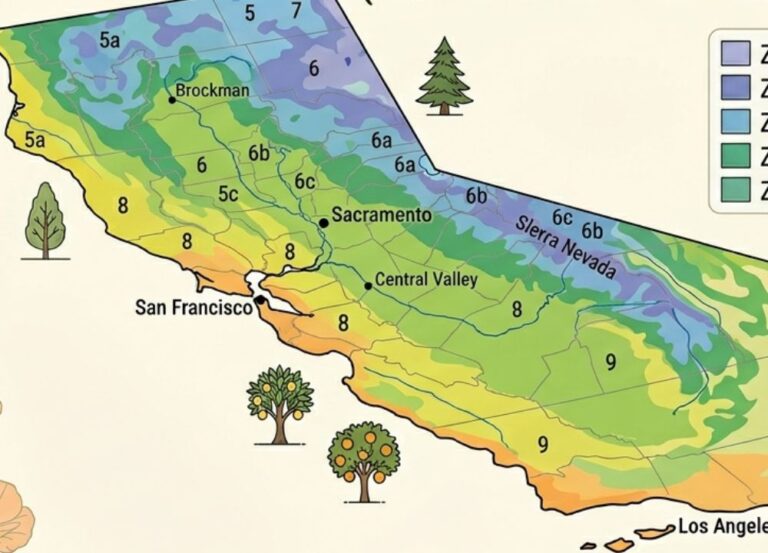
California’s zones range from 5a in the mountainous regions to 10b in the warmest coastal areas, which is a massive range for one state.
California hardiness zones range from USDA zone 5 to zone 10, and some areas, like the deserts and Central Valley, get extremely hot in summer. Getting your zone right is simply the first step to a successful garden.
The solution is simple. Know your region, find your zone, and then match your plants to it. The rest of this guide breaks it all down, region by region, so you stop guessing and start growing.
What Zone Is Western California For Plants?
Most of Western California sits in growing zones 8 to 10, making it one of the more gardener-friendly parts of the state. The Pacific Ocean keeps temperatures mild, so winters are rarely harsh, and summers stay manageable near the coast.
This mild climate means a wide variety of plants can survive here year-round. Vegetables, citrus, herbs, and flowering shrubs all do well across Western California’s coastal stretch.
What Zone Is Eastern California For Plants?
Eastern California tells a very different story. The coldest regional gardening conditions in California are in the Sierra Nevada mountains along the eastern side of the state, with some areas reaching zone 5a, with annual extreme minimums as low as -20°F.
Higher elevations bring shorter growing seasons and much colder winters. Gardeners in this part of the state need to stick to cold-hardy plant care practices and plan around late frosts that can stretch well into spring.
What Zone Is Northern California For Plants?
Northern California spans USDA zones 5b through 9b, covering a wide temperature range due to the Sierra Nevada and the coast. Cities like Redding, Santa Rosa, Eureka, and Chico all fall within this broad band, each with slightly different conditions depending on elevation and distance from the ocean.
Coastal northern California runs from the Oregon border down, and the climate near the Pacific is surprisingly consistent, with growing zones between 8 and 9. As you move inland, temperatures shift more dramatically between seasons.
San Jose sits in zones 9a to 10b, benefiting from the Bay Area marine influence that keeps frost rare and growing seasons long. Northern California includes zones 5a to 10b overall, so your exact zone depends heavily on whether you are near the coast, in the valley, or up in the mountains.
According to Plantmaps, the 2023 updated USDA zones use 30-year climate data from 1991 to 2020, giving gardeners more accurate numbers than older maps.
What Zone Is Southern California For Plants?
Southern California is where the zones warm up fast. The hardiness zones for the parts of Southern California near the Pacific generally range from 9 to 11, and farther south, you can expect zones 10 to 11. The Mediterranean-style climate here means warm, dry summers and mild, wet winters.
The warmest regions of southern California, including Los Angeles and Palm Springs, are almost tropical in zones 10b and 11a, with winter weather that rarely gets below freezing. This makes SoCal a hotspot for tropical fruits, succulents, and drought-tolerant plants.
San Diego spans zones 10a and 10b, with coastal neighborhoods even touching zone 11a in the warmest pockets. Lancaster falls in zones 8a and 8b, which brings colder winters, occasional snowfall, and shorter growing seasons compared to coastal cities in the same region.
What Zone Is Central California For Plants?
Central California is the agricultural engine of the state, and its zones reflect that. The Central Valley, including cities like Fresno, Bakersfield, Sacramento, and Modesto, typically falls in zones 8a to 10a, with hot, dry summers, cool, damp winters, and long growing seasons.
These conditions are ideal for tomatoes, peppers, melons, stone fruits, and nuts. Fresno and Bakersfield are both in zones 9a and 9b, sitting in that sweet spot where winters are cool but frost is manageable, and summers are long enough for multiple harvests.
FAQs
What Zone Is Most Of California In?
Most home gardens in California fall between zones 8a and 10a. Coastal and inland valley areas make up the bulk of where people actually live and garden.
Can I Grow Tropical Plants In California?
Yes, but only in the warmest zones. Tropical fruit trees like avocado, papaya, mango, and lychee thrive in zones 10b and 11a, mostly found along the Southern California coast.
How Do I Find My Exact California Planting Zone?
The easiest way is to enter your ZIP code on the USDA Plant Hardiness Zone Map at planthardiness.ars.usda.gov. It gives you your exact zone in seconds.
Does California Have Cold Zones Too?
Yes. Zone 5a covers the highest elevations of the Sierra Nevada mountains, where winters are severe and growing seasons are very short.
Why Does My Zone Matter For Gardening?
Your zone tells you the coldest temperature your area typically sees in winter. Plants rated for your zone or lower can survive those conditions, while others will die off when frost hits.