Boston winters can be tricky. One wrong plant choice and you lose everything by February.
Most gardeners in Boston pick plants that look good at the nursery, without checking if they can actually survive the cold. That mistake costs money, time, and months of effort.
Knowing your planting zone before you buy anything changes everything. It tells you what will grow, what will die, and when to plant.
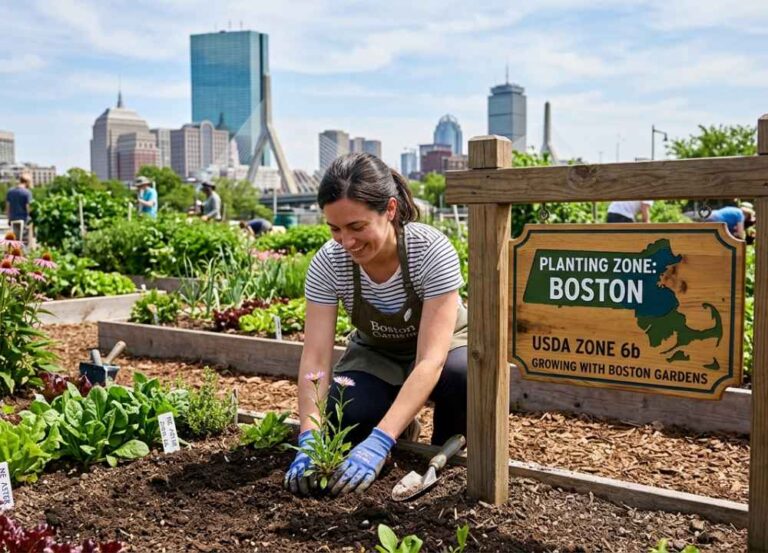
Boston is primarily in USDA Zone 6b, with average annual minimum temperatures ranging from 0°F to 5°F. Coastal Boston neighborhoods extend into Zone 7a, and nearby cities like Cambridge, Brookline, Newton, Somerville, and Quincy fall in the same zones. Planting Zones by Zipcode
So what planting zone is Boston in? It sits between Zone 6b and 7a, and the difference matters more than most people think. A plant rated for Zone 7 might survive in one Boston neighborhood but die in another just a few miles away.
What Zone Is Boston for Planting? USDA Zone 6b & 7a
Boston does not fit neatly into one single zone. Zone 7a covers urban neighborhoods like Back Bay, Beacon Hill, and East Boston, while Zone 6b includes cooler spots like Allston, West Roxbury, Dorchester, and suburban areas like Dedham and parts of Milton. Planting Zones by Zipcode
This matters because urban heat plays a big role. Downtown Boston feels warmer due to pavement, brick buildings, and dense streets, which can push a neighborhood into Zone 7a territory. But move a few miles inland or uphill, and you drop back into Zone 6b with colder overnight lows.
Urban heat, pavement, and proximity to the ocean soften winter lows in Greater Boston and the North Shore, keeping most suburbs in zones 6b to 7a. If you are near the waterfront, your winters tend to be milder. If you are in a more suburban or elevated spot, expect slightly harder freezes. Gardenia
The practical difference is this: Zone 7a gives you a bit more flexibility with borderline plants. Zone 6b means you need to play it safer with cold-hardy varieties or give tender plants some extra winter protection.
What Planting Zone Is Boston In? East, West, North, and South
Boston is not one uniform zone, and the direction you are planting in matters. Massachusetts spans four climate regions, from the Berkshires in the west to Greater Boston and the South Shore in zones 6b to 7a, with Cape Cod and the islands reaching zones 7a to 7b. Planting Zones by Zipcode
East Boston and the Coast
East Boston sits close to the harbor, which keeps temperatures steadier through winter. Zone 7a hugs the coast, from Gloucester down through Boston and Plymouth, partly due to the stabilizing effect of water on temperature and the land being at sea level. If you are gardening on the eastern, coastal edge of the city, you likely fall in Zone 7a. Gardening Know How
West Boston and Inland Suburbs
Move west toward Allston or West Roxbury, and the zone cools. These neighborhoods sit farther from the moderating effect of the ocean, so winter lows drop a bit more. An open area with low elevation in Boston could make it harder to grow plants rated for Zone 6b, while a sunny garden spot in the same zone might allow plants rated for Zone 7a to survive. GreenUpside
North Boston and Suburbs
Head north toward Revere, Lynn, or Somerville, and you stay mostly in zones 6b to 7a. The North Shore benefits from both urban heat and coastal influence, so regional gardening conditions are fairly mild compared to central or western parts of the state.
South Boston and the South Shore
South Boston and areas heading toward Quincy and Plymouth gradually shift toward Zone 7a. Coastal Boston neighborhoods extend into Zone 7a, and cities including Quincy sit in the same zones as most of the Greater Boston area. The spring planting window opens a little earlier here compared to inland spots. Planting Zones by Zipcode
According to Mahoney’s Garden Center, most of eastern Massachusetts, including the Greater Boston area, falls within USDA Plant Hardiness Zones 6a to 7b, and knowing your zone is key to choosing perennials, shrubs, and trees that can survive the winter.
FAQs
What planting zone is Boston in?
Boston is primarily in USDA Zone 6b, with some coastal neighborhoods falling into Zone 7a. Your exact zone depends on your neighborhood and how close you are to the water.
Is Boston Zone 6 or Zone 7?
It is both. Most of Boston is Zone 6b, but urban and coastal areas like Back Bay and East Boston often reach Zone 7a due to the warming effect of the city and the harbor.
What is the Massachusetts planting zone overall?
Massachusetts spans USDA Zones 5a to 7b. The Berkshires in the west are the coldest, while Boston and the coast are warmer, and Cape Cod reaches up to Zone 7b.
When should I start planting in Boston?
For most crops, the last frost in Boston occurs between mid-April and early May. Cool-season crops like lettuce and peas can go in sooner, while tomatoes and peppers should wait until after the last frost date.
Can I grow Zone 7 plants in Boston?
Yes, in many parts of Boston you can, especially in Zone 7a neighborhoods or in a sheltered, south-facing garden spot. Zone 6b gardeners can also try Zone 7 plants with some protection, like mulching or a cold frame, through winter.