As the nights turn cold, many gardeners stare at their tomato plants and wonder what to actually do with them. Do you chop the whole plant down, or leave part of it standing?
The honest answer depends on where you live and what you plan to do with the plant once spring rolls around. A gardener in Minnesota faces a very different task than one in coastal Florida.
Get this wrong, and you either waste effort trying to save a plant that was always going to die in the freeze, or you throw out one that could have lived through winter and grown fruit again next year.
This guide walks through the right cutback method for each case, from a plant that will die in a hard frost to one you plan to nurse through winter indoors.
How to Cut Back Tomato Plants for Winter?
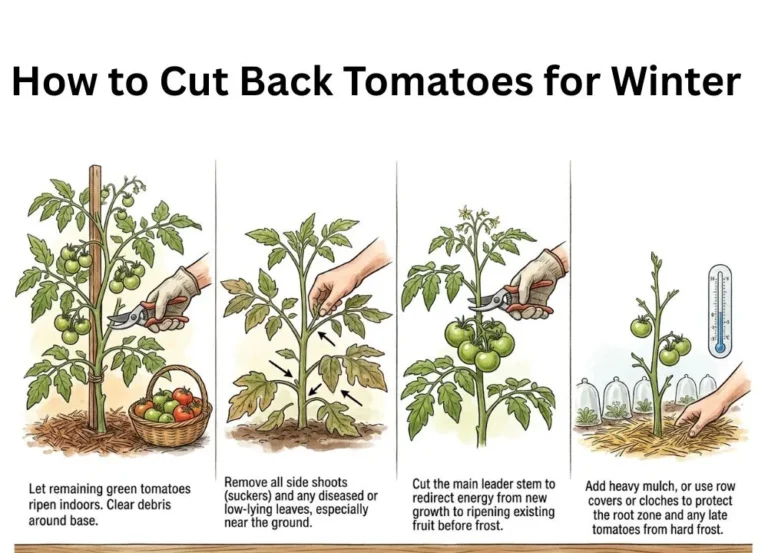
Start by grabbing a clean, sharp pair of pruning shears, or loppers if the stems have grown thick and woody. Wipe the blades with rubbing alcohol first, since tomato plants pass disease along easily through dirty cuts.
Cut just above a leaf node and work from the top of the plant down, pulling off any yellowed or spotted leaves as you go. Healthy stems you trim off can often be rooted into brand new plants, a method covered in checking whether a plant is a good candidate for cutting propagation.
How much you cut back, and whether you remove the plant fully, depends a lot on your winter. The sections below break this down by exact case, starting with gardens that get a true hard frost.
Cutting Back Tomato Plants Before a Hard Frost
If your area drops below 32°F and stays there, your tomato plant will not make it through winter, no matter what you do. This is true for most of the United States, outside a handful of warm coastal spots.
The University of Wisconsin-Madison Division of Extension notes that tomato plants sit among the most cold-sensitive garden crops, with real damage starting once nighttime temperatures near 35°F, even before an actual freeze hits. You can read more about frost protection from UW-Madison Extension here.
Once frost has blackened the leaves, cut the main stem down to about two inches above the soil line. There’s no reason to save any part of the plant, since frozen plant tissue will not grow back in spring.
Pull the root ball out fully if you plan to reuse that same garden bed next year. Leftover roots can quietly hold disease through winter and pass it straight to whatever you plant there next.
Many cold-climate gardeners find it helpful to track their exact freeze timing instead of guessing. Knowing your zone 5 frost dates and growing season can help you plan the cutback before a surprise freeze catches the garden off guard.
Cutting Back Tomato Plants to Overwinter Outdoors in Mild Climates
Gardeners in USDA zones 10 through 11, such as southern Florida or coastal Southern California, often see winters that never get close to freezing. In these areas, a tomato plant can live outdoors all year without any special care.
Tomatoes are naturally tender perennials, not true annuals, even though most gardeners treat them as a one-season crop. Whether tomato plants are annual or perennial explains why warm-climate growers can carry a healthy plant over instead of starting fresh every spring.
For outdoor overwintering, cut the plant back by about half its height rather than removing it fully. Leave two or three strong main stems standing, each with a handful of healthy leaves still on it.
Add a thick layer of mulch around the base to protect the shallow roots during the rare cool night. This gives the plant a strong head start once warm weather returns and fresh growth begins.
One detail most guides leave out: check whether your variety is determinate or indeterminate before deciding if this effort is worth it. Determinate plants are bred to reach a set size, fruit once, and die on their own schedule, so cutting one back mostly buys you an earlier start next year rather than a plant that keeps growing on and off through winter. Indeterminate varieties, which never stop growing on their own, are the ones that pay off the most with this method.
Cutting Back Tomato Plants for Indoor or Container Overwintering
If you want to save a favorite tomato variety but don’t live somewhere frost-free, moving the plant indoors or into a pot is the answer. This works best with smaller varieties, since a full-size plant quickly outgrows most indoor spaces.
Cut the plant down to about six to twelve inches tall, removing most of the top growth along with any fruit that never ripened. This smaller size makes the plant easier to carry, easier to fit near a window, and easier on the roots to support.
Once indoors, the plant needs much less water than it did outside, since growth slows down a lot under weaker winter light. General guidance on how often you should water your plants still applies here, just cut back to match the plant’s slower pace.
Place the pot near your brightest window, or under a grow light if natural sunlight is limited where you live. Without enough light, the plant will grow thin and pale instead of staying strong through the colder months.
If your plant is a grafted variety, common with disease-resistant nursery plants, never cut below the graft line near the base of the stem. Any new growth below that point comes from the rootstock, not the fruiting variety you bought, and rootstock is picked for strong growth rather than for the taste of its tomatoes.
When to Cut Back Tomato Plants?
Timing depends on which case above fits your situation, but a few signs apply across the board. Watch the calendar and the plant itself, not just one or the other.
A handful of clear signs tell you it’s time to reach for the shears:
- Nighttime forecasts keep dipping toward 40°F, meaning frost is close.
- Fruit growth has slowed to almost nothing for over a week.
- Leaves show heavy yellowing or disease spreading across most of the plant.
- You plan to move the plant indoors before the first cold snap.
For hard-frost climates, wait until just after the first light frost blackens the leaves, since a plant that’s already dead is safe to cut all the way down. Cutting too early wastes any fruit still ripening on the vine.
For mild-climate or indoor overwintering, cut back a few weeks ahead of your average first frost date. This gives the plant time to recover from the stress of cutting before cold weather adds more strain.
What to Do With Cut-Back Tomato Plants?
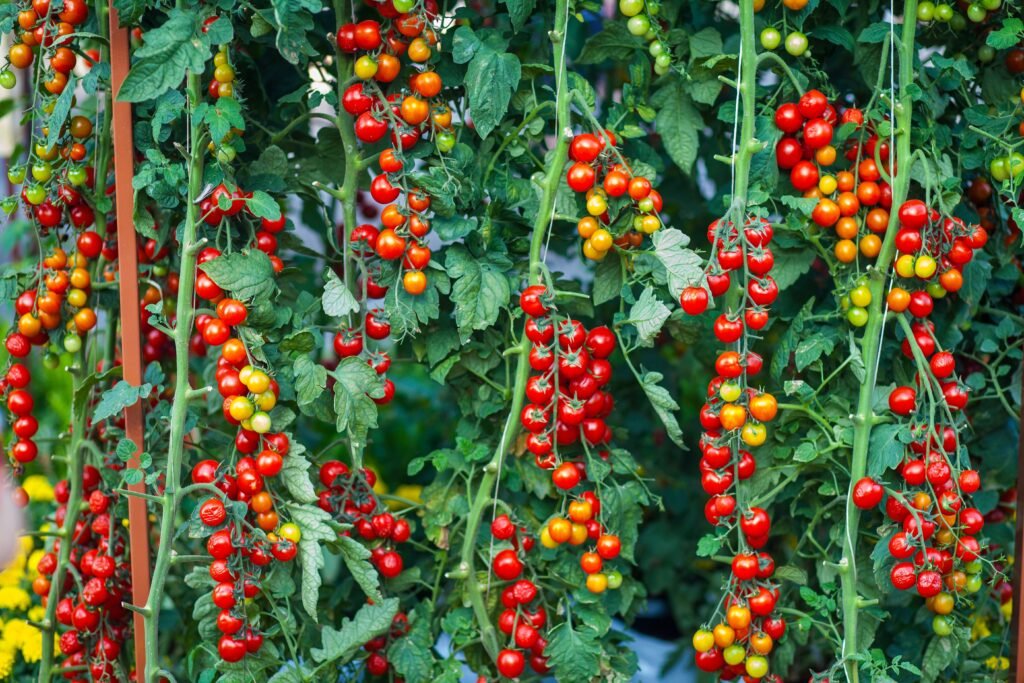
Healthy stems, leaves, and roots can go straight into your compost pile with no special treatment needed. Tomato plant matter breaks down well and feeds useful nutrients back into your soil over time.
Diseased growth is a different story. Leaves with blight, mold, or dark spots belong in the trash, never the compost bin, since most home compost piles never get hot enough to kill off plant disease.
If any green tomatoes were still on the vine when you cut back, bring them indoors to ripen on a windowsill instead of tossing them out. Many will still turn red over the following couple of weeks.
There’s a real reason clean tools matter this much. University of Arkansas Cooperative Extension research on tomato bacterial stem rot points to open wounds as the main way this disease gets into a plant, which means a dirty blade can cause the very rot you’re trying to avoid.
Setting Your Tomato Plants Up for a Strong Spring Return
How you cut back a tomato plant in fall shapes how well it does once warm weather returns. A clean, disease-free cutback gives the plant a healthy base to grow from, while a rushed or dirty job carries the same problems straight into spring.
Plants that overwintered outdoors in a mild climate, or indoors in a pot, often bear fruit earlier than a brand-new seedling would. They already have roots in place, so they skip the weeks of early growth a fresh transplant needs.
Once the weather warms and the risk of frost passes, go back to regular watering and feeding to wake the plant from its slow winter pace. If you’re unsure of the right time, when to plant tomatoes in zone 5 covers the same soil and air temperature cues that apply to new growth.
A little care during the cutback now pays off with a stronger, faster-growing plant later. That’s the real payoff of matching your method to your climate instead of guessing.