It happens to the best of us: you think you’re being a “plant parent of the year” by keeping the soil damp, but suddenly your tomatoes look like they’ve had a rough night.
If your garden is looking a bit soggy, don’t panic.
Tomatoes are resilient. While they definitely don’t appreciate sitting in a swamp, they have a remarkable ability to bounce back if you act fast.
This guide will walk you through exactly how to dry out those roots and get your garden back on track before things get mushy.
Can Overwatered Tomato Plants Recover?
The short answer is yes, but timing is everything. Whether your plant bounces back depends on how long the roots have been “suffocating” under the surface.
When you start to notice what an overwatered tomato plant looks like, usually yellowing leaves and a general wilted appearance, the plant is telling you it can’t breathe.
Soil that is constantly soaked pushes out oxygen, which roots need to survive. If you catch it while the stems are still firm, your chances of recovery are very high.
However, if the plant has developed severe root rot (where the roots turn black and slimy), it becomes much harder to save.
The goal is to stop the cycle immediately and fix the environment so the plant can start drinking at a normal pace again.
Oops, I Overwatered My Tomato Plant, Now What? Here’s the Solution!!
Saving your plant isn’t just about “waiting for it to dry.” You need to be proactive to prevent permanent damage. Here is the best way to save your tomatoes:
1) Stop Watering Immediately
This seems obvious, but it’s the most important rule. Even if the top inch of soil feels dry, the area around the roots might still be a lake.
You need to break the habit of daily dousing and let the environment reset.
2) Improve the Drainage
If your tomato is in a pot, make sure the drainage holes aren’t blocked so water can flow out freely.
For plants in the ground, The Old Farmer’s Almanac recommends adding compost or building small soil mounds to help extra water run away from the roots.
3) Provide Some Shade (Temporarily)
It sounds backward, but a stressed, overwatered plant struggles to move water to its leaves. If the sun is beating down, the leaves will wilt even more.
Giving the plant some light shade for a day or two reduces the “workload” on the roots while they recover.
4) Aerate the Soil
Gently poke the soil around the plant with a stick or a pencil. This creates “air pockets” that allow oxygen to reach the roots faster.
Be careful not to snap the roots; you just want to break up the compacted, muddy dirt.
5) Check for Root Health
If the tomato plant is in a container and looks terrible, gently lift it out. If the roots are white, you’re in luck!
If they are brown and smelly, trim away the mushy parts and repot the plant in fresh, slightly damp (not soaking) soil.
Is it Too Wet or Too Dry? How to Save an Overwatered Tomato Plant from Confusion
To prevent this from happening again, you need to know the difference between the two most common garden mistakes.
When you compare underwatering vs overwatering tomato plant symptoms, the signs can be tricky.
- Overwatering: Leaves turn yellow first, feel soft or limp, and the soil stays wet for days.
- Underwatering: The whole plant flops over, but the leaves feel crispy or dry. If you look at what an underwatered tomato plant looks like, it usually perks up within an hour of being watered, whereas an overwatered one stays wilted.
If you aren’t sure which one you are dealing with, check the soil depth. If the leaves aren’t “crunchy,” you are likely dealing with too much moisture.
What to Watch for While Your Overwatered Tomato Plant Recovers
When soil is waterlogged, it’s not just the “drowning” that’s the problem. It’s the diseases that follow. Understanding what happens after overwatering a tomato plant can help you spot secondary issues, such as fungus or mold.
Fungal spores love wet, stagnant conditions. If you see white fuzzy growth on the soil or dark spots on the stems, you’ll need to increase airflow around the plant.
Snipping off the lowest leaves (the ones touching the wet ground) can help prevent these diseases from climbing up the rest of the plant.
As gnats are also attracted due to overwatering, see here the detailed guide to get rid of them.
Summary:) How to Save an Overwatered Tomato Plant from Future Soakings
The biggest myth in gardening is that “more is better.” Many beginners wonder, do tomato plants need a lot of water to produce big fruit? The truth is, they need consistency, not saturation.
Instead of watering a little bit every day, it is much better to water deeply once every few days.
This encourages the roots to grow deep into the ground to find moisture, rather than sitting near the surface where they can easily rot.
Using a mulch like straw can also help keep the moisture level even, so you don’t feel the need to reach for the hose every time the sun comes out.
Expert Tips to Rescue an Overwatered Tomato Plant
Never fertilize a stressed plant. The salts in fertilizer can burn the struggling roots. Wait until you see new, green growth before feeding.
Before you water, stick your finger two inches into the soil. If it feels moist, put the watering can away!
If rain is in the forecast for three days straight, consider covering your outdoor containers or moving them under a porch to avoid another round of soaking.
Now that you know how to save an overwatered tomato plant, you can keep a close eye on your garden’s recovery. Most plants will show signs of improvement within 3 to 5 days.
Grid
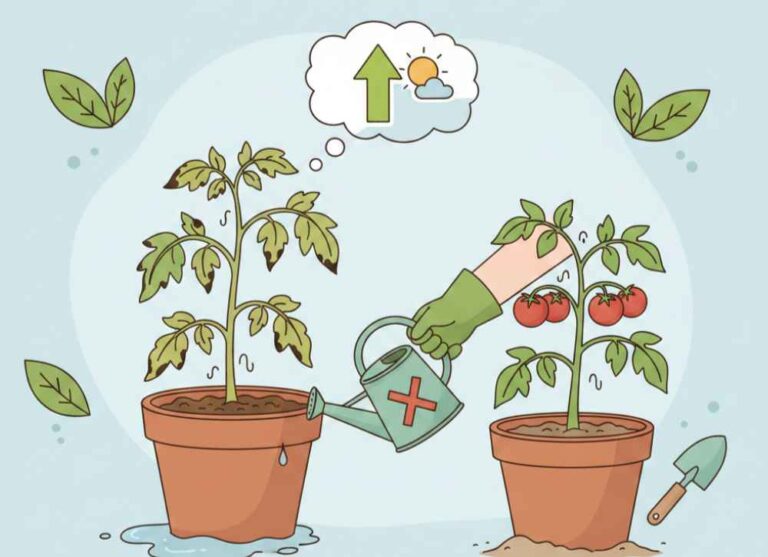
How to Save an Overwatered Tomato Plant? 5 Easy Steps
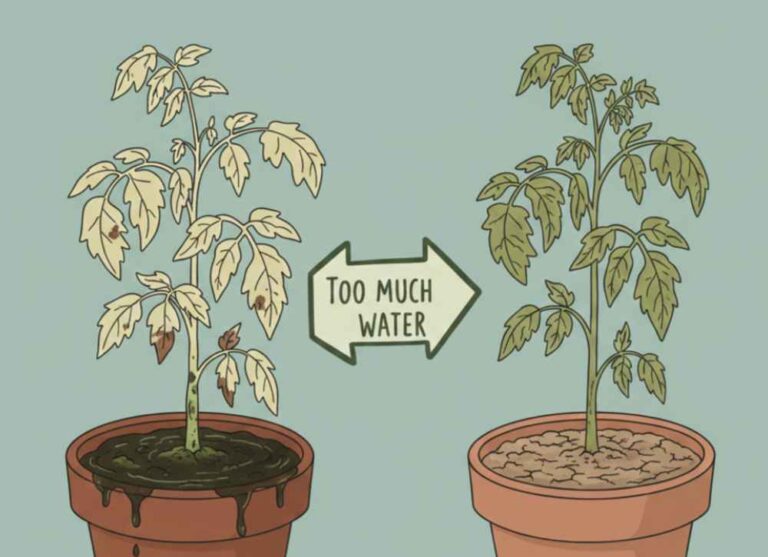
Save YOUR Tomatoes: Underwatered vs Overwatered Tomato Plant
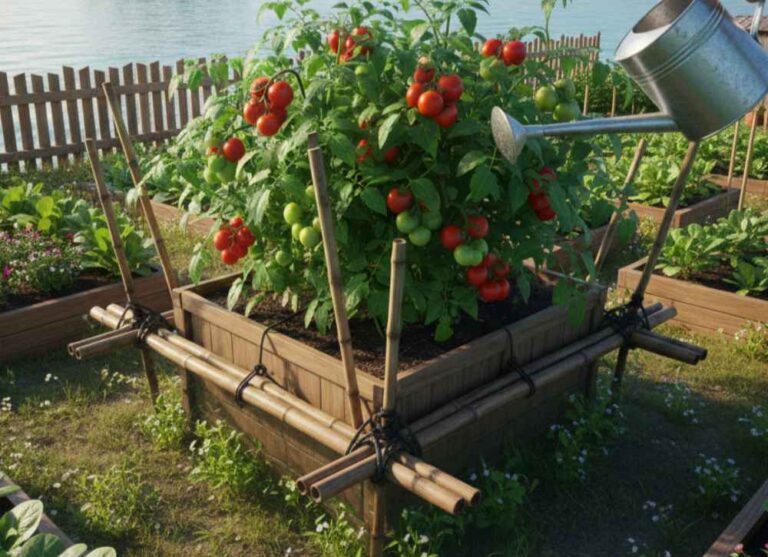
Here’s What Does An Overwatered Tomato Plant Look Like!!
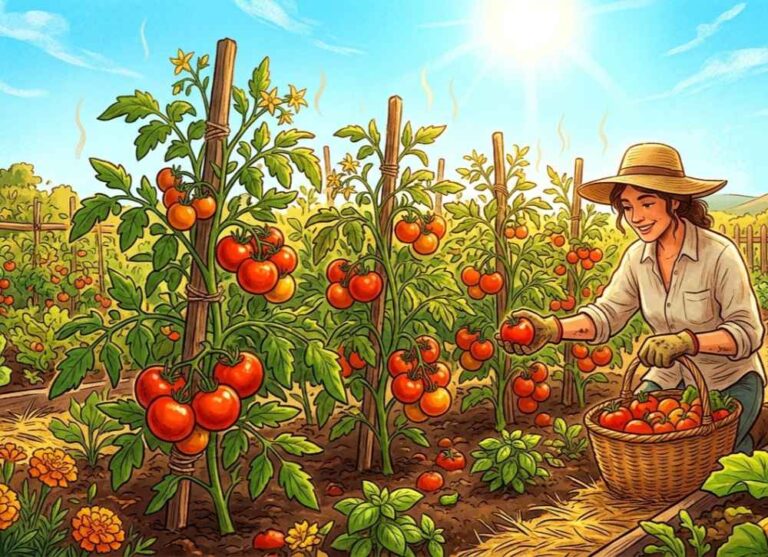
Do Tomato Plants Produce All Summer? Can You Grow It in Summer?

Can You Grow Tomatoes In Florida in the Summer?