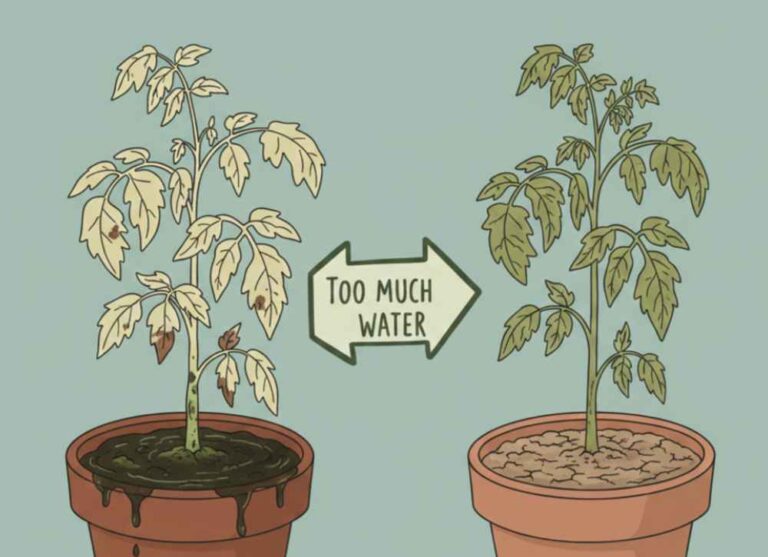
You walk out to your garden, coffee in hand, expecting to see vibrant green vines, but instead, you’re met with a wilted, yellowing mess.
Your heart sinks. Your first instinct is to grab the hose and drench it, but then you pause. Is it thirsty, or is it drowning?
This is the ultimate gardener’s dilemma. Because both underwatered and overwatered tomato plants can look “droopy,” it’s easy to make a mistake that turns a minor problem into a fatal one.
Adding water to a plant already suffering from root rot is a death sentence, while leaving a parched tomato plant in the sun for another day can ruin your harvest.
To save your tomato plant, you need to look closer than just the “wilt.” Let’s break down the subtle cues your plants are giving you.
Underwatered vs. Overwatered Tomato Plant: The Quick Check – How Does It Feel?
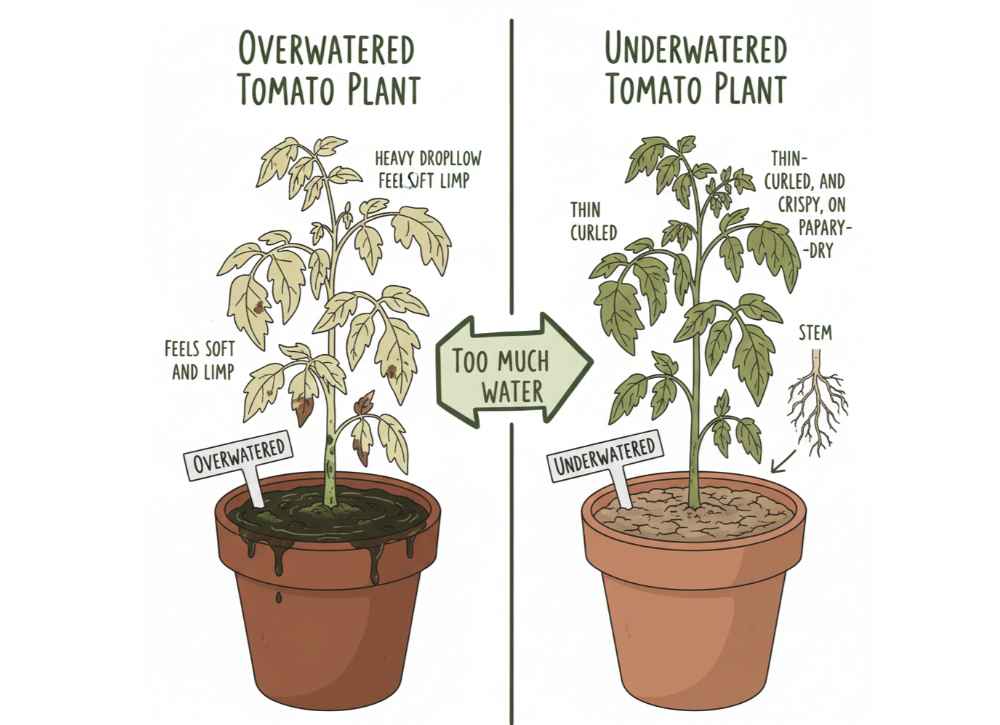
While both look stressed, the “vibe” of the tomato plant is different. An underwatered tomato plant looks exhausted and thin. An overwatered plant looks sick and heavy.
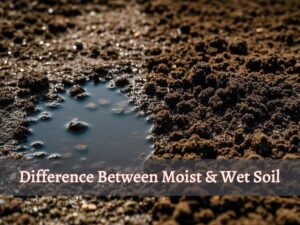
- Underwatered: Soil is dry and cracking; leaves feel like paper.
- Overwatered: Soil is damp or green with algae; leaves feel limp or “mushy.”
Signs of Underwatered Tomato Plants
When a tomato plant loses more water through its leaves than it can pull from the ground, it loses its “turgor pressure”, the internal water pressure that keeps the plant standing tall.
The leaves will start to curl inward to prevent further moisture loss, and the lower leaves may turn brown and crispy.
If your plant is looking thin and skeletal, you should look specifically at what an underwatered tomato looks like to see if you can still save the foliage.
In most cases, these “thirsty” plants are resilient and will perk up within hours of a deep soak.
Signs of Overwatered Tomato Plants
Overwatering is often “the silent killer” because the damage happens underground, where you can’t see it. When soil is saturated, oxygen is pushed out, and the roots literally suffocate.
Initially, the leaves will turn a pale yellow, often starting from the bottom and moving up. Unlike the dry, brittle leaves of a thirsty plant, these leaves feel soft and damp.
It is vital to recognize what an overwatered tomato looks like early on, because once the stems become black or slimy, the plant may be beyond help.
Summary:) Underwatered vs Overwatered Tomato Plant
The confusion often stems from a simple question: “Do tomatoes need a lot of water?” The answer is a bit of a paradox.
Tomatoes are “heavy drinkers,” but they hate “wet feet.” They thrive on deep, infrequent watering that reaches the bottom of the root zone rather than constant surface splashes.
The primary difference is the long-term impact.
- Underwatering typically results in smaller fruit and “blossom end rot” because the plant can’t move calcium without water.
- Overwatering leads to fungal diseases and root decay. You must understand what happens if you overwater because, unlike a dry plant that just needs a drink, an overwatered plant needs a total environment change, and potentially a soil transplant, to survive.
Grid
Can I Grow Tomatoes in October? Here’s Detailed Guide
How to Store Green Tomatoes for Winter?
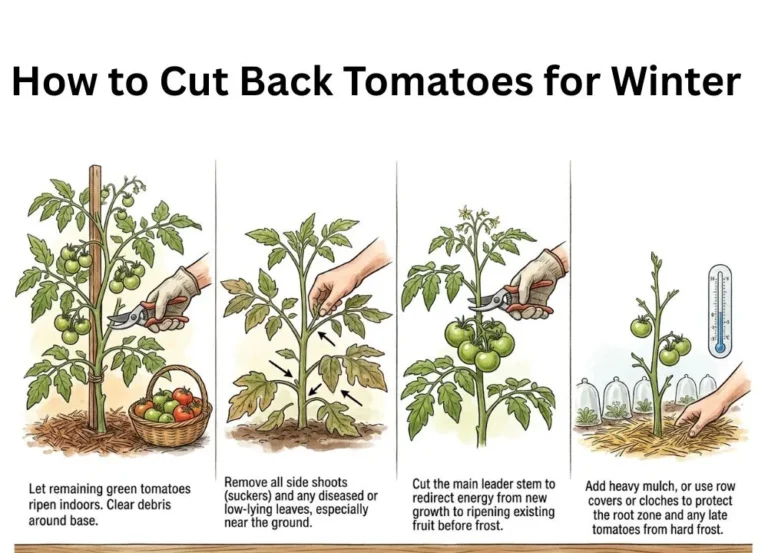
How to Cut Back Tomato Plants for Winter?
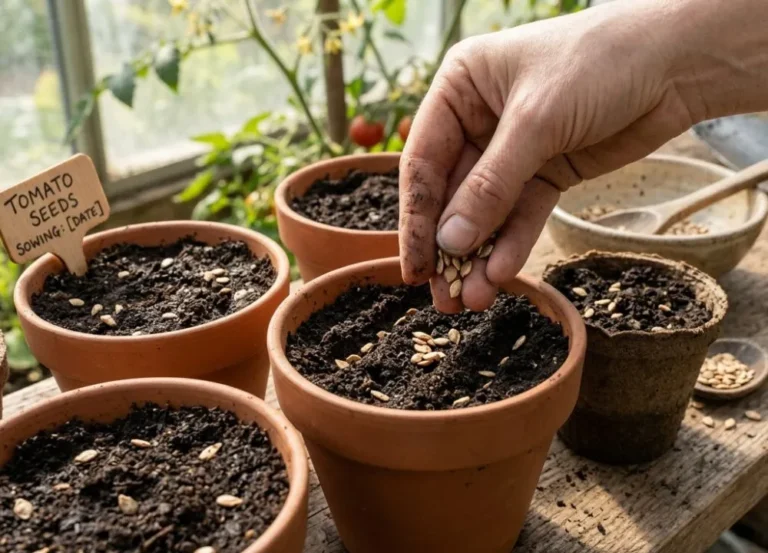
Can You Winter Sow Tomatoes? A Zone-by-Zone Guide to Timing It Right
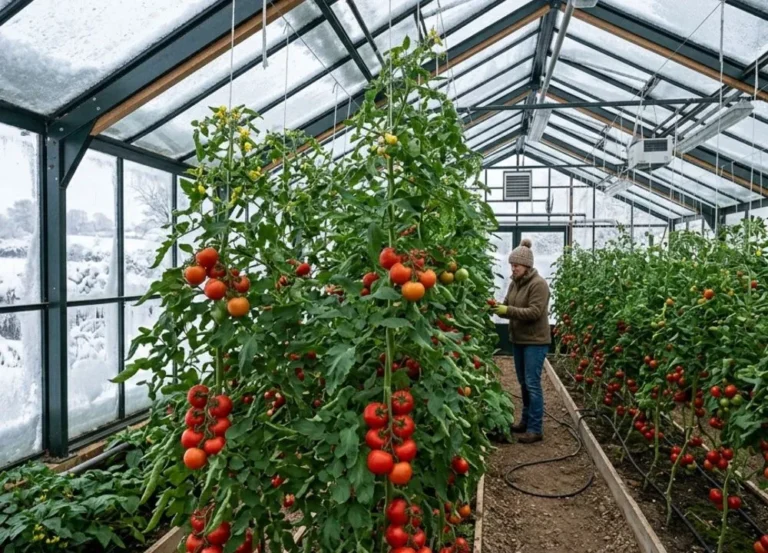
Can You Grow Tomatoes in a Greenhouse in the Winter?