Winter feels like the slow season for gardeners, yet plenty of people already sow seeds while snow still covers the ground.
One method behind this, winter sowing, has built a loyal following among growers of hardy flowers, herbs, and tough leafy greens.
Tomatoes raise a trickier question than most of those plants do, since they bruise easily from cold and carry none of that same toughness.
Sow them wrong and a whole batch of seedlings can die from one hard freeze before spring even settles in.
That risk is exactly why zone and timing matter so much here, and why the rest of this guide walks through both in careful detail.
- Can You Winter Sow Tomatoes?
- Winter Sowing Tomatoes in Cold Zones (3–5)
- Winter Sowing Tomatoes in Moderate Zones (6–7)
- Winter Sowing Tomatoes in Warm Zones (8–10)
- Winter Sowing Tomato Seeds
- Why Determinate Types Handle the Cold Start Better
- Caring for Winter-Sown Tomato Seedlings After Germination
- Why Timing, Not the Method Itself, Decides Your Winter Sowing Success
Can You Winter Sow Tomatoes?
Yes, tomatoes can be winter sown, but they demand more care with timing than a typical winter-sown perennial would.
Most flowers and herbs grown this way actually need weeks of hard freezing weather to crack their tough seed coat open.
Coneflower, milkweed, and many other hardy annuals rely on that cold exposure almost like an alarm clock buried inside the seed.
Tomatoes carry no such requirement, since they behave as a strictly annual warm-season crop rather than something built to overwinter outdoors.
A single overnight frost can wipe out young tomato seedlings fast, which is very different from how perennial seeds are usually handled during the colder months.
Almanac’s original winter sowing guide explains how the whole process depends on mimicking freeze-thaw cycles, and for tomatoes that timing has to be precise.
Beyond the calendar itself, two main factors end up deciding exactly when any crop, tomatoes included, can safely go outside.
Winter Sowing Tomatoes in Cold Zones (3–5)
Gardeners in zones 3 through 5 face long, harsh winters that stretch on far past what warmer regions ever see.
Because of this, the tomato sowing window shifts noticeably later than it would for hardy perennials in the same zone.
A good rule of thumb is roughly four to six weeks before your area’s expected last frost date each year.
Someone gardening in zone 5 usually finds this lands sometime in March, depending on how far north they sit within the zone.
Gardeners further north, including those in Alaska, often push this window even later given how long the ground stays frozen there.
Mountain towns like Denver, Boulder, and Durango all sit within this same cold-zone range, so the same later timing applies across each of them.
Container placement matters more in these harsher climates than it does anywhere further south:
- Choose a spot with full sun exposure, since warmth triggers germination once temperatures rise.
- Shield containers from sustained wind, which can knock jugs over or dry soil fast.
- Group several jugs close together to buffer against sharp temperature swings overnight.
- Raise containers slightly off frozen ground to avoid trapping extra cold underneath.
Check soil moisture weekly even while nothing seems to be happening, since a dried-out jug won’t germinate once real warmth finally arrives.
Winter Sowing Tomatoes in Moderate Zones (6–7)
Zones 6 and 7 carry shorter, milder cold stretches, so the sowing date moves earlier than it does in colder regions.
Many gardeners here start their jugs sometime in February, giving seeds a slightly longer stretch of cool weather first.
This earlier start works simply because the cold period itself is briefer, leaving less waiting before conditions turn favorable.
Growers looking into tomato timing in Massachusetts or Colorado will notice both states straddle this moderate range depending on elevation and distance from the coast.
The same logic carries over to inland cities like Chicago, much of Ohio, and parts of Indiana, all of which sit comfortably within zone 6.
Placement plays just as big a role as timing in these moderate zones.
A spot against a south-facing wall traps extra daytime heat, which speeds up germination compared to an open, exposed spot.
Watch for a late cold snap even after seedlings sprout, since moderate zones still see surprise frosts well into April some years.
Winter Sowing Tomatoes in Warm Zones (8–10)
Warm-zone winters barely dip cold enough to hold seeds dormant, creating a different problem than colder regions ever face.
Instead of frost, growers here have to worry about seeds sprouting too early during a random warm spell in December.
Jugs left in direct sun on a warm afternoon can also overheat fast inside what’s essentially a sealed greenhouse.
Gardeners weighing tomato timing in Florida, Texas, or Georgia are all dealing with this same premature-sprouting risk in one form or another.
Deep in South Texas, where the growing season barely pauses at all, this risk becomes even more pronounced than in cooler pockets of the same zone.
Anyone unsure whether it’s already too late to start seeds in a zone 9a climate should check local frost data before assuming a delayed start has ruined their chances.
A few precautions help avoid both extremes:
- Wait until January or early February to sow, rather than starting in fall.
- Vent jugs during any unexpected warm stretch, even in the middle of winter.
- Use containers with slightly larger vent holes, since airflow matters more in mild climates.
- Check soil moisture often, since warm air dries containers faster than cold air does.
Waiting a bit longer than instinct suggests usually pays off far more in these zones than starting early ever does.
Winter Sowing Tomato Seeds
Once the right timing for your zone is settled, the physical process of sowing tomato seeds stays largely the same everywhere.
Good preparation at this stage decides whether the seeds you’ve chosen actually get a fair shot at germinating outside.
Picking the Right Tomato Seeds
Choose varieties known for cold tolerance or a shorter growing season, since these handle a slow, unpredictable start better than others.
Cherry tomatoes and determinate varieties tend to forgive rougher treatment more easily than large, slow-ripening beefsteak types.
Fresh tomato seeds from a sealed packet also germinate far more reliably than old seed sitting open for several seasons already.
Knowing what a healthy tomato plant looks like at each early stage also helps you catch problems before they spread through an entire jug.
Why Determinate Types Handle the Cold Start Better
Determinate tomato plants stop growing at a set height and ripen their fruit within a shorter, more compressed window overall.
That shorter timeline matters here, since winter-sown seedlings already start a bit later than seeds started indoors under lights.
A determinate variety can still ripen a full crop even with this slightly later start, unlike many long-season indeterminate types.
Prepping Your Jug or Container
A translucent gallon milk jug remains the most common choice, mostly because it’s free and easy to work with.
Cut around the middle of the jug, leaving a small hinge of plastic intact near the handle to keep both halves connected.
Drill several drainage holes through the bottom so extra water has somewhere to escape rather than pooling near the roots.
Leave the cap off entirely, since that opening lets rain and snow in while also letting air circulate through the container.
Mixing and Adding Soil
Use a moist, well-draining seed-starting mix rather than heavy garden soil, which compacts over time and blocks root growth.
Fill the bottom half of the jug with four to six inches of this mix before adding any seeds at all.
If you’re buying in bulk, knowing how to properly store soil between uses keeps the leftover mix from going stale or clumping before your next batch of jugs.
The same goes for bagged potting mix, which dries out or attracts pests fast if it’s left open in a garage or shed.
A few extra details make a real difference here:
- Avoid mixes with large chunks of bark, since these slow down germination.
- Pre-moisten the soil before filling, so seeds never sit on dry ground.
- Skip added fertilizer at this stage, since young roots burn easily from strong nutrients.
Sowing the Seeds Correctly
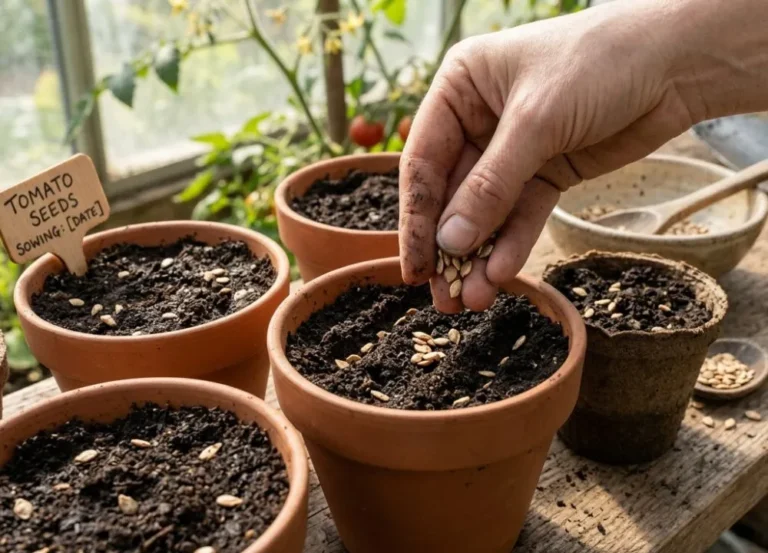
Space seeds an inch or two apart across the soil surface rather than clustering several together in one spot.
Press each seed gently into the mix, then cover with a thin layer of soil or fine vermiculite.
The same gentle-press technique used when you sow lettuce works nearly the same way here, since both are small seeds that need only light soil coverage.
Tape the jug shut around its middle, label it clearly, and set it outside once your zone’s timing lines up.
Caring for Winter-Sown Tomato Seedlings After Germination
Germination is only the halfway point, and how seedlings get handled afterward decides whether they survive long enough to reach the garden.
Warm days and sudden cold snaps both demand real attention once tiny leaves start pushing through the soil.
Venting on Warm Days
Once seedlings appear, open the lid or prop it slightly whenever daytime temperatures climb into the sixties or higher.
Trapped heat inside a closed jug can build up fast under direct sun and scorch young leaves within an hour or two.
Close the vent again each evening as temperatures drop, protecting seedlings through the cooler overnight hours that follow.
Cramped, humid conditions inside a vented jug can also attract fungus gnats, so it helps to check the soil surface for small flying pests once seedlings are a few inches tall.
Watching for Late Cold Snaps
Keep an eye on the forecast even after germination, since a surprise frost can still damage newly exposed seedlings.
If a hard freeze is expected, close the jug fully or move the container somewhere more sheltered for that night.
Knowing how often to water seedlings during cold stretches matters too, since soggy soil combined with near-freezing air causes more damage than either problem alone.
Seedlings recovering from a cold shock can look surprisingly similar to ones that are simply underwatered, which makes checking the actual soil moisture worth doing before assuming the cold caused all the damage.
Hardening Off Before Transplant
Winter-sown seedlings are naturally tougher than indoor-started ones, so the hardening off period is shorter, though not skippable entirely.
Give plants a few days of gradually longer outdoor exposure before moving them into their permanent garden spot.
Leaves that turn pale or yellow during this stage usually point to a stress issue worth catching early, before the plant goes into the ground permanently.
If soil ever stays too wet for too long in the jug, knowing how to rescue an overwatered plant can save a seedling that would otherwise be a total loss.
Choosing the Right Day to Finally Transplant
Pick a calm, overcast afternoon for transplanting rather than a bright, windy one that stresses roots right away.
Transplant only once the real danger of frost has fully passed for your specific zone and location.
Checking a local frost date guide beforehand is far more reliable than judging safety by how the weather simply feels that day.
Why Timing, Not the Method Itself, Decides Your Winter Sowing Success
Winter sowing works for tomatoes just as reliably as it does for hardier plants, but only when timing respects the crop’s tender nature.
A gardener in zone 4 and one in zone 9 work with completely different calendars, even using the exact same jug and soil.
Rushing the process, in either direction, causes far more failures than any flaw in the method itself ever could.
Most seedling losses trace back to timing mistakes rather than the dozens of other reasons plants sometimes struggle to thrive once they’re in the ground.
Get the zone-specific window right, vent consistently, and watch the forecast closely, and this low-effort method will keep your seedlings alive and ready for transplant every single spring.