If you’ve ever put tomato seedlings in the ground too early, only to watch a late frost turn them into sad, blackened stems, you know the timing question isn’t a small one.
In Massachusetts, “when do I plant?” doesn’t have a single answer; it depends heavily on where in the state your garden is located. A gardener in the Berkshires and a gardener on Cape Cod can be separated by three or four weeks of safe planting time, even though they live in the same state.
The good news is that once you know your planting zone and region, the timing becomes fairly predictable. This guide walks through the general rule of thumb, then breaks it down region by region, and covers the seed-starting and transplanting schedule that ties it all together.
- When to Plant Tomatoes in Massachusetts?
- Western Massachusetts (Berkshires) Planting Time
- Central Massachusetts Planting Time
- Eastern Massachusetts / Greater Boston Planting Time
- Cape Cod & Coastal Massachusetts Planting Time
- When to Start Tomato Seeds Indoors in Massachusetts?
- When to Plant Tomatoes Outside in Massachusetts?
- When Do Tomatoes Ripen in Massachusetts?
- When Is Tomato Season in Massachusetts
- Why Your Massachusetts Region Matters More Than the Calendar
When to Plant Tomatoes in Massachusetts?
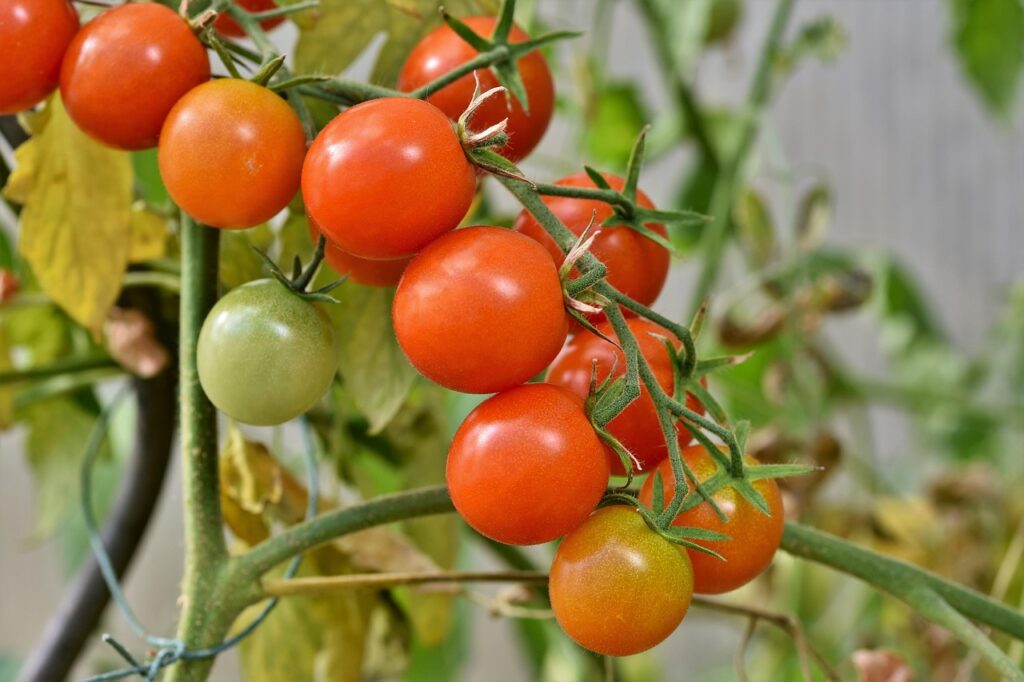
As a general rule, tomatoes should go into Massachusetts gardens after the danger of frost has passed and the soil has warmed to at least 60°F, since tomatoes are a warm-season crop that can be killed or stunted by cold. Statewide, that typically lands somewhere between mid-May and early June, depending on your region.
The two conditions that matter most are:
- Air temperature: your area’s last spring frost date needs to be behind you, plus a small buffer, since an “average” last frost date still carries some risk of a late cold snap.
- Soil temperature: even frost-free air doesn’t guarantee warm enough soil. Cold soil slows root growth and can stunt young tomato plants for weeks, so it’s worth waiting until nighttime lows are reliably above 50°F.
Because Massachusetts spans a range of climates, from cool, elevated inland hills to a moderating coastline, there’s no single calendar date that works for the whole state. These are the same two main factors that affect planting time for nearly any crop, not just tomatoes.
The regional breakdowns below give you a much more accurate target, and if you want the general rundown on when to plant tomato seeds, that’s worth a look too.
Western Massachusetts (Berkshires) Planting Time
The Berkshires are the coldest gardening region in Massachusetts, with elevations often running from 1,000 to over 2,000 feet. Last frost here typically doesn’t clear until mid-to-late May, and in higher pockets it can stretch into the first week of June.
That makes the safe outdoor planting window for tomatoes roughly late May through early June, noticeably later than the rest of the state. Much of the Berkshires falls in zone 5, so it’s worth checking zone 5 frost dates and growing season length for a closer estimate specific to your town.
Gardeners in this region also benefit from choosing shorter-season tomato varieties, since the growing season here is the shortest in Massachusetts. If you want to confirm your exact zone, see our guide to the Springfield, MA, planting zone.
Central Massachusetts Planting Time
Central Massachusetts, including the Worcester area, sits at more moderate elevations and warms up faster than the Berkshires. The average last frost date generally falls in late April to early May, putting the safe tomato planting window at roughly mid-May to Memorial Day.
Compared to Western Massachusetts, this region gains a week or two of extra growing time, though it’s still noticeably cooler than the coast and shouldn’t be treated the same as Boston or the Cape. For a closer look at your specific area, see our guide to the Worcester, MA, planting zone.
Eastern Massachusetts / Greater Boston Planting Time
Greater Boston and the rest of Eastern Massachusetts benefit from some coastal moderation, which keeps both spring and fall temperatures milder than in inland areas. Last frost in and around Boston tends to arrive by mid-to-late April, making it one of the earlier-clearing regions in the state.
That puts safe tomato planting in Eastern Massachusetts at roughly mid-May, a bit ahead of Central Massachusetts and well ahead of the Berkshires. As with anywhere else, it’s still worth keeping an eye on overnight forecasts in early May, since a cold snap can still sneak through.
If you garden closer to the city, check the Boston planting zone guide; gardeners farther out can reference the Andover or Concord, MA, planting zone pages for more localized details.
Cape Cod & Coastal Massachusetts Planting Time
Cape Cod and the state’s other coastal areas are the warmest tomato-growing zones in Massachusetts. The surrounding ocean water acts as a heat buffer, moderating temperature swings so that frost clears earlier in spring and holds off later in fall. Some coastal towns see their last frost by mid-April.
That gives coastal gardeners a safe planting window as early as early-to-mid May, several weeks ahead of the Berkshires. This same coastal buffering effect is also why the Cape’s growing season stretches later into autumn than in inland Massachusetts.
For town-specific detail, see the Cape Cod planting zone guide, along with the Plymouth, Seekonk, and Westport, MA, planting zone pages for nearby South Coast towns.
When to Start Tomato Seeds Indoors in Massachusetts?
Tomato seedlings need about 6 to 8 weeks of indoor growth before they’re ready to go outside, so your indoor start date should be counted backward from your region’s outdoor planting window above:
- Western MA (Berkshires): start seeds indoors around early-to-mid April
- Central MA: start seeds indoors around late March to early April
- Eastern MA / Boston: start seeds indoors around late March
- Cape Cod & coastal areas: start seeds indoors around mid-to-late March
Starting too early leads to leggy, overgrown seedlings sitting in pots waiting for warm soil, so it’s better to err a few days late than several weeks early. For the mechanics of getting seeds started indoors, our guide to propagation by seeds covers the basics.
When to Plant Tomatoes Outside in Massachusetts?
Once your indoor seedlings are several weeks old and the calendar is closing in on your region’s outdoor planting window, the next step is hardening off, gradually acclimating the plants to outdoor conditions before they’re transplanted for good.
A typical hardening-off schedule runs about 7 to 10 days:
- Start by setting seedlings outside in a sheltered, shaded spot for an hour or two.
- Gradually increase both sun exposure and time outdoors each day.
- By the end of the week, seedlings should be spending most of the day outside and can handle a bit of direct sun and light wind.
- Bring them in overnight if temperatures are still dipping into the 40s.
Once hardening off is complete and your region’s outdoor window has arrived, checked against the current forecast for any lingering frost risk, the seedlings can go into the ground. Transplant in the early evening or on an overcast day when possible, since this reduces transplant shock compared to planting in full midday sun.
For more on timing other crops during this same window, see our spring planting hub, and once your seedlings are in the ground, our guide on how often to water tomato plants is a natural next read.
When Do Tomatoes Ripen in Massachusetts?
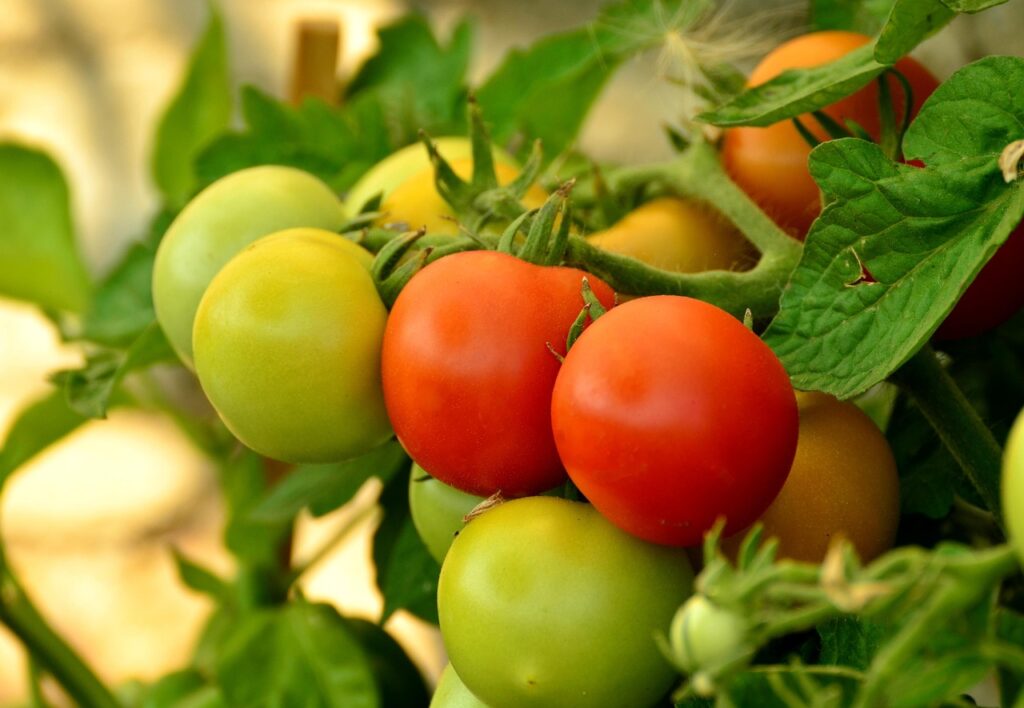
From the day tomatoes go into the ground, most varieties take roughly 60 to 85 days to produce their first ripe fruit, though the exact number depends heavily on the variety planted. Early varieties can ripen in as little as 55–60 days, while larger beefsteak types often need closer to 80–85 days.
Given the regional transplant windows above, that generally puts the first ripe tomatoes at:
- Coastal MA & Cape Cod: early-to-mid July onward
- Eastern MA / Boston: mid-July onward
- Central MA: mid-to-late July onward
- Western MA (Berkshires): late July into August
Warm, sunny stretches in June and July can speed this timeline up, while a cool, cloudy summer can push it back by a week or two. If you’re unsure whether your plants are on track, our guide on what a tomato plant looks like at each stage can help you spot-check growth.
When Is Tomato Season in Massachusetts
Taken together, the Massachusetts tomato season generally runs from the regional transplant dates in May through the first hard fall frost, which arrives anywhere from early October inland to early November on the coast.
The heart of the harvest, when most home gardens are producing steadily, typically falls in late July through September, tapering off as fall temperatures cool the vines.
For a broader look at what else is thriving during these months, our summer planting hub covers the wider seasonal picture, and you can also check whether tomato plants keep producing all summer once they start bearing fruit.
Why Your Massachusetts Region Matters More Than the Calendar
The throughline across all of this is simple: there’s no single “right” day to plant tomatoes in Massachusetts. The Berkshires, Central Mass, Greater Boston, and Cape Cod can each be weeks apart in their safe planting windows, driven by elevation and distance from the moderating effect of the coast.
Rather than planting by a date circled on a generic calendar, the more reliable approach is to work backward from your specific region’s average last frost date, add a buffer for soil warmth, and let that, not the calendar, set your schedule for starting seeds, hardening off, and transplanting.
If you garden in another part of the country, the same region-first approach applies; see our guides on when to plant tomatoes in Georgia, Texas, and Florida for comparison.