Many new gardeners on the Cape buy plants without checking whether they will survive the coastal winters, only to watch them die within a season. That mistake means wasted money, wasted time, and a garden that never gets past its first year.
When frost hits a plant that was never meant for this region, the roots freeze, and the stems turn black almost overnight. A gardener can lose an entire bed of shrubs or perennials in one cold night, and by spring, there is nothing left to show for the effort.
This usually happens because people plant based on general zone charts made for inland areas, not for a peninsula surrounded by ocean water. Cape Cod’s climate behaves differently from the rest of Massachusetts, so a plant rated for a nearby inland town can still fail here.
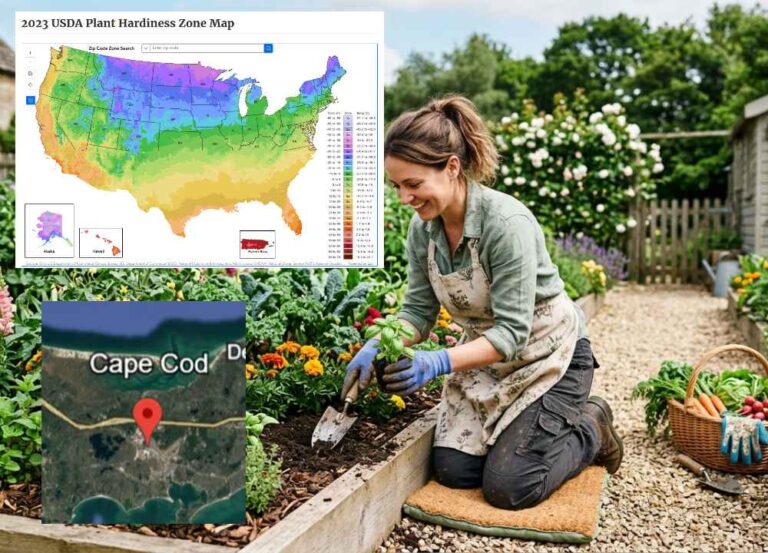
Knowing exactly what planting zone Cape Cod, Massachusetts, is in gives you a real starting point before you buy a single seed or shrub. According to the USDA Plant Hardiness Zone Map, most of the Cape falls in a warmer zone than many expect, because the surrounding water keeps winter temperatures milder than in inland spots.
Once you know your zone, choosing plants becomes simple instead of stressful. This guide walks through the exact zone, the reason behind it, and the plants that actually thrive here.
What Planting Zone Is Cape Cod, Massachusetts?
Most of Cape Cod falls under USDA Hardiness Zone 7a, based on the most recent map update. A few areas near the outer beaches and the nearby islands even edge into zone 7b, since the ocean holds heat longer into the fall.
This is warmer than most people assume when they hear “Massachusetts,” since inland spots like Worcester sit two full zones colder. The Atlantic water around the Cape acts like a buffer, softening both the summer heat and the winter cold.
Anyone asking what planting zone Cape Cod, Massachusetts, is in should treat 7a as the safe baseline for shrubs, perennials, and fruit trees, similar to how Boston’s planting zone is often used as a nearby reference point. Coastal towns closest to the water can be slightly warmer, so a plant labeled for zone 7 usually has a strong chance here.
Winters still bring frost and occasional snow, so this is not a tropical zone by any stretch. It simply means gardeners get a longer growing season and more plant options than colder parts of New England.
Gardening and Best Plants to Grow in Cape Cod
Gardening in Cape Cod means working with sandy soil, salty air, and a growing season that runs a bit longer than most of New England. Once a gardener understands these three factors, plant choices become much easier to make.
The sandy ground drains fast, so plants that hate wet roots tend to do well here, while thirsty plants need extra watering and a layer of mulch. Wind off the water can also dry out leaves quickly, so many local gardeners lean toward tougher, low-maintenance plants.
Spring and fall planting windows work especially well here, since the ocean delays the first frost and pushes the last frost earlier than inland Massachusetts. This gives Cape Cod gardeners more flexibility with timing than gardeners just an hour inland, and checking regional gardening guidance can help fine-tune the exact dates.
Best Vegetables for Cape Cod Gardens
Tomatoes, peppers, and squash grow well here because they enjoy warm days and a long stretch of frost-free weather. Root vegetables like carrots and beets also do well in sandy soil, since loose soil lets them expand with little resistance.
Leafy greens such as lettuce and spinach prefer the cooler shoulder seasons, so planting them in early spring or early fall yields better results than planting in peak summer heat. Garlic is another reliable choice, and many local gardeners plant cloves in the fall for a summer harvest the following year.
Best Flowers and Shrubs for Cape Cod
Hydrangeas are practically a Cape Cod signature, thriving in the peninsula’s humid air and slightly acidic soil. Beach roses and bayberry shrubs also handle salt spray well, which makes them dependable choices near the coastline.
For color through the season, black-eyed Susans and coneflowers hold up against wind and drought once established. These perennials return year after year, which saves both money and effort compared to replanting annuals every spring.
FAQs
What planting zone is Cape Cod, Massachusetts, officially in?
Cape Cod is primarily in USDA zone 7a, with a few outlying areas reaching 7b. That is warmer than most inland Massachusetts towns.
Can you grow palm trees on Cape Cod?
Not reliably outdoors year-round, since true palms need warmer zones than 7a. Some gardeners grow hardy palm varieties in pots and bring them inside for winter.
What is the last frost date on Cape Cod?
The last frost usually lands in early to mid-April, though it can shift slightly near the coast. It is always smart to check local forecasts before planting tender seedlings outside.
Why is Cape Cod warmer than the rest of Massachusetts?
The ocean surrounding the Cape holds heat and releases it slowly, keeping winters milder. This same effect also keeps early summer a touch cooler than inland areas.
What vegetables grow best in Cape Cod’s sandy soil?
Tomatoes, peppers, carrots, and beets all do well since the soil drains fast. Adding compost helps the sandy ground hold onto moisture and nutrients a bit longer.