Boulder gardeners deal with a strange contradiction. The city gets over 300 days of sunshine, yet late snowstorms can still roll in during May. You can grow tomatoes one season and lose an entire bed of transplants to a surprise frost the next.
That unpredictability makes knowing your planting zone critical. Without it, every trip to the nursery turns into a gamble. You grab whatever looks good on the shelf, bring it home, and hope for the best. Then winter hits and half your perennials never come back.
Boulder sits along the Front Range at 5,430 feet, right where the plains crash into the foothills. The elevation, the wind, and the alkaline clay soil all create conditions that punish the wrong plant choices fast.
This guide covers what planting zone Boulder falls into, how the wider county varies by elevation, and which plants actually hold up against everything this city dishes out.
Boulder Sits in USDA Hardiness Zone 6a
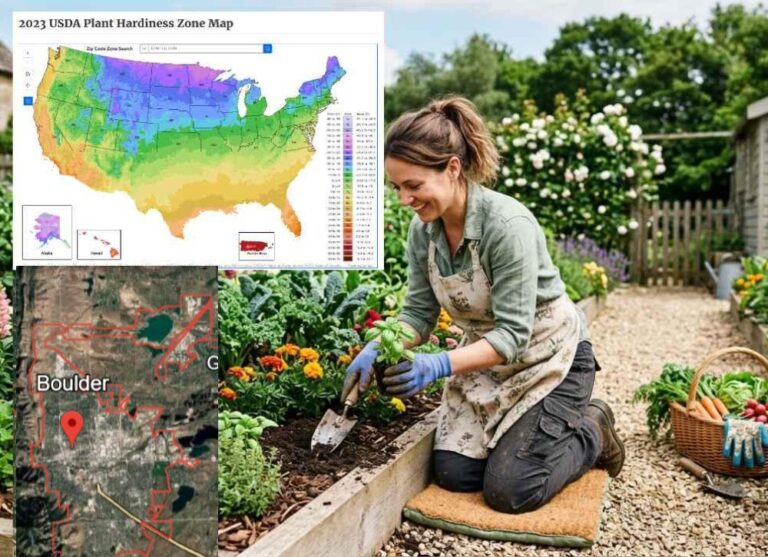
If you search what planting zone is Boulder, Colorado, the answer from the 2023 USDA Plant Hardiness Zone Map is Zone 6a. That classification applies to the city proper and most of the populated valley floor.
Zone 6a means the average annual extreme minimum temperature in your area falls between negative 10 and negative 5 degrees Fahrenheit. The USDA calculated this number using 30 years of weather data collected from 1991 through 2020.
This is the same zone that covers neighboring Front Range cities like Denver, Aurora, and Longmont. If a plant tag says it handles Zone 6, it should survive a typical Boulder winter without protection.
What Changed From the 2012 Map
Boulder’s zone classification actually shifted with the 2023 update. According to PlantMaps.com, the 2012 USDA map placed Boulder in both Zones 5b and 6a. The 2023 revision moved the city fully into Zone 6a.
That change reflects a broader national trend. The PRISM Climate Group at Oregon State University, which co-developed the map with the USDA, reported that the 2023 version runs about 2.5 degrees Fahrenheit warmer on average than the 2012 edition across the contiguous United States.
For Boulder gardeners, the practical takeaway is simple. Plants rated for Zone 6 are now a safe bet across the city, whereas a decade ago, parts of town leaned closer to Zone 5b territory.
Why Boulder County Spans Multiple Zones
The city of Boulder sits in Zone 6a, but Boulder County tells a very different story. According to the 2023 USDA map, the county stretches across five separate zones: 4a, 4b, 5a, 5b, and 6a.
That dramatic range comes down to elevation. The valley floor where most people live hovers around 5,430 feet. But head west into the foothills and you climb past 7,000, 8,000, even 10,000 feet within the same county.
According to Go West Gardener, for every 1,000 feet of elevation gain in Colorado, temperatures drop roughly 3 to 4 degrees. A gardener in downtown Boulder and a gardener in Nederland, just 20 miles away, are working in completely different climate realities.
Beyond the Zone Number: What Actually Shapes Boulder’s Growing Conditions
Your hardiness zone tells you one thing: how cold it gets in winter. But Boulder’s gardening challenges run much deeper than cold. Several factors work together to make this city unique, and ignoring any one of them will cost you plants.
Elevation, UV, and Thin Air
At 5,430 feet, Boulder receives far more intense ultraviolet radiation than cities at lower elevations. Colorado State University Extension notes that high-intensity sunlight and low humidity restrict plant growth in Colorado more than low temperatures alone.
That strong UV can bleach leaves, dry out foliage, and stress plants that handle full sun just fine at sea level. Placing beds where they catch morning light but get afternoon shade helps reduce this pressure, especially for leafy vegetables and delicate perennials.
Alkaline Clay Soil
Boulder’s soil shares the same profile as most of the Front Range: heavy clay with an alkaline pH. According to Boulder County Home and Garden Magazine, most soils in the Boulder area already lean slightly to very alkaline, and adding lime or calcium-rich amendments only makes the problem worse since Colorado soil is naturally high in calcium.
This means acid-loving plants like azaleas, blueberries, and rhododendrons face an uphill battle from the start. Your best path is choosing species that tolerate or even prefer alkaline conditions, then amending with compost to improve texture and drainage without trying to overhaul the pH.
Late Frosts and a Tight Growing Window
Boulder’s growing season is shorter than many Front Range cities. Based on frost data compiled by Garden.org using NOAA climate normals, Boulder has a 90 percent chance of being frost-free by June 2. The 50/50 mark falls around May 17.
That is noticeably later than Denver, where the same 90 percent threshold lands nearly a week earlier. Understanding Zone 5 frost dates and the growing season helps you plan even more carefully if your property sits closer to the foothills.
The first fall frost typically arrives around mid-September. That gives Boulder gardeners a frost-free window of roughly 130 to 150 days, depending on your exact location and how aggressively you protect tender crops at the tail ends.
Chinook Winds and Hail
Boulder sits in one of Colorado’s most wind-exposed corridors. Chinook winds barrel down from the mountains and can shift temperatures by 20 or 30 degrees in a matter of hours. Those gusts dry out soil fast and can physically snap young transplants or strip leaves from established plants.
Hail adds another layer of risk. The Front Range averages two to three significant hailstorms per growing season, and a single event can flatten broad-leafed plants in minutes. Native grasses and narrow-leafed perennials bounce back from hail far better than large ornamentals.
Best Plants for Boulder’s Zone 6a
Boulder’s combination of cold winters, intense sun, alkaline soil, and low rainfall narrows your options. But the plants that do work here tend to thrive with very little fuss once established.
Vegetables That Perform Well
Warm-season crops like tomatoes, peppers, and squash produce well in Boulder, but timing is everything. Start seeds indoors six to eight weeks before late May, then transplant only after the frost risk genuinely clears. A study referenced by Blooming Expert recommends choosing tomato varieties with 70 to 80 day maturity in this region, since 90-plus day types risk running out of season.
Cool-season crops get a longer runway. Lettuce, spinach, kale, and peas can go into the ground as early as mid-March, as long as the soil is workable. Colorado State University Extension considers these crops appropriate for outdoor sowing in March along the Front Range.
Raised beds give Boulder vegetable gardeners a real advantage. According to Garden Truth, soil in a 12-inch raised bed warms two to four weeks faster than in-ground soil during spring. In a city with a tight growing season, that head start matters.
Perennials That Return Year After Year
Perennials suited to Boulder need to survive the cold, tolerate alkaline soil, and handle low water once established. Several species check every box:
- Rocky Mountain Penstemon blooms in late spring with blue-purple flowers
- Purple Coneflower draws pollinators and handles drought well
- Blanket Flower thrives in poor, alkaline soil with zero pampering
- Yarrow grows in a wide range of colors and needs almost no water
- Russian Sage handles heat, wind, and dry spells without complaint
- Colorado Blue Columbine is the state flower and a natural fit here
Trees and Shrubs for the Front Range
Picking the right tree in Boulder is a long-term decision. A tree that cannot handle the wind, soil pH, or cold will struggle for years before finally giving up.
Gambel Oak is a tough Colorado native that tolerates drought and supports local wildlife. Ponderosa Pine provides evergreen structure and windbreak capability. For ornamental appeal, Chokecherry and Serviceberry both offer spring blossoms, fall color, and edible berries for birds.
Among shrubs, Rabbitbrush thrives in Boulder’s alkaline soil with almost no supplemental water. Three-leaf Sumac adds fall color and handles exposed, windy sites better than most.
Drought-Tolerant and Xeriscape Picks
Boulder’s semi-arid climate delivers limited annual rainfall, and water conservation is a growing priority across the Front Range. The Boulder-based nonprofit Resource Central offers discounted DIY garden kits each spring that help homeowners transition to water-wise landscaping.
Blue Grama Grass and Buffalograss work as low-water lawn alternatives. Yucca adds structural drama with almost no irrigation. For ground cover, Ice Plant spreads quickly with bright blooms and handles dry conditions naturally.
The Plant Select program, a collaboration between Colorado State University and Denver Botanic Gardens, evaluates and recommends species proven to thrive in the Rocky Mountain region. Their roster includes over 180 grasses, shrubs, perennials, and trees tested for dry conditions and harsh weather.
How to Find Your Exact Zone by ZIP Code
Boulder’s zone can vary even across a few miles, especially as you move closer to the foothills. The most precise way to confirm your zone is to use the official USDA Plant Hardiness Zone Map and type in your ZIP code.
Common Boulder ZIP codes include 80301, 80302, 80303, 80304, and 80305. Areas closer to the Flatirons or at higher elevations within these codes may behave more like Zone 5b in practice, even if the map says 6a.
Microclimates also play a significant role. A garden sheltered by a south-facing wall collects and radiates heat, effectively bumping your micro-zone warmer. An exposed north-facing slope with no wind protection behaves colder. Knowing your micro-zone matters as much as knowing your zip-level zone.
Planting Calendar for Boulder Gardeners
Timing separates successful Boulder gardens from frustrating ones. The two main factors that affect planting time for any crop are your frost dates and your soil temperature, and both shift later in Boulder than in lower-elevation Front Range cities.
Early Spring: March Through Mid-April
Direct-sow cold-tolerant crops like spinach, radishes, arugula, and peas as soon as the soil thaws enough to work. Start warm-season seeds indoors under grow lights during this window so they are ready for transplanting in late May or early June.
This is also a strong time to plan garlic planting if you did not get cloves in the ground the previous fall. Test your soil pH and amend beds with compost before the growing season picks up speed.
Late Spring: Late May Through June
Wait until mid to late May before transplanting warm-season crops outside. Watch the forecast closely through the last week of May, because Boulder’s last frost can sneak in later than the calendar suggests. Keep row covers or frost cloth ready to protect tender transplants on cold nights.
Set out annual flowers and establish new perennial beds once the soil has warmed consistently. This is when most nurseries along the Front Range stock their widest selection of zone-appropriate plants.
Summer: July Through August
Water deeply and less often to encourage roots to push down into the soil rather than staying shallow near the surface. Mulch all beds with two to three inches of organic material to slow evaporation and buffer soil temperature swings.
Watch for hail damage after afternoon storms. Prune any broken stems cleanly and promptly to prevent disease from entering through ragged wounds.
Fall: September Through October
Harvest warm-season crops before the first frost, which usually arrives by mid-September. Plant trees and shrubs in early fall so roots can establish before the ground freezes solid.
Sow garlic cloves in mid to late October for a harvest the following summer. Prepare your garden for winter by cutting back dead perennial growth, adding a layer of mulch over sensitive root zones, and draining any irrigation lines before the first hard freeze.
Final Takeaway
Boulder, Colorado sits in USDA Hardiness Zone 6a under the 2023 map, a shift from the split 5b/6a designation it carried in 2012. But Boulder County as a whole spans five zones, from 4a in the high peaks down to 6a on the valley floor, so your exact location matters enormously.
The zone number tells you how cold it gets. Everything else, the intense UV, the alkaline clay, the chinook winds, the late frosts, and the hail, you learn by gardening here. Choose plants rated for Zone 6 or colder, lean toward drought-tolerant and native species, and time your planting around late May for warm crops and mid-March for cool ones.
Boulder rewards patience. The gardeners who work with this climate instead of fighting it end up with landscapes that look natural, stay healthy, and barely need watering by midsummer.