You picked up a gorgeous perennial at the garden center, brought it home to your Aurora yard, and watched it wilt before summer even hit. The tag said it could handle cold winters. So what went wrong?
Chances are, you planted something rated for the wrong hardiness zone. Aurora sits on the Colorado Front Range at over 5,400 feet of elevation, right next door to Denver’s own planting zone, where thin air, intense sun, and clay-packed soil gang up on plants that were never built for this environment. Plant the wrong zone rating and you lose money, time, and a perfectly good Saturday afternoon.
The fix is simple, but it starts with knowing your exact zone. This guide breaks down what planting zone Aurora falls into, what that zone actually means for your garden, and which plants will hold up through the heat, hail, and hard freezes this city throws at them.
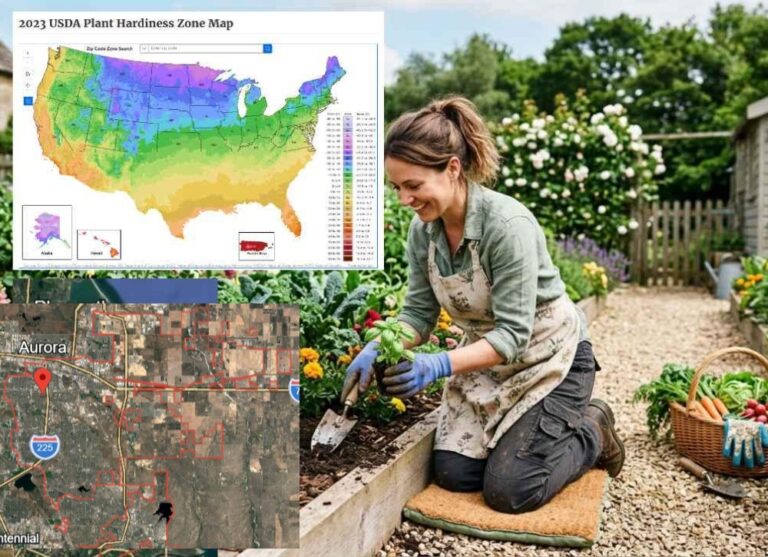
Aurora Falls in USDA Zones 6a and 5b
If you search what planting zone is Aurora, Colorado, the short answer is that nearly the entire city sits in USDA Hardiness Zone 6a. A small slice of the southern edge falls into Zone 5b instead.
According to the 2023 USDA Plant Hardiness Zone Map, Zone 6a covers roughly 95 percent of Aurora’s neighborhoods. That includes areas like Aurora Highlands, Murphy Creek, Southlands, and Tallyn’s Reach, along with more than 120 other communities.
Zone 5b only touches a handful of spots along Aurora’s southern boundary. Neighborhoods like Hampton Hills, Inspiration, and Rocking Horse sit in this slightly colder pocket, where local elevation and terrain create cooler microclimates.
What Zone 6a Actually Means for Your Yard?
Zone 6a tells you one specific thing: the average annual extreme minimum temperature in your area ranges from negative 10 to negative 5 degrees Fahrenheit. That is the coldest temperature your outdoor plants need to survive through an average winter.
The USDA bases this number on 30 years of weather data collected between 1991 and 2020. It does not guarantee your yard will never dip below negative 10. It simply reflects the statistical average of the coldest nights recorded across three decades.
Any perennial, tree, or shrub you buy should carry a hardiness rating of Zone 6 or lower. Plants rated for Zone 7 or above will likely struggle through an Aurora winter, even a mild one.
How Zone 5b Differs?
Zone 5b drops the floor slightly. The average annual minimum here falls between negative 15 and negative 10 degrees Fahrenheit. That five-degree difference matters more than it sounds.
It means certain borderline plants that survive in Zone 6a might not pull through in a 5b pocket. If you live in one of those southern neighborhoods, understanding Zone 5 frost dates and the growing season will help you plan more accurately.
The good news is that most plants rated for Zone 5b will also thrive in Zone 6a. So if you are unsure which micro-zone your property falls in, picking Zone 5 rated plants gives you a wider margin of safety.
Why the 2023 Map Matters More Than Older Versions?
Many gardening websites and plant tags still reference the old 2012 USDA map. The problem is that the 2023 update changed zone designations across a large chunk of the country, and relying on outdated information could steer your plant choices in the wrong direction.
A Bigger Data Set Behind the New Map
The USDA released the updated Plant Hardiness Zone Map in November 2023, developed jointly with Oregon State University’s PRISM Climate Group. This version pulled data from 13,412 weather stations, compared to only 7,983 stations used for the 2012 edition.
That jump in data points made the new map far more precise. According to Chris Daly, director of the PRISM Climate Group at Oregon State University, the 2023 map runs about 2.5 degrees Fahrenheit warmer on average than the 2012 version across the lower 48 states.
What Changed for Aurora Specifically?
Under the 2012 map, parts of Aurora straddled Zone 5b more heavily. The 2023 revision pushed the dominant classification firmly into Zone 6a for most of the city, reflecting warmer low-temperature averages over the updated 30-year window.
For Aurora gardeners, this shift opens the door to a slightly wider range of plants. Species that were once considered borderline risky now fall within the safe range for the majority of the city.
Still, no zone map captures everything. The USDA itself cautions that the map only measures average extreme minimum winter temperatures. It does not account for summer heat, humidity, rainfall, soil type, or wind exposure.
Aurora’s Climate Throws More Curveballs Than Just Cold
Knowing your hardiness zone is a solid starting point, but Aurora’s climate has quirks that a zone number alone will never capture. If you only shop by zone rating, you will still lose plants to challenges that have nothing to do with winter cold.
Elevation and Intense UV
Aurora sits at roughly 5,400 feet above sea level. At that altitude, the atmosphere filters less ultraviolet radiation than it does at lower elevations. Plants receive harsher, more direct sun exposure throughout the growing season.
This means even sun-loving varieties can scorch if they sit in full afternoon light without any break. Morning sun with afternoon shade works well for many species here. Positioning your beds on the east or northeast side of your house can help buffer that midday intensity.
Alkaline, Clay-Heavy Soil
Most Aurora yards sit on dense clay subsoil with an alkaline pH that typically ranges from 7.5 to 8.5. Research from Colorado State University Extension confirms that heavy clay and high pH are common across the Front Range and require active management to support healthy plant growth.
Acid-loving plants like blueberries, azaleas, and rhododendrons will struggle in this soil no matter how perfectly they match your zone. Rather than fighting your geology, pick species that naturally tolerate alkaline conditions.
Amending beds with compost improves drainage and nutrient availability. Raised beds also help, especially in areas where the clay runs deep and drains poorly.
Short Growing Season and Late Frosts
Aurora’s frost-free growing window runs roughly 118 to 137 days, depending on which probability threshold you follow. Based on data compiled by Garden.org using NOAA climate normals, gardeners in Aurora have a 90 percent chance of being frost-free by late May and should expect the first fall frost around mid-September.
Late spring frosts catch Aurora gardeners off guard more than almost anything else. Localized cold pockets, especially in lower-elevation neighborhoods, can see killing frosts through mid-May even when the rest of the city has warmed up.
Hail, Wind, and Sudden Storms
Aurora averages two to three hailstorms per growing season, mostly between late spring and early fall. Broad-leafed tropicals and delicate flowering plants get shredded by even a moderate hail event.
Choosing plants with narrow, flexible, or thick leaves gives your garden a better chance of bouncing back after a storm rolls through. Native grasses and prairie perennials handle hail far better than large-leafed ornamentals.
Best Plants for Aurora’s Zone 6a (and 5b)
With the zone, soil, and climate picture clear, here are the categories of plants that genuinely perform well in Aurora.
Vegetables That Work Here
Warm-season crops like tomatoes, peppers, and squash thrive once you get past the last frost date. Start seeds indoors six to eight weeks before mid-May, then transplant after soil temperatures hit at least 55 degrees Fahrenheit at four inches deep.
Cool-season vegetables get an earlier start. Lettuce, spinach, kale, and peas can go into the ground in mid-March to early April, as soon as the soil thaws and daytime temperatures stay above freezing consistently.
Corn also does well here. Zone 6a provides enough heat units through the summer for most standard sweet corn varieties to reach maturity before the first fall frost arrives.
Perennials Built for the Front Range
Perennials that return year after year need to handle both the cold winters and the dry, alkaline growing conditions. Several species stand out for Aurora specifically:
- Purple Coneflower tolerates drought, poor soil, and full sun
- Blanket Flower thrives in alkaline clay without extra amendments
- Russian Sage handles heat, wind, and dry spells with minimal care
- Rocky Mountain Penstemon is a Colorado native adapted to high altitude
- Daylilies survive hard freezes and bloom reliably each summer
- Black-eyed Susan spreads well in amended beds with moderate water
Trees and Shrubs Worth Planting
Trees take years to establish, so picking the right species matters even more than it does with annuals. Several trees perform well at Aurora’s elevation and soil pH.
Gambel Oak is a Colorado native that handles drought and supports local wildlife. Ponderosa Pine is another strong pick, offering year-round structure and wind protection. For fall color, the Autumn Blaze Maple hybrid tolerates windy Colorado afternoons and puts on a reliable show each October.
Among shrubs, Rabbitbrush is a tough native that thrives in alkaline soil and needs almost no supplemental water once established. Lilac bushes also do well, bringing spring fragrance and color to Aurora yards.
Drought-Tolerant and Xeriscape Options
Aurora receives only about 14 inches of rain per year. Water-smart landscaping is not just an environmental choice here. It is a practical one.
Blue Avena Grass offers ornamental texture without heavy watering. Yucca and Prickly Pear Cactus both handle the dry conditions naturally. Colorado Blue Spruce, the state tree, anchors a landscape and provides wind screening through every season.
Aurora Water even offers rebates of up to two dollars per square foot for homeowners who remove traditional turf and replace it with xeriscape plantings. That incentive makes the switch easier on both your yard and your wallet.
How to Find Your Exact Zone by ZIP Code?
Aurora stretches across a large geographic area, and your specific neighborhood might sit in a slightly different micro-zone than someone across town. The most reliable way to pinpoint your zone is to use your ZIP code on the official USDA map.
Visit the USDA Plant Hardiness Zone Map website and type in your five-digit ZIP code. The tool will return your exact zone designation based on the 2023 data set. Common Aurora ZIP codes include 80010, 80011, 80012, 80013, 80014, 80015, 80016, and 80017.
You can also cross-reference your result with Garden.org’s zone finder, which uses the same underlying USDA data but presents it in a slightly different interface.
Keep in mind that even within a single ZIP code, elevation changes and nearby structures can shift your micro-zone. A yard backed against a south-facing brick wall stays warmer in winter than an exposed yard just a few blocks away.
Planting Calendar for Aurora Gardeners
Knowing your zone is only half the puzzle. The other half is timing, because two main factors affect when any crop should go in the ground. Here is a rough seasonal guide built around Aurora’s frost dates and growing window.
Early Spring: March Through Mid-April
This window belongs to cold-hardy crops and soil preparation. Start transplanting cool-season vegetables like lettuce, spinach, and peas once the ground thaws. Begin indoor seed starting for warm-season crops you plan to move outside after the last frost. Early spring is also a good window for planning garlic planting in Zone 5.
Test your soil pH during this period. A simple test kit from any garden center will tell you whether your beds need sulfur, compost, or other amendments before planting season ramps up.
Late Spring: Mid-May Through June
After the last frost clears, typically by mid to late May, it is safe to transplant tomatoes, peppers, squash, and other warm-season plants. Set out annual flowers and begin establishing new perennial beds.
Keep frost cloth or row covers handy through at least the third week of May. Surprise cold snaps are not rare, and protecting tender transplants for one extra week can save an entire season’s planting.
Summer: July Through August
Maintain consistent watering, especially during dry stretches. Mulch beds with two to three inches of organic material to hold moisture and moderate soil temperature. Watch for hail damage after afternoon storms and prune broken stems promptly to prevent disease entry.
Fall: September Through October
Plant trees and shrubs in early fall so their roots can establish before the ground freezes. Sow cool-season cover crops like winter rye to protect bare soil through the cold months. Harvest remaining warm-season vegetables before the first frost arrives, usually around mid-September.
Final Takeaway
Aurora, Colorado sits primarily in USDA Hardiness Zone 6a, with a small southern section in Zone 5b. But the zone number is just the entry point. Successful gardening here means working with the alkaline clay soil, the thin high-altitude air, the short frost-free window, and the unpredictable hail that defines life along the Front Range.
Pick plants rated for your zone or colder. Amend your soil with compost rather than fighting its natural pH. Time your planting around mid-May for warm crops and mid-March for cool ones. And lean toward drought-tolerant, native species whenever you can.
Do those things, and your Aurora garden will not just survive. It will look like it belongs here.