
Bermuda grass is one of the toughest, most heat-resistant grasses you can grow in Texas. It handles the brutal summers, bounces back from drought, and spreads thick enough to choke out most weeds without much help.
Most Texans who struggle with Bermuda grass don’t have a seed problem or a soil problem. They have a timing problem. Plant too early, and the seeds sit in cold soil, rotting.
Plant too late and the summer heat bakes them before roots ever get a chance to form. Either way, you end up with patchy, thin, or completely bare results after all that work.
The window for planting Bermuda grass in Texas is specific, and it shifts depending on which part of the state you live in.
North Texas, South Texas, and Central Texas have different soil temperatures and frost timelines, which means the right planting date in San Antonio is not the same as in Dallas or Amarillo.
You need to know exactly when to plant Bermuda grass in Texas, how to prepare, and what to do to get Bermuda grass growing strong from day one.
- Is Bermuda Grass Good for Texas?
- When to Plant Bermuda Grass in Texas?
- Can You Plant Bermuda Grass in the Fall in Texas?
- How to Plant Bermuda Grass Seed in Texas?
- When to Overseed Bermuda Grass in Texas?
- How to Care for Bermuda Grass in Texas?
- How High to Cut Bermuda Grass in Texas?
- When to Scalp Bermuda Grass in Texas?
- When to Dethatch Bermuda Grass in Texas?
- When Does Bermuda Grass Go Dormant in Texas?
- FAQ'S
Is Bermuda Grass Good for Texas?
Texas heat is no joke. Most grass types struggle to survive a full summer here, let alone look good doing it. Bermuda grass, though, is built for exactly this kind of climate.
It handles drought, bounces back from heavy foot traffic, and grows so dense that it crowds out most weeds on its own. That’s why you see it everywhere, from home lawns to football fields to golf courses across the state.
It needs full sun to thrive so that it won’t do well under heavy tree cover. But if your yard gets good sunlight, Bermuda is one of the lowest-maintenance, highest-performing options you’ll find in Texas.
One honest downside: it spreads aggressively. According to Ryno Lawn Care, Bermuda is sometimes called “Devil’s grass” because it grows quickly and can creep into flower beds or sidewalks if you’re not keeping an eye on it.
Is Bermuda Grass Native to Texas?
Bermuda grass is not native to Texas. It originated in Africa and was introduced to the United States in the 1700s as a pasture grass.
Over time, it spread across the South and became one of the most widely used turf grasses in warm climates. Today, it’s so common in Texas that most people assume it’s always been here.
When to Plant Bermuda Grass in Texas?
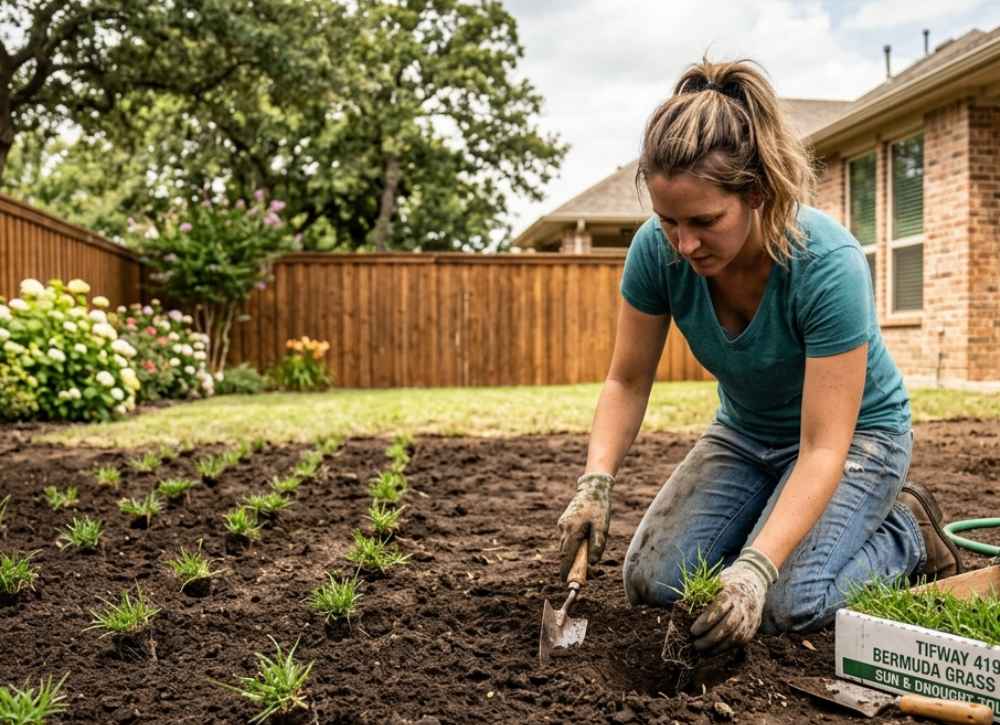
Timing is everything with Bermuda. Plant it at the wrong time, and you’re setting yourself up for failure before you even begin.
The window you’re aiming for is late spring to early summer. That’s when the soil and air temperatures are both warm enough for Bermuda seeds to germinate and grow properly.
When to Plant Bermuda Grass Seed in Texas?
The key number to watch is soil temperature. Bermuda seeds germinate best when soil temperatures are consistently between 65°F and 70°F, which is common in most parts of Texas from late April through June.
Planting Bermuda grass in Texas is often done from May to mid-June, as warm weather promotes seed germination and gives the grass plenty of time to establish roots before cold weather arrives. Don’t push it past mid-June, especially in northeast Texas, where heat and dry conditions can make establishment much harder.
When to Seed Bermuda Grass in Texas?
The seeding window is a bit broader than most people think. If you’re establishing a Bermuda grass lawn, the best time to seed is between March and August, with spring and early summer planting recommended for better establishment.
South Texas gets warm earlier, so planting can start sooner there. In north and central Texas, patience pays off; wait until the soil is genuinely warm before you put seed down, even if it means waiting until May.
Can You Plant Bermuda Grass in the Fall in Texas?
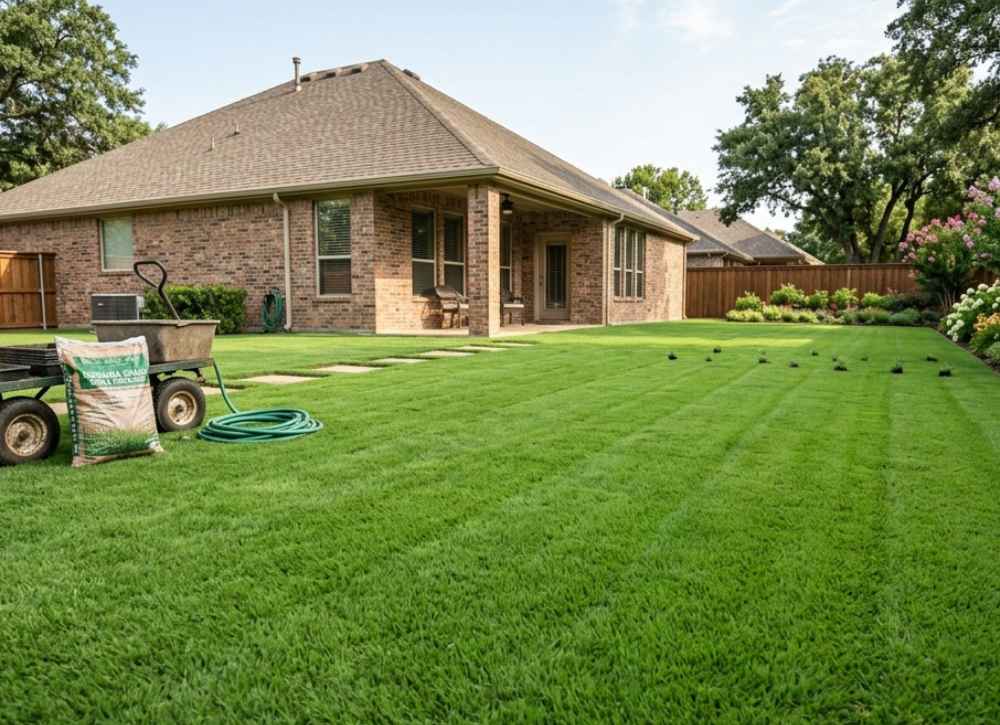
It is a question many people ask, and the honest answer is: not really. Fall planting gives Bermuda seeds almost no time to establish before cold weather sets in.
Sowing seed in the fall would be a waste of time and money, because even if it germinated, winter would kill the new seedlings. If you missed the spring and summer window, your best move is to wait and plan for next year.
How to Plant Bermuda Grass Seed in Texas?
Before you throw any seed down, the soil needs to be ready. Bermuda won’t establish well in hard, compacted ground or in areas where weeds are already competing for space.
Start by clearing existing vegetation. Kill off any weeds with an appropriate herbicide, then rake the top layer to loosen it. Prepare a good, firm seedbed and pack it with a roller. After the first rain, kill any emerging weeds, and once they turn brown, broadcast the Bermuda seed and pack again to press it into the soil surface.
How to Seed Bermuda Grass in Texas?
The rule of thumb for Bermuda grass seed is one-half pound to one pound of seeds per 1,000 square feet of lawn. Spread it evenly using a drop spreader or rotary spreader for best coverage.
After seeding, keep the seedbed consistently moist with light, frequent watering until germination happens. Once the seed has sprouted, water less frequently but more deeply to encourage roots to grow downward. Mow for the first time once the grass reaches about 2 inches tall.
How to Grow Bermuda Grass in Texas?
Bermuda grass grows fast once conditions are right. Give it full sun, warm soil, and consistent moisture in the early stages, and it will take off on its own.
The grass spreads through both above-ground runners called stolons and underground rhizomes. This is what makes it so effective at filling in bare spots, but it’s also why you have to keep it away from garden beds and sidewalk edges.
When to Overseed Bermuda Grass in Texas?
Overseeding is a good move when your lawn is looking thin or uneven. Overseeding Bermuda grass during the peak summer growing season is an effective strategy, and combining it with dethatching and aerating can help your lawn thrive.
If you want to keep your lawn green through winter, you can overseed with perennial ryegrass in the fall. In Texas, this means overseeding between late August and mid-November, about 5 to 8 weeks before the first frost. Just keep an eye on the spring transition; if the ryegrass lingers too long, it can slow down Bermuda’s return.
How to Care for Bermuda Grass in Texas?
Bermuda is low-maintenance compared to many grass types, but it still needs some attention to stay thick and healthy. The main things it needs are regular mowing, consistent watering during active growth, and fertilizer at the right time.
Don’t let it go too long between mowings. Bermuda grows fast in summer, and if you let it get too tall before cutting, you’ll end up scalping it, which stresses the grass and slows recovery.
How to Take Care of Bermuda Grass in Texas?
The basics come down to a simple rhythm. Mow weekly during the growing season, water deeply but not daily, and fertilize only when the grass is actively growing.
Stay off it during dormancy in winter. It’s important to turn off or significantly reduce irrigation from late fall to early spring; over-irrigation during this period can increase the risk of diseases such as large patch and take-all patch. Let the grass rest, and it will bounce back stronger in spring.
How to Water Bermuda Grass in Texas?
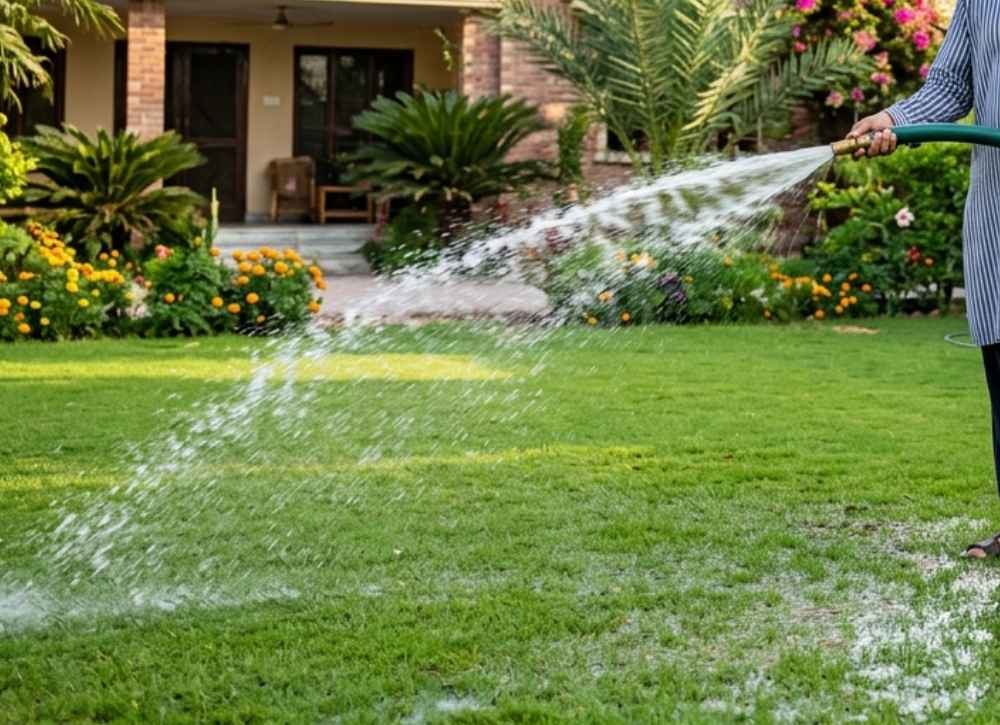
Bermuda is one of the most drought-tolerant grasses you can plant. But drought-tolerant doesn’t mean drought-proof; it still needs water to stay green and thick.
The biggest mistake most people make is watering too often and not deeply enough. Shallow daily watering keeps moisture near the surface, which actually encourages shallow roots and makes the grass more vulnerable in the long term.
How Often to Water Bermuda Grass in Texas?
Bermuda grass needs to be watered once or twice per week. During hot, dry Texas summers, twice a week may be necessary. But outside of peak heat, once a week with a good deep soak is usually enough.
The best time to water is early morning, around 4 to 6 a.m. It gives the grass time to absorb moisture before the heat of the day causes evaporation. Watering at night leaves the lawn damp for too long and can invite fungal disease.
How Much Water Does Bermuda Grass Need in Texas?
Bermuda grass requires approximately 1 to 1.25 inches of water per week to stay healthy during the summer months. If the ground is sandy, a half inch of water needs to be applied once every third day to keep the grass growing as it should.
You can use a simple tuna can or rain gauge to measure how much your sprinkler is putting out. It takes the guesswork out of it and helps you avoid both overwatering and underwatering.
How Long to Water Bermuda Grass in Texas?
How long you need to run your sprinklers depends on your irrigation system. On average, watering for 60 to 90 minutes per zone has proven effective, depending on your sprinkler head type.
The goal is deep watering, not long watering. Deep and infrequent watering trains Bermuda grass roots to grow deep into the soil where there is more moisture, but stop watering if water begins to pool or run on the surface.
How to Fertilize Bermuda Grass in Texas?
Fertilizer gives Bermuda the fuel it needs to grow thick and stay green. But timing matters as much as what you use. Feed it at the wrong time, and you’re either wasting money or actually hurting the lawn.
Never fertilize dormant grass. It won’t absorb the nutrients, and the extra nitrogen will feed weeds instead. Wait until Bermuda is actively growing and showing a strong, even green color before you put anything down.
When to Fertilize Bermuda Grass in Texas?
You should apply the first round of fertilizer after you have already cut your lawn two to three times in the spring. It is a reliable sign that the grass is out of dormancy and actively growing, usually from late April to May, depending on where in Texas you live.
According to Texas A&M AgriLife Extension, a typical fertilization plan for a Bermuda home lawn in Texas ranges from 1 to 4 applications per year, using 0.5 to 1 pound of nitrogen per 1,000 square feet during the growing season. Stop fertilizing in early fall before the grass goes dormant.
How Often Should You Fertilize Bermuda Grass in Texas?
As a general guideline, apply fertilizer to your Bermuda grass lawn every four to six weeks throughout the summer. For low-maintenance yards, a single spring application and one mid-summer application are usually enough.
Apply your final fertilizer application in early September, using a product low in nitrogen and high in phosphorus and potassium. Bermuda slows down in the fall, and pushing nitrogen at that point encourages soft new growth that cold snaps can easily damage.
How High to Cut Bermuda Grass in Texas?
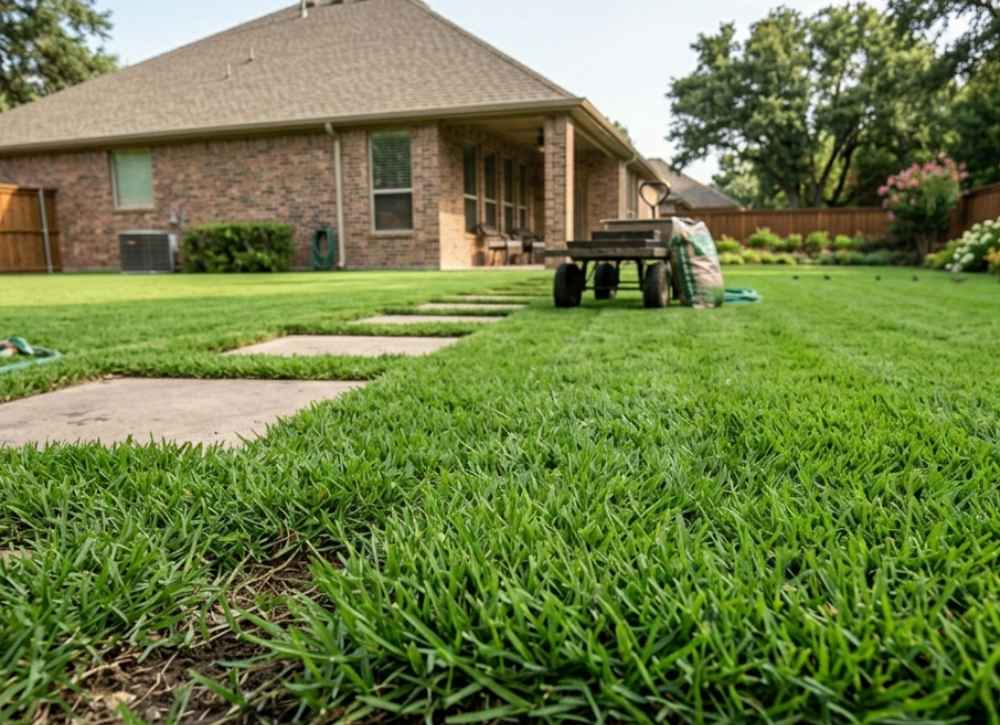
Mowing height matters more than most people realize. Cut it too short, and you stress the grass. Let it grow too tall and then cut it back hard, you’ll end up with a brown, scalped lawn that takes weeks to recover.
The recommended mowing height for Bermuda grass home lawns is 1 to 2 inches using a rotary mower. Keeping it in that range through the growing season provides enough leaf surface for photosynthesis without letting it get overgrown.
The one-third rule is your guide: never remove more than one-third of the blade in a single mow. If your lawn is at 2 inches, mow it again once it hits 3 inches, not after it’s already 4 or 5.
When to Scalp Bermuda Grass in Texas?
Scalping is when you cut the grass very low, lower than normal, to remove old dormant growth and help the lawn warm up faster in spring. Done at the right time, it speeds up green-up. Done too early, it can expose the roots to a late frost.
The ideal time to scalp Bermuda grass in Texas is between late February and mid-March. Scalping too early risks damaging roots from cold exposure, while scalping too late may remove new growth. After scalping, bag the clippings, return your mower to normal height, and let the grass come back on its own.
When to Dethatch Bermuda Grass in Texas?
Thatch is a layer of dead grass stems and roots that builds up between the soil and the green blades. A thin layer is fine, but once it gets past half an inch, it starts blocking water, air, and nutrients from reaching the roots.
Dethatching is essential for Bermuda grass as it is more prone to thatch than other warm-season grasses. These tasks are best performed during Bermuda’s active growing season, starting in spring, so the lawn has enough time to recover. Pair dethatching with aeration for the best results; together, they make a big difference in how well the grass absorbs water and nutrients.
When Does Bermuda Grass Go Dormant in Texas?
Bermuda doesn’t stay green year-round in Texas. Once temperatures drop, the grass naturally slows down and eventually goes dormant, turning tan or straw-colored until warmth returns.
Bermuda grass will start to turn green and resume growth when nighttime air temperatures consistently stay above 60 degrees Fahrenheit and soil temperatures reach 65 degrees. In South Texas, that can happen as early as February or March. In north Texas, you might not see full green-up until late April or May.
During dormancy, ease off on watering and stop fertilizing entirely. The grass isn’t dead, it’s just resting. Leave it alone, and it’ll come back on its own when conditions are right. Trying to force growth in winter with water or fertilizer only creates problems, such as disease and weed pressure.
FAQ’S
What month is best to plant Bermuda grass in Texas?
Late April through June is the sweet spot for most of Texas. That’s when soil temperatures are consistently warm enough for good germination. South Texas can start a few weeks earlier, while North Texas should wait closer to May.
Can Bermuda grass survive Texas winters?
Yes, but it goes dormant. It turns brown and stops growing once temperatures drop. It’s not dead, it comes back green once soil temps warm up again in spring.
How long does Bermuda grass take to germinate in Texas?
Usually 7 to 14 days when soil temperatures are between 65-70°F and the seedbed stays consistently moist. If conditions are cooler or drier, it can take up to 3 weeks.
Does Bermuda grass need a lot of water in Texas?
Not as much as you’d think. About 1 to 1.25 inches per week during summer is enough. Water deeply twice a week rather than lightly every day; that’s the key to strong roots.
Why is my Bermuda grass not spreading?
Usually, it’s one of three things: not enough sun, not enough water during establishment, or soil that’s too compacted. Bermuda spreads aggressively when conditions are right; aerate the soil, make sure it gets 6+ hours of direct sunlight, and water deeply to encourage root growth.