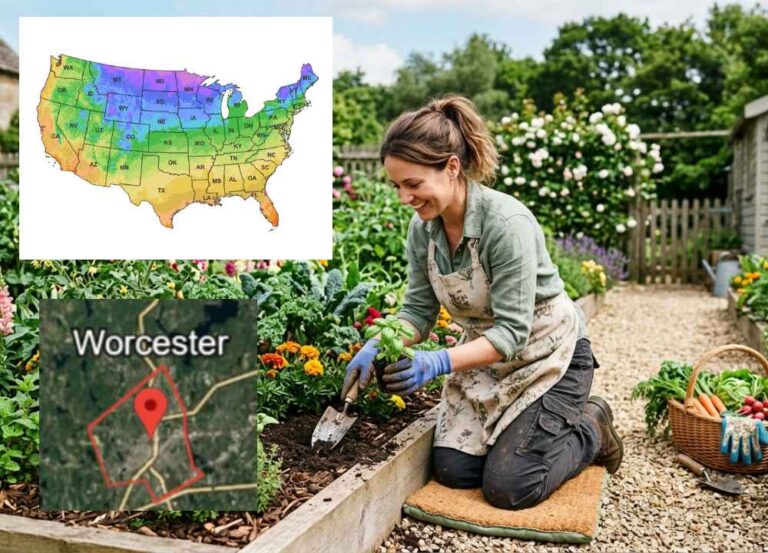
Every spring, many Worcester gardeners buy their seedlings early and pop them straight into the ground. Then a late frost rolls through, and the whole tray of tomatoes turns black overnight.
This usually happens because people plant by feel instead of by their actual climate zone. Worcester’s weather is tricky since it sits inland and at a higher elevation than most of eastern Massachusetts, so it stays colder for longer.
If you skip this step, the loss adds up fast. You waste money on seeds and starter plants, you lose weeks of growing time, and you end up frustrated when nothing survives the first cold snap.
The fix is simple once you know your zone. According to the USDA Plant Hardiness Zone Map, Worcester falls mostly in Zone 6a, with some pockets nudging into 6b depending on elevation and proximity to the city center.
So when someone asks what planting zone Worcester, MA is in, the short answer is Zone 6a. Once you know that, picking the right plants and the right planting dates gets a lot easier, and that is exactly what we will walk through next.
Gardening and Best Plants to Grow in Worcester, MA
Worcester’s Zone 6a climate means winters can dip to minus 10 degrees Fahrenheit, so anything you plant needs to handle a real cold season. Summers, on the other hand, get warm and a little humid, which actually works in your favor for vegetables like tomatoes, peppers, and squash.
Most local gardeners wait until after the last frost, usually in early May, before putting tender plants outside. If you want a deeper breakdown of how Worcester compares to the rest of the state, our guide on what planting zone is Massachusetts covers the full picture.
For flowers and shrubs, hardy choices like hostas, daylilies, and lilacs handle Worcester’s winters without much fuss. Fruit lovers do well with apples and blueberries, since both varieties are bred to survive cold New England winters and still produce a solid harvest.
Coastal cities nearby run a bit warmer because of the ocean, so if you are curious how that changes things, take a look at what planting zone is Boston for comparison. Worcester gardeners can also browse our regional gardening section for more zone-specific planting tips across New England.
FAQs
What planting zone is Worcester, MA in?
Worcester falls mainly in USDA Hardiness Zone 6a. A few small pockets closer to the city may lean toward 6b, depending on elevation and wind protection.
When is the last frost date in Worcester, MA?
The average last frost usually occurs in early May. It is safest to wait until after this date before moving tender seedlings outside.
When does the first frost hit in the fall?
Worcester typically sees its first fall frost around mid to late October. Plan to harvest warm-season crops before then.
What plants grow best in Worcester’s zone?
Tomatoes, peppers, squash, apples, and blueberries all do well here. Hardy perennials like hostas and daylilies also thrive through the winters.
Is Worcester colder than Boston for gardening?
Yes, Worcester sits inland and at a higher elevation, so it runs colder than Boston. Boston’s coastal location keeps it slightly milder.