Planting garlic in October is a bit of a waiting game. You push the cloves into cold ground, cover them with mulch, and then basically forget about them for months.
And that’s the confusing part for a lot of people. The garlic you planted in October doesn’t come up that same fall. It roots before winter, sleeps through the cold, and finishes the next year.
So the real worry is digging at the wrong time. Pull too early and the bulbs come out small, with skinny cloves that never filled in. Leave them too long and the heads crack open, the wrappers rot off, and they won’t keep.
But when you nail the timing, you get big, tight bulbs that sit happily in your kitchen for months. Below I’ll walk you through exactly what to look for and when your fall crop will actually be ready.
When to Harvest Garlic Planted in October?
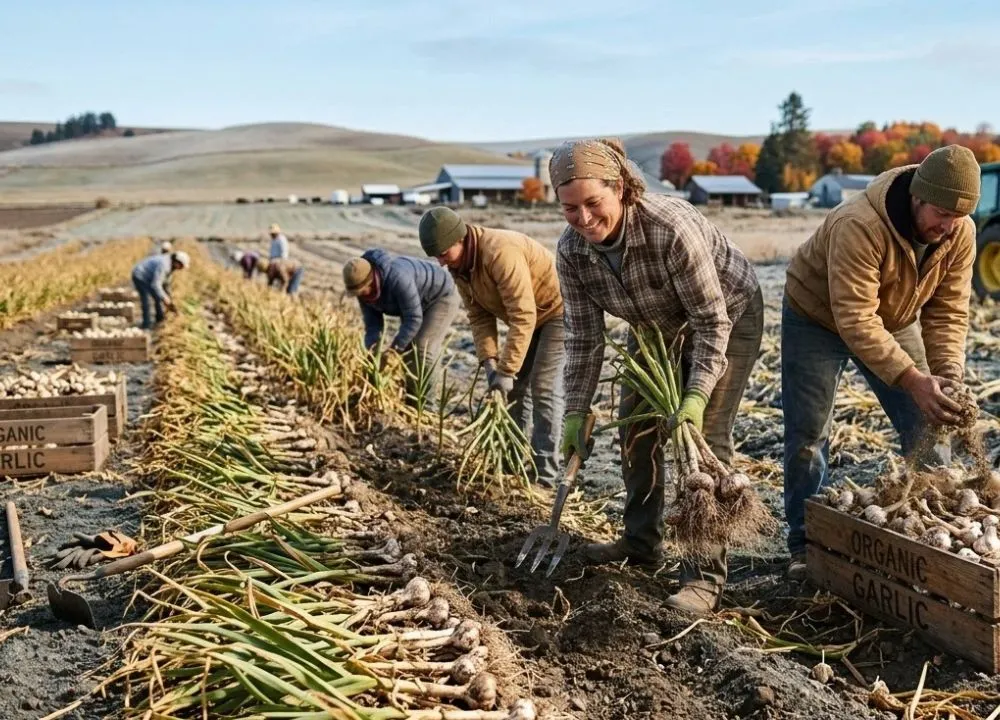
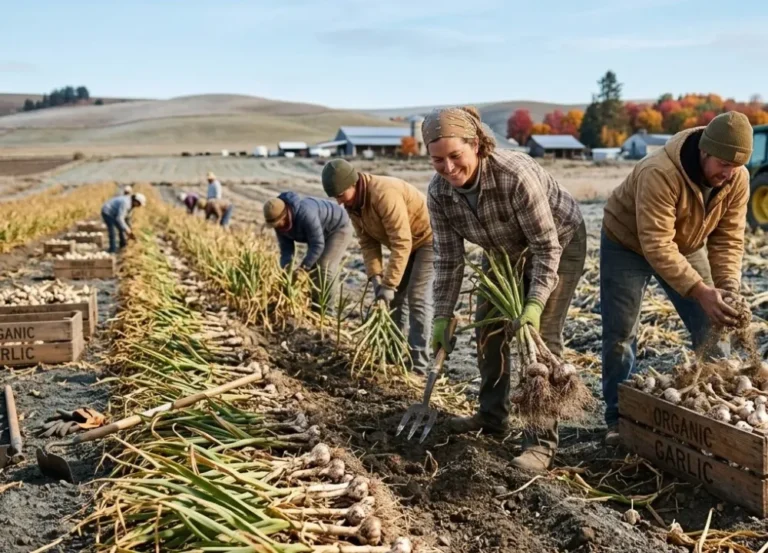
October-planted garlic is usually ready somewhere between late spring and mid-summer the following year. For most US gardens that means late May through July.
The plant will tell you when, and it does it through the leaves. As the bulb fattens up underground, the bottom leaves start yellowing and browning from the ground up.
Here’s what you’re waiting for: the lower leaves have gone brown, but about five or six of the top leaves are still green.
Those green leaves aren’t just for show. Each one feeds a papery wrapper around the bulb, so the more green up top, the more protective skins you get around your garlic.
The Old Farmer’s Almanac makes a good point here, that if you wait until every leaf browns, those outer wrappers break down and leave the bulb bare. When it looks close, dig one bulb and squeeze it, the cloves should feel firm and full. Once you get used to spotting these signs your garlic is ready to pull, you stop second-guessing yourself every June. This same window holds true for fall-planted garlic generally, whether you got your cloves in during September, October, or November.
When to Harvest Hardneck Garlic Planted in October?
Hardneck garlic hands you a clue softneck won’t. Sometime in late spring it throws up a curly stalk from the middle of the plant, called a scape.
Snip that scape off once it curls into a loop or two. That stops the plant from wasting energy on a flower and sends it back down into the bulb instead.
The scape is also a handy timer. Hardneck is usually ready about three to four weeks after those scapes show up.
One more thing about hardneck: it tends to finish a little sooner than softneck, and it wraps the bulb in fewer skins. Fewer wrappers means less room for mistakes, so keep a close eye once the bottom leaves start turning. Some growers leave a single scape uncut on purpose, and when it straightens all the way out, they know it’s dig day.
When to Harvest Softneck Garlic Planted in October?
Softneck plays by different rules, starting with what it doesn’t do. It almost never sends up a real scape, so that flower-stalk trick is off the table for timing.
What it does give you is more leaves, and more leaves means more wrappers hugging each bulb. So you’re counting a bigger stack of green leaves before the plant says it’s finished.
All those extra leaves usually push softneck’s harvest a bit later than hardneck in the same patch. The payoff is worth the wait though. Those thick layers of skin are why softneck keeps so much longer, often lasting deep into winter if you cure it right.
When to Harvest Garlic Planted in October in the USA?
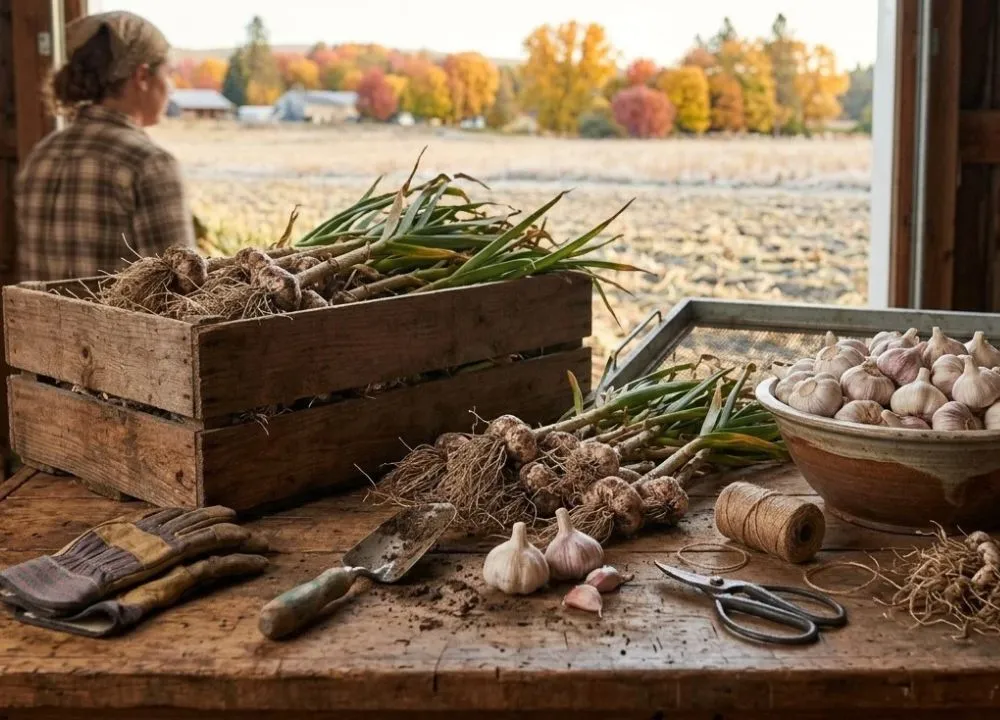
There’s no one harvest date for the whole country, because your weather runs the show. The milder your winter, the earlier your October garlic wraps up.
A gardener in coastal Georgia and one up in Minnesota both plant in October, but they’ll be pulling bulbs weeks, sometimes a whole month, apart. It also helps to remember that when you plant garlic in the fall shifts by region, and your planting date sets the clock for everything that follows. The quickest way to guess your own timing is your USDA hardiness zone.
The three groups below give you a month to aim for. Start with that, then let the leaves settle the exact day.
Warm Southern Zones (USDA 8–10)
Down south, you harvest first. In these warm-winter areas, October garlic is often ready from late May into early June.
Mild winters and an early spring just speed the whole thing up. The bulbs race through top growth and bulbing faster than they ever would up north, so your window opens well ahead of colder gardens.
These warmer zones also lean toward softneck and Creole types instead of hardneck, since those handle a soft winter better. If you’re in Texas, you’ll often be harvesting garlic by late May, and Georgia and Florida growers see much the same early finish. Start checking beds around mid-May so it doesn’t sneak past you.
Temperate Middle Zones (USDA 6–7)
The middle of the country falls into the classic June window. October-planted garlic through here is usually ready around then.
These zones get a solid cold winter and a steady spring, which suits both hardneck and softneck nicely. Maturity sits right between the fast southern finish and the slow northern one.
June’s your month, but don’t just circle a date and dig. Start peeking at the lower leaves in late May and let the browning tell you when.
Cold Northern Zones (USDA 3–5)
Up north you wait the longest, and honestly it’s worth it. In these cold zones, October garlic tends to finish from late June into July.
A longer, meaner winter keeps the plant sleeping well into spring before it wakes up. That deep cold is also what builds those big, strong hardneck bulbs, because hardneck really does need a hard winter to size up. Growers in colder spots like zone 5, Colorado, and Massachusetts should plan to reach for the fork later than most of the country. Watch the leaves through July and lift once the bottom third has gone brown.
When Will Garlic Planted in October Be Ready?
If months make more sense to you than seasons, here’s the count. Garlic is slow, taking roughly eight to nine months from an October planting to a bulb you can pull.
Following it month by month helps you see it coming instead of just wondering. Here’s how the whole thing plays out:
- October to November: Cloves grow roots underground and settle before frost.
- December to February: The plant rests through winter, tucked under the mulch.
- March to April: Spring warmth wakes it up and green tops shoot out.
- May: Hardneck sends up scapes as the bulbs start sizing.
- June to July: Bulbs swell and finish, and harvest time arrives.
Eight or nine months is a long haul, and it’s why garlic asks for more patience than just about anything else in the garden. Once you see how long garlic really takes to grow from a single clove, that long stretch of nothing starts to make sense. It’s also part of why garlic acts more like a perennial than the quick annuals most people are used to.
Reading the Plant, Not Just the Calendar
After all those dates and zones, here’s the thing to hang onto. The calendar only ever gives you a rough window, not a promise.
Your variety, your zone, and whatever the spring weather decides to do all move the finish line. A cool May drags everything out, while a sudden heat wave can rush your bulbs up early.
So read all three together. Pick your month from your zone, know how your variety behaves, then let the browning leaves make the real call.
When the bottom leaves brown and five or six up top stay green, believe that over any date on paper. Pull one bulb, check the cloves, and you’ll know for sure. And once it’s out of the ground, good curing and storage is what turns a decent crop into garlic that carries you through next winter.