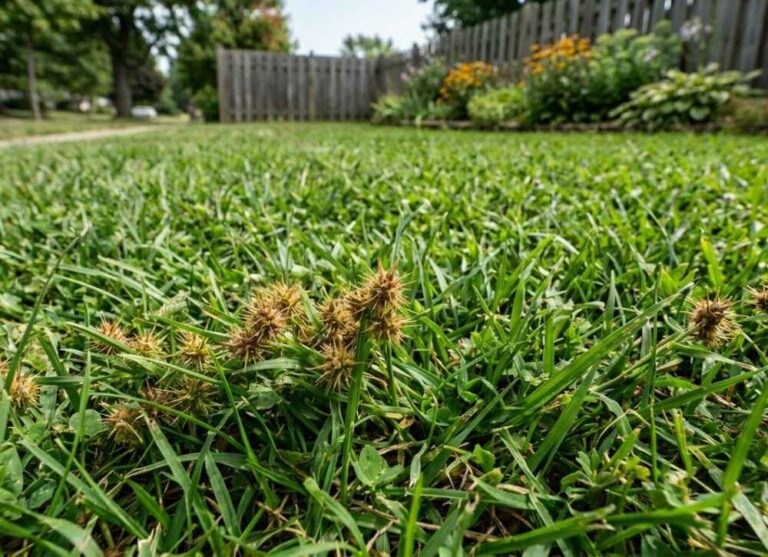
After planting grass seeds in Texas, when it starts to grow, and you step outside barefoot in the morning, and within seconds, something sharp stabs your foot. That is a grass burr, and if you live in Texas, you know this pain all too well.
These tiny spiked seedpods love sandy, dry, and stressed lawns, which makes Texas one of their favorite places to thrive. The worst part is they do not come alone; once you see a few, hundreds are already spreading.
If you ignore them, the problem gets much worse very fast. Each burr is actually a seedpod, and when it sticks to your shoes, your pet, or your lawn mower, it travels and plants itself somewhere new.
Grass burrs are an annual grassy weed that thrives in drier Texas climates, and when left unchecked, they can quickly spread and make an entire yard unusable. That means a small patch today becomes a full infestation by summer if nothing is done.
The solution is not just spraying something and hoping for the best. Timing matters, product choice matters, and lawn health matters. Once you understand how grass burrs grow and spread, getting rid of them becomes a lot more manageable.
- What Are Grass Burrs and Why Do They Spread So Fast?
- What Kills Grass Burrs in Texas?
- How to Get Rid of Grass Burrs in Texas Using Pre-Emergent?
- How to Prevent Grass Burrs From Coming Back?
- FAQs
What Are Grass Burrs and Why Do They Spread So Fast?
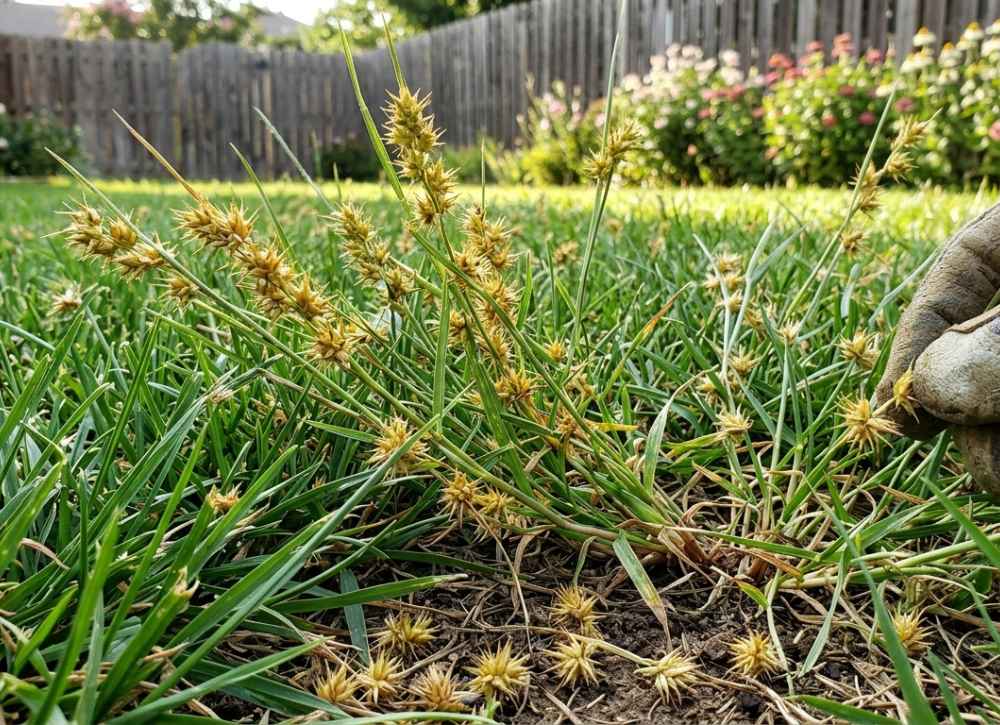
Grass burrs go by many names in Texas, such as sticker burrs, sandburs, and sand spurs, but they are all the same weed causing the same problem.
The plant itself looks like a regular grassy weed until it starts producing those sharp seedpods in mid-summer, which is exactly when most people notice they have a problem.
The reason they spread so fast is that the burrs are designed to latch on to anything moving through your yard. Pets, kids, shoes, and even your mower pick them up and drop them in new spots, restarting the cycle all over again. By the time you see burrs in multiple areas, the soil already has seeds waiting to sprout next season, too.
Grass burrs love weak, thin lawns where there is open ground and little competition. A thick, healthy lawn is genuinely the best long-term defense because it leaves no room for burr seeds to take root and grow.
What Kills Grass Burrs in Texas?
The honest answer is that killing grass burrs already in your lawn is hard, and over-the-counter products from big box stores rarely do the job.
According to Ryno Lawn Care, post-emergent herbicides are the most effective option for killing established grass burrs, but they work best when applied early at the two to four vegetative growth stage, and options like 2,4-D combined with quinclorac or dicamba give better results than single-product applications. Note that 2,4-D should not be used on St. Augustine lawns unless the label specifically says it is safe.
Most post-emergent treatments require two to three applications spaced two to three weeks apart. One treatment is almost never enough because some plants survive the first round and will keep producing seeds if left alone.
For large infestations, a professional lawn care company with access to commercial-grade herbicides is often the faster and more reliable path. The cost is higher, but the results are much more consistent than repeated failed attempts with consumer products.
How to Get Rid of Grass Burrs in Texas Using Pre-Emergent?
Pre-emergent herbicide is the real game-changer when it comes to how to get rid of grass burrs in Texas long-term. Instead of killing plants already growing, it stops the seeds from germinating in the first place, which breaks the cycle before it starts.
Rainbow Gardens recommends applying pre-emergent products starting in mid-February to mid-March, before seeds have a chance to sprout, and stresses that you must follow up with at least two more applications throughout the year, noting that it typically takes three applications over three years to fully eradicate sticker burrs. The key is timing, apply too late and the seeds have already started germinating, making the pre-emergent useless for that season.
Products containing pendimethalin or oryzalin are common pre-emergent choices that work well in Texas. Always water the product in after applying so it moves into the soil and activates properly.
How to Prevent Grass Burrs From Coming Back?
Getting rid of grass burrs once is only half the battle. If your lawn stays thin and stressed, they will come back every single year without fail.
The most practical prevention is filling in bare or thin patches with quality grass seed that suits your region, because a dense lawn leaves no open ground for burr seeds to land and grow. Pair that with consistent fertilizing twice a year, proper watering, and mowing at the right height to keep your turf thick and competitive.
In fall, bag your lawn clippings if burrs are present rather than mulching them back into the lawn. This one simple habit stops thousands of seeds from being scattered right back into the areas you just treated.
FAQs
Can I pull grass burrs out by hand?
You can do small patches, but always wear thick gloves. Make sure you pull the entire root and bag everything immediately so seeds do not drop back into the soil.
When is the best time to apply pre-emergent for grass burrs in Texas?
Mid-February to early March is the target window, before soil temperatures hit 52 degrees. Missing this timing means you will be dealing with burrs all summer.
Will vinegar kill grass burrs?
Vinegar can burn the plant tops, but does not kill the roots or seeds. It is not a reliable solution and can also damage your desirable grass in the treated area.
Do grass burrs come back every year?
Yes, because their seeds can stay viable in the soil for up to seven years. That is why consistent pre-emergent treatment over multiple seasons is the only way to truly break the cycle.
Are grass burrs harmful to pets?
They are not toxic, but the sharp spines can get lodged in paws, fur, and even between toes, causing pain and sometimes infection if left in. Check your pets after every outdoor visit during burr season.
Explore More Texas Gardening Guides
Texas Planting Zones by Region & City
| Statewide overview of Texas planting zones | Warm, tropical South Texas zones |
| Cold-snap prone North Texas zone | Humid, mild East Texas zone |
| Arid, alkaline West Texas zone | Transitional Central Texas zone |
| Zone guide for Dallas | Zone guide for Fort Worth |
| Zone guide for Houston | Zone guide for San Antonio |
| Zone guide for Austin | Full Texas growing season & frost dates |
Growing a Lawn in Texas
| Full guide to planting grass in Texas | Choosing the best grass for Texas |
| When to plant Bermuda grass | When to plant St. Augustine grass |
| When to plant Zoysia grass | When to plant Buffalo grass |
| When to plant rye grass | When grass starts growing in Texas |
| How often to water grass in Texas | When to fertilize grass in Texas |
| How to get rid of grass burrs |
Fruit Trees & Peaches in Texas
| The top fruit trees for Texas | When to plant peach seeds in Texas |
| When to plant a pear tree in Texas | When to plant fig tree cuttings in Texas |
| When peach season hits Fredericksburg | When to plant loquat seeds in Texas |
Vegetables & Herbs in Texas
| When to plant tomatoes in Texas | How often to water tomatoes in Texas |
| Is it too late to seed tomatoes in zone 9a? | When to plant lettuce in Texas |
Growing Garlic in Texas
| Full guide: when to plant garlic in Texas | Can you plant garlic in spring in Texas? |
| When to harvest garlic in Texas |