Castle Rock draws a lot of new residents who move down from Denver expecting the same gardening conditions. They plant the same things they grew 30 miles north and then wonder why half of it dies before spring. The problem is not their gardening skills. The problem is elevation.
At over 6,200 feet, Castle Rock sits higher and colder than most of the Denver metro area. That altitude difference translates directly into a tighter planting zone and a shorter window for getting things in the ground. Ignoring it means losing plants, wasting seasons, and repeating the same expensive mistakes.
This guide covers Castle Rock’s exact USDA zone, the frost dates that shape your calendar, and specific plant choices that actually hold up here.
What Zone Is Castle Rock, Colorado for Planting?
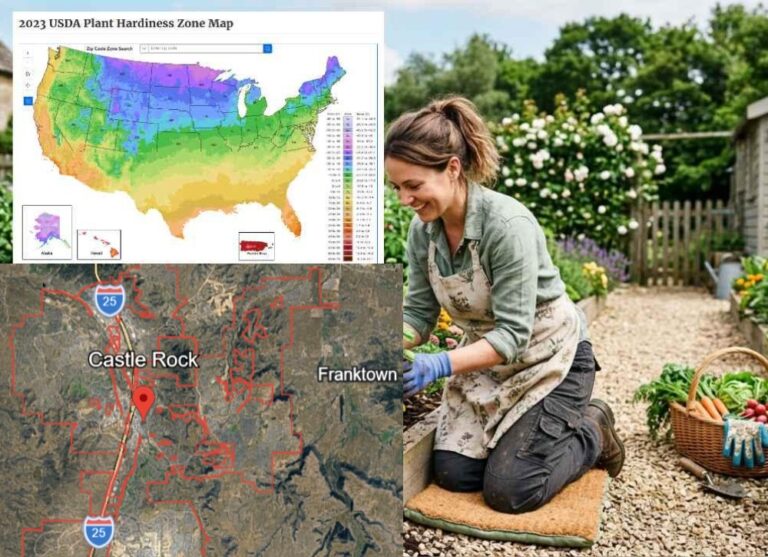
Castle Rock falls entirely within USDA Hardiness Zone 5b, according to the 2023 USDA Plant Hardiness Zone Map.
Zone 5b means the average annual extreme minimum winter temperature ranges from -15°F to -10°F. Unlike Aurora or Denver, which straddle the line between two zones, Castle Rock sits squarely in one classification across the whole town.
Garden.org and PlantMaps both confirm the Zone 5b designation using the 2023 USDA data. The Lady Bird Johnson Wildflower Center, a respected native plant resource based at the University of Texas at Austin, also lists Castle Rock at Zone 5b in its Colorado planting guidance.
This zone is half a step colder than what Denver metro gardeners work with. That half-zone gap might seem small, but it translates into real limits on what you can grow perennially. For a complete breakdown of conditions in this zone, Zone 5 frost dates and growing season lays it all out.
Understanding Zone 5b in Castle Rock’s Context
Zone 5b is not just a number on a map. In Castle Rock, it reflects the combined effect of elevation, terrain, and the town’s position south of the metro heat island.
Why Elevation Pushes Castle Rock Colder
Castle Rock sits at approximately 6,224 feet above sea level. Denver proper sits around 5,280 feet. That roughly 1,000-foot difference in elevation pushes average temperatures down by 3 to 5 degrees Fahrenheit.
Cold air also behaves differently at this altitude. It settles quickly into the valleys and draws that surround Castle Rock’s neighborhoods, creating frost pockets that can hit freezing temperatures even on nights when the rest of the Front Range stays above 32°F.
Less Urban Heat Buffering
Denver and Aurora benefit from miles of concrete, asphalt, and building mass that absorb daytime heat and release it slowly overnight. This urban heat island effect bumps their effective temperatures up and softens frost risk.
Castle Rock lacks that insulation. Its more spread-out development and surrounding open grassland mean that nighttime temperatures drop faster and further than they would in a dense urban setting. Your garden here cools off quicker after sunset, and that faster cooling is what pushes the zone down to 5b.
Castle Rock’s Growing Season and Frost Dates
Data from plantingzonesbyzipcode.com shows Castle Rock averaging about 151 frost-free growing days per year. The last spring frost typically falls around May 15, with the first fall frost arriving near September 27.
Garden.org’s frost calculator for Castle Rock lines up closely, placing the 50/50 frost probability point around early October for the fall freeze and early to mid-May for the spring thaw.
Compared to Denver’s roughly 157 to 173 growing days, Castle Rock gives you about two to three fewer weeks of frost-free gardening. That gap matters most for warm-season crops that need sustained heat to produce fruit.
Getting Warm-Season Crops to Work
Tomatoes, peppers, and squash need every bit of heat Castle Rock can offer. Starting these indoors in late February or early March is not optional here. Transplant outdoors only after mid-May, and watch the forecast closely through the end of the month. This guide on when to plant tomatoes in Zone 5 walks through exactly when to start seeds and move them outside.
Choosing short-season tomato varieties with maturity dates under 65 days gives you a buffer against the early fall frost. Varieties like Early Girl, Fourth of July, and Glacier were bred for exactly this type of compressed season.
Cool-Season Crops Have the Advantage
Castle Rock’s climate actually favors cool-weather vegetables. Spinach, kale, lettuce, peas, broccoli, and radishes all thrive in the cooler spring and fall temperatures that would stress a tomato plant.
You can direct-sow these crops in early April once the soil thaws. A second planting in late July or early August yields a fall harvest that often outperforms the spring one, since the gradually cooling temperatures slow bolting and sweeten the leaves. For lettuce specifically, when to plant lettuce in Zone 5 covers the ideal sowing windows.
Best Plants for Castle Rock’s Zone 5b
Plants rated for Zone 5 or colder will handle Castle Rock’s winters without special protection. Anything labeled Zone 6 is a gamble unless you can provide a sheltered, south-facing location.
Trees That Perform at This Elevation
Castle Rock’s combination of cold, wind, and dry soils narrows the tree list, but several species do well:
- Ponderosa pine grows natively at this elevation throughout Colorado
- Gambel oak tolerates the cold and the rocky, dry soil
- Bur oak withstands harsh winters and alkaline conditions
- Rocky Mountain juniper handles drought and wind exposure
- Bristlecone pine thrives at elevation and needs minimal water
Perennials for Castle Rock Gardens
Native plants from Colorado’s Front Range and foothills tend to outperform anything shipped in from milder climates. Rocky Mountain penstemon, blanket flower, prairie coneflower, and blue flax all handle Zone 5b conditions naturally.
Hens and chicks, along with various sedum species, make excellent ground covers for dry, sunny spots. They survive deep cold, need almost no irrigation once established, and spread slowly to fill gaps between larger plants.
For more color, consider butterfly weed and red columbine. Both attract pollinators and return reliably year after year in Castle Rock’s climate.
Microclimates in and Around Castle Rock
Castle Rock’s rolling terrain creates meaningful microclimate variation within the town. Hilltops tend to be windier but drain cold air effectively, so they sometimes avoid the worst overnight freezes.
Valley bottoms and low points between ridges collect cold air and frost more heavily. If your neighborhood sits in one of these draws, your effective zone may function closer to 5a during severe winters.
Newer subdivisions with lots of hardscape, such as concrete driveways and stone retaining walls, tend to hold heat slightly longer than properties surrounded by open grassland. That stored warmth can make a difference of a few degrees on a marginal frost night.
South-facing slopes catch the most sun and warm up earliest in spring. If you have a choice of planting locations on your property, the south-facing side of your house will always give you the longest effective growing season and the mildest winter exposure.
How Castle Rock Compares to Nearby Cities
Castle Rock’s Zone 5b places it distinctly cooler than the Denver metro average of Zone 6a. Gardeners who move between the two areas should adjust their plant lists and planting dates accordingly. The planting zone for Denver is half a zone warmer, which means some borderline perennials that thrive there will struggle in Castle Rock.
Aurora, in Zone 6a, enjoys a longer growing season and milder winter lows. Boulder shares Castle Rock’s 5b designation but deals with additional challenges from foothill winds. Broomfield straddles 5b and 6a, giving it a slight edge.
Colorado Springs sits at a similar elevation but benefits from more urban heat and a slightly different wind pattern. Its zone classification splits between 5b and 6a depending on the neighborhood, giving it a small advantage over Castle Rock for borderline plants.
Tips for Success in Castle Rock’s Zone 5b
Mulch generously before winter. A thick layer of wood chips or straw over root zones prevents the freeze-thaw cycling that heaves plants out of the ground during January and February warm spells. For the full fall prep routine, this guide on how to prepare your garden for winter covers every step.
Protect newly planted trees from sunscald. Castle Rock’s intense winter sun can heat the southwest-facing bark of young trees during the day, only for the tissue to freeze and crack overnight. Wrapping trunks with a light-colored tree guard from November through March prevents this damage.
Water through winter on warm, dry days. Castle Rock’s precipitation averages about 17 inches per year, and much of that falls as summer afternoon thunderstorms. Winter can be remarkably dry, and evergreens in particular lose moisture through their needles even while dormant. One deep soak per month during dry winter stretches keeps roots healthy.
Start building soil quality now. Castle Rock’s native soil is often rocky, clay-heavy, and alkaline. Adding compost each season gradually improves texture and fertility, making it easier for roots to establish before their first hard winter.
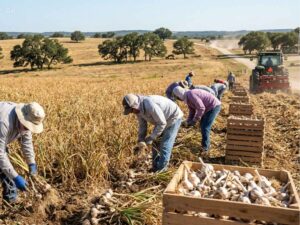
Garlic is one of the best fall-planted crops for Castle Rock. Cloves go in the ground in mid-October, overwinter under mulch, and produce full bulbs by mid-summer. The guide on when to plant garlic in Zone 5 covers exact timing for your zone.