Fort Collins gardeners deal with a climate that looks gentle on paper but delivers surprises at odd moments. A sunny 70°F afternoon in May can drop to 28°F by midnight, and a hailstorm in July can shred a tomato patch in minutes.
Picking the right plants starts with knowing your exact USDA planting zone. Without that baseline, every trip to the nursery becomes a gamble. You end up guessing whether a shrub or fruit tree will survive the winter or just become expensive mulch by March.
This piece breaks down what zone Fort Collins falls in, why parts of the city land in different zones, and how to use that information to build a garden that actually lasts.
What Planting Zone Is Fort Collins, Colorado?
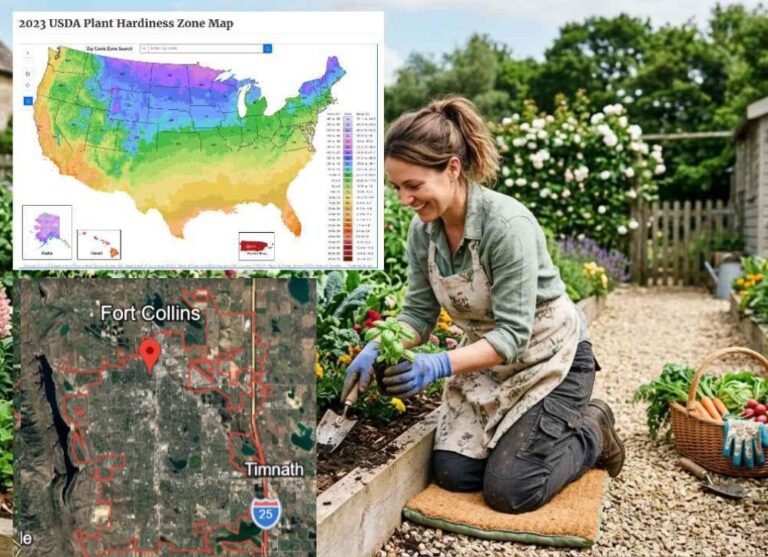
Fort Collins falls in USDA Hardiness Zones 5b and 6a, according to the 2023 USDA Plant Hardiness Zone Map. The specific zone depends on which part of the city you live in.
Zone 5b covers the majority of Fort Collins, including neighborhoods like Old Town, Rigden Farm, and English Ranch. Average annual minimum temperatures in this zone drop to between -15°F and -10°F.
Zone 6a applies to a smaller number of neighborhoods, including Four Mile Creek and Woodland Trails. Winters in these pockets are slightly milder, with lows between -10°F and -5°F.
Both zones reflect the updated 2023 data, which used 30 years of climate records from 1991 through 2020. The mapping work came from the PRISM Climate Group at Oregon State University.
Why Fort Collins Has Two Zones
A city split across two zones might seem unusual, but it makes sense once you look at how terrain and development affect temperature.
Zone 5b Across Most of the City
The bulk of Fort Collins sits in Zone 5b. This covers the older neighborhoods, the university area near Colorado State, and the residential developments stretching east and north.
Fort Collins’ elevation hovers around 5,000 feet. That is high enough for cold winters but low enough to avoid the extreme conditions that mountain towns face. The city catches cold air flowing off the foothills to the west, which keeps winter lows firmly in the Zone 5b range for most blocks.
Local nursery Bath Garden Center in Fort Collins confirms they stock plants rated for Zone 5b because that is the zone most of their customers garden in. Choosing plants rated at or below 5b gives the best odds of winter survival.
Zone 6a in Warmer Pockets
A few neighborhoods in Fort Collins land in Zone 6a, where the heat from buildings, roads, and surrounding structures creates what climate scientists call an urban heat island effect.
These slightly warmer spots tend to sit in lower, more sheltered parts of the city. Concrete and asphalt absorb daytime heat and release it overnight, raising the minimum temperature just enough to shift the zone upward by half a step.
If you live in one of these neighborhoods, you can experiment with plants rated for Zone 6a. But keeping a few Zone 5b-rated backup plants in the landscape is smart insurance against unusually harsh winters.
Frost Dates and Growing Season in Fort Collins
Fort Collins averages a last spring frost around mid-May and a first fall frost in early to mid-October. Data from frost tracking sources shows that the growing season runs roughly 146 days.
That is a workable season for most vegetables, though it is shorter than what gardeners in Denver or Colorado Springs work with. Starting seeds indoors six to eight weeks before the last frost date gives warm-season crops the head start they need.
Late spring frosts in Fort Collins are sneaky. A warm stretch in late April can tempt you into planting early, but a cold snap in the first or second week of May will punish anything tender that is already in the ground.
The safest strategy is to watch the 10-day forecast closely once May arrives. If nighttime lows stay above 40°F for a full week, transplanting is a reasonable bet. Row covers offer cheap insurance if temperatures threaten to dip.
What Thrives in Fort Collins’ Climate
The combination of Zone 5b conditions, intense sun, and relatively low humidity shapes which plants perform best here. Focus on selections bred for cold hardiness, strong sun tolerance, and low water needs.
Cool-Season and Warm-Season Vegetables
Fort Collins’ 146-day season supports both cool-season and warm-season vegetables if you time them right. Consider building your garden around these groups:
- Lettuce, spinach, and peas go in the ground as soon as the soil thaws in April
- Tomatoes transplant outdoors after mid-May when frost risk fades
- Peppers and squash follow the same post-frost timeline as tomatoes
- Garlic plants best in fall for a summer harvest the following year
- Lettuce also works as a fall crop if you sow seeds in August
Hail is a genuine concern in Fort Collins during summer storms. Keeping lightweight row cover fabric or hail netting on hand protects leafy crops and young fruit from sudden damage.
Trees and Shrubs for Northern Colorado
Colorado blue spruce, Austrian pine, and ponderosa pine handle Fort Collins winters without flinching. For deciduous shade trees, bur oak and hackberry both carry strong Zone 5 ratings and tolerate the alkaline soils common in this area.
Flowering shrubs like lilac, spirea, and potentilla add color without demanding coddling. These species tolerate cold winters, dry air, and the clay-heavy soil that many Fort Collins properties sit on.
If fruit trees interest you, tart cherry varieties and cold-hardy apple cultivars do well in Zone 5b. Peach trees face more risk here because late frosts can destroy blossoms before fruit sets.
Common Gardening Challenges in Fort Collins
Beyond cold winters, Fort Collins gardeners face a few recurring problems that are worth planning around.
Soil in much of Fort Collins is heavy clay with a high pH. It drains poorly and compacts easily. Working in compost every season loosens the structure and feeds the soil biology that plants depend on. Testing your soil through a local extension office tells you exactly what amendments will help.
Low humidity and steady wind pull moisture from leaves faster than roots can replace it. Mulching with wood chips or straw slows evaporation at the soil surface. Drip irrigation delivers water directly to roots and wastes far less than sprinklers.
The intense Colorado sun at 5,000 feet can scorch plants that thrive in similar temperature zones at lower altitudes. Afternoon shade for lettuce and other greens extends their productive life well into summer.
Fort Collins also sits in a zone where fungus gnats can be a nuisance for indoor seed-starting setups. Letting the top inch of soil dry between waterings reduces gnat populations dramatically.
Putting Your Zone to Work
Knowing that Fort Collins lands in Zone 5b, with a few pockets of 6a, gives you a clear filter for every planting decision. Match your plants to the zone, respect the frost calendar, and plan for the altitude-driven quirks of sun, wind, and hail.
For a broader understanding of how Colorado’s zones compare and what grows across different parts of the state, the USDA Plant Hardiness Zone Map lets you search by zip code for pinpoint accuracy.