Grand Junction occupies a strange and wonderful corner of Colorado. While gardeners in Denver and Fort Collins scramble to squeeze tomatoes into a tight season, Grand Junction growers harvest peaches, melons, and wine grapes with time to spare.
That advantage comes down to geography. Grand Junction sits on the Western Slope at a much lower elevation than the Front Range, and that lower altitude creates growing conditions you would not expect to find anywhere in Colorado.
Planting without knowing your zone here means missing out on the full range of crops this region supports. You might stick with cold-hardy basics when you could be growing figs, apricots, or long-season peppers.
This piece walks through what planting zone Grand Junction falls in, why the Western Slope is so different from the rest of the state, and what that means for your garden.
What Planting Zone Is Grand Junction, Colorado?
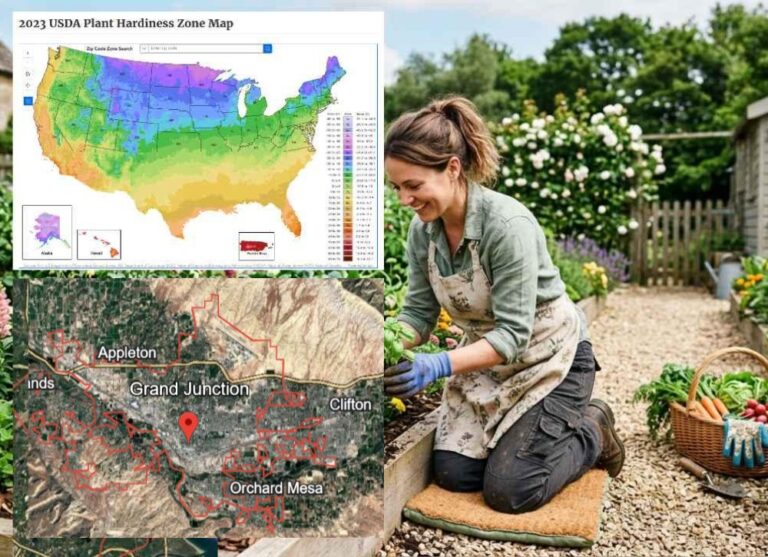
Grand Junction falls in USDA Hardiness Zones 6b and 7a, based on the 2023 USDA Plant Hardiness Zone Map.
Zone 6b covers areas like De Beque, Fruita, Loma, Redlands Mesa, and Tiara Rado. Minimum winter temperatures in this zone range from -5°F to 0°F.
Zone 7a spans Grand Junction proper, Clifton, Palisade, Orchard Mesa, and Whitewater. Here, minimum temperatures sit between 0°F and 5°F. That is remarkably mild for Colorado.
The 2023 map relies on temperature data collected between 1991 and 2020. The PRISM Climate Group at Oregon State University handled the analysis, factoring in elevation, terrain shape, and proximity to the Colorado River.
Why Grand Junction Is Colorado’s Warmest Growing Region
The contrast between Grand Junction and cities on the Front Range is dramatic. Denver sits in Zone 6a. Boulder and Fort Collins land in Zone 5b. Grand Junction, at Zone 7a, runs a full zone and a half warmer than most of Northern Colorado.
Western Slope Advantage
Grand Junction sits at roughly 4,600 feet in elevation. Compare that to Denver’s 5,280 feet, Fort Collins’ 5,000 feet, or Evergreen’s 7,220 feet, and the difference becomes clear.
Lower elevation means warmer overnight lows, earlier spring warm-up, and a later first frost in fall. The Western Slope also benefits from its position in a broad river valley, which traps warm air and shields gardens from the harshest mountain winds.
The Palisade area, just east of Grand Junction, is famous for its peach orchards. According to Colorado’s tourism board and agricultural community, this region produces some of the best stone fruit in the western United States. That reputation exists because of the mild winter lows and the long, warm growing season.
How Zone 7a Compares to the Front Range
Zone 7a in Grand Junction is comparable to parts of Oregon, the mid-Atlantic, and even northern sections of the Deep South. Plants that gardeners in Aurora or Castle Rock could never overwinter outside survive just fine on the Western Slope.
This opens up categories like fig trees, certain grape varieties, lavender, and rosemary as landscape perennials rather than annuals. Gardeners moving to Grand Junction from the Front Range are often surprised by how much their plant palette expands.
Frost Dates and Growing Season in Grand Junction
Grand Junction enjoys one of the longest frost-free seasons in Colorado. Garden.org data shows the average last spring frost around April 25, with the first fall frost arriving near October 16.
That gives Grand Junction roughly 174 frost-free growing days. Some tracking sources estimate the season at up to 182 days, depending on the specific neighborhood and its microclimate.
For reference, Fort Collins gets about 146 days, and mountain towns like Evergreen squeeze by with roughly 87 days. Grand Junction’s season is long enough for double cropping, where you harvest a spring planting and follow it with a second round of warm-season vegetables.
Data from the National Weather Service office in Grand Junction confirms that the average last freeze date falls around April 22 in the lower parts of the valley. Higher surrounding areas freeze a bit later into spring.
Best Plants for Grand Junction’s Zones
With Zone 7a conditions and 174 or more frost-free days, Grand Junction supports a wider plant list than almost anywhere else in Colorado.
Fruit Trees and Warm-Season Crops
This region is built for fruit. Peach trees, apricot trees, and cherry trees all produce well. The peach season in Colorado centers on the Grand Junction and Palisade area for good reason.
Several warm-season crops that struggle on the Front Range do well here:
- Melons and watermelons ripen fully with the long, hot summer
- Peppers, including long-season varieties, produce heavy harvests
- Tomatoes have enough time for even large heirloom cultivars
- Sweet corn matures without the rush that higher elevations impose
- Eggplant, which demands consistent heat, performs reliably here
Pear trees also produce in Grand Junction’s climate. And unlike most of Colorado, fig trees stand a real chance of surviving winters in sheltered Zone 7a spots, especially against a south-facing wall.
Drought-Tolerant Landscaping Picks
Grand Junction gets far less rain than the national average. Choosing plants that handle dry conditions saves water and keeps your landscape looking strong through July and August.
Desert willow, Apache plume, and Gambel oak are native or well-adapted options for the landscape. Big sagebrush fits right into the natural aesthetic of the Western Slope.
For flowering perennials, lavender, Russian sage, and penstemon all tolerate the heat, low humidity, and lean soils that define this part of Colorado.
Watering and Soil Considerations
Gardening in Grand Junction requires constant attention to water. The region averages less than nine inches of rainfall per year, and summer temperatures regularly push into the 90s.
Drip irrigation is the most efficient way to keep plants alive without wasting water. Overhead sprinklers lose a significant portion to evaporation in the dry, windy conditions common on the Western Slope.
Mulching with three to four inches of organic material around the base of plants helps keep soil moisture stable. This is especially important for fruit trees during the weeks when fruit is sizing up.
The soil in much of Grand Junction tends toward alkaline with a clay or silty texture. Adding compost improves drainage and feeds the soil organisms that help roots absorb nutrients. A soil test through your local Colorado State University Extension office tells you exactly where your pH and nutrient levels stand.
Grand Junction’s combination of warm zones, long seasons, and intense sun makes it one of the most rewarding places to garden in the entire state. Knowing that you sit in Zone 6b or 7a lets you take full advantage of what this climate offers.
For a deeper look at planting zone details across Colorado cities, the USDA Plant Hardiness Zone Map provides zip-code-level accuracy.