

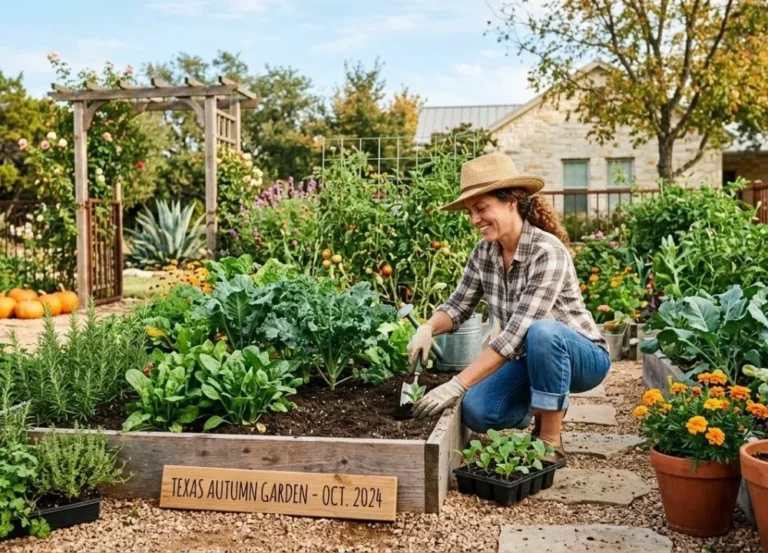
For Texas gardeners, October is the month the garden finally turns friendly again. The brutal summer loosens its grip, and planting stops feeling like a losing battle.
All those weeks of triple-digit heat pushed most crops to the breaking point. Now cooler air moves in, the soil calms down, and vegetables that struggled all summer suddenly want to grow.
Most guides will hand you a plant list and stop there. This one goes further, because two things actually decide whether your fall garden succeeds.
The first is your real first-freeze date, which shifts by weeks across Texas. The second is why some October plantings still refuse to sprout, a problem almost no one explains. You’ll get both here, region by region.
What to Plant in October in Texas?
The short answer: October is peak cool-season planting across most of Texas, as the fall garden replaces spent summer crops.
Leafy greens, root vegetables, and the whole cabbage family thrive now that the heat has broken. These are the crops that would have bolted or scorched in July but settle in happily this month.
The complication is timing, and Texas timing swings hard by location. Texas A&M divides the state into gardening regions running from zone 6 up north to zone 9b down south, and each hits its window on a different date.
So the smart first step isn’t grabbing seeds. It’s finding your region and, more importantly, your freeze date, which the next sections nail down.
First, Find Your Region and Your Freeze Date
Texas gardening splits roughly into three practical bands: North, Central, and South. Knowing yours sets both your planting dates and your frost risk.
Here’s the quick version:
- North Texas: Panhandle and DFW, around USDA zones 6 to 7.
- Central Texas: Austin and the Hill Country, roughly zones 8 to 8b.
- South Texas: San Antonio to the Valley, about zones 9a to 9b.
The state also splits east to west. Humid East Texas holds soil moisture longer, while dry West Texas swings hot by day and cold at night, which nudges your timing too.
Still, zones alone are too vague to plant by. What you really need is your average first freeze, since that single date is the finish line every fall crop races toward. If you’re unsure of your band, start by checking your exact planting zone.
Here’s where Texas surprises people. According to National Weather Service 30-year averages, the first freeze lands far apart across the state:
- Amarillo: around October 22, the earliest in Texas.
- Dallas–Fort Worth: about November 23.
- San Antonio: roughly November 29.
- Austin: near December 1.
- Houston: around December 4.
- Brownsville: as late as January 4.
That’s a ten-week gap from the Panhandle to the Valley, and it reshapes the whole growing season by region. Two Texas gardeners can both plant in October, yet work with wildly different clocks.
The 60-Day Rule: Counting Back From Your First Freeze
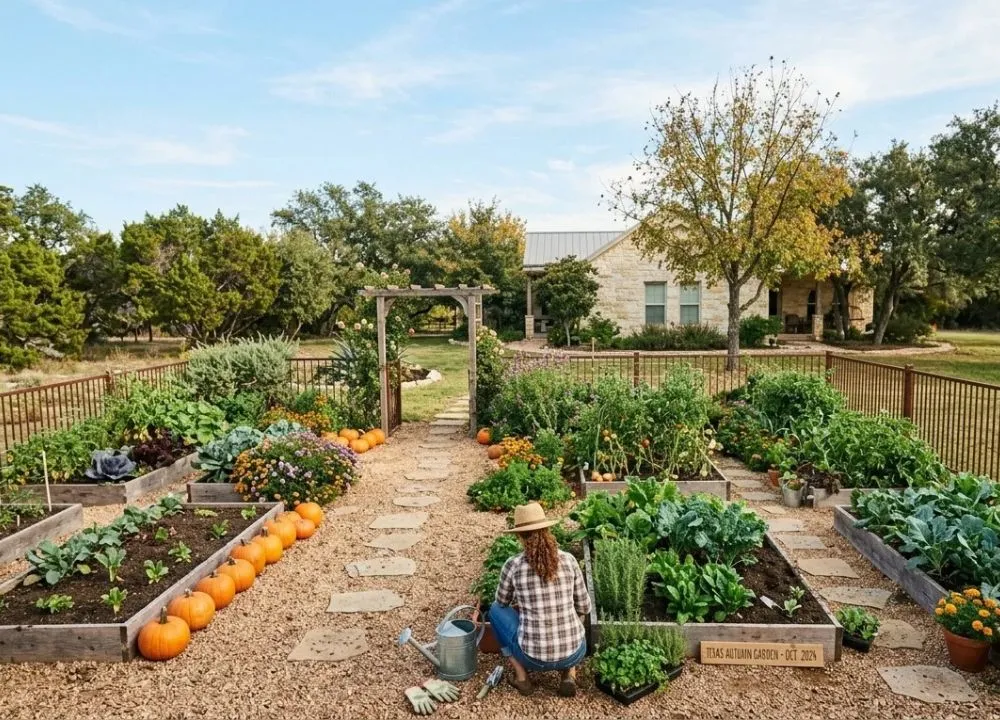
Here’s the trick most Texas garden posts skip entirely. Whether a crop finishes in time comes down to simple subtraction.
Most cool-season vegetables need 50 to 70 days from planting to harvest. So take your first-freeze date and count backward by the crop’s days to maturity.
Say you garden near Dallas, with a freeze around November 23. A 60-day broccoli planted in early October clears that finish line with room to spare.
Now picture Amarillo, freezing near October 22. Planting that same broccoli in October is already too late, which is why Panhandle gardeners start their brassicas back in summer.
This is also why leafy greens are the safe October bet almost everywhere. Fast crops like radishes, lettuce, and spinach mature in 30 to 45 days, so they beat the freeze even where it comes early. Read the days-to-maturity number on every seed packet, then check it against your date.
What to Plant in October in North Texas?
North Texas is the coolest, most frost-prone band, so your clock runs fastest. With freezes possible from late October through November, speed matters most here.
October still works for frost-tolerant cool-season crops. Broccoli, cabbage, cauliflower, Brussels sprouts, kale, collards, spinach, and turnips all belong now.
Lean on transplants, not seed, for the slower brassicas. Setting out four-to-six-week-old seedlings shaves weeks off maturity and helps them beat an early freeze.
This is prime time to start lettuce while days stay mild, and to tuck in garlic cloves now for a big harvest next summer. For the quick greens and roots, direct seeding straight into the bed still works fine this month.
What to Plant in October in Central Texas?
Central Texas enjoys a gentler, longer window than the north. Freezes hold off until late November or December, giving you more breathing room and less risk.
The cool-season lineup stays the same, just with easier timing. Broccoli, cabbage, cauliflower, carrots, beets, kale, chard, and lettuce all go in this month.
Root crops shine in this stretch. Carrots and beets go straight into the soil as seed, while broccoli and cabbage transplants settle fast in the warm days and cool nights.
With Austin freezes near December 1, you can even succession plant. Sow a row of lettuce or radishes now, then another two weeks later for a steady harvest into winter.
What to Plant in October in South Texas?
South Texas plays the loosest game in the state. With freezes rare, light, or absent, gardeners here get the widest menu and the calmest pace.
You can plant every cool-season vegetable, but you’re not boxed in like the north. The mild fall lets you keep going for weeks longer with a broader range.
Here’s the southern advantage: warm-season crops still work in the far south. In frost-free pockets, gardeners squeeze in another round of tomatoes, peppers, and beans beside the greens.
Even so, the calendar isn’t endless. If you’re eyeing a late tomato crop, check whether it’s too late to seed tomatoes for your zone before committing the bed.
Why Your Seeds Aren’t Coming Up: The Soil Temperature Trap
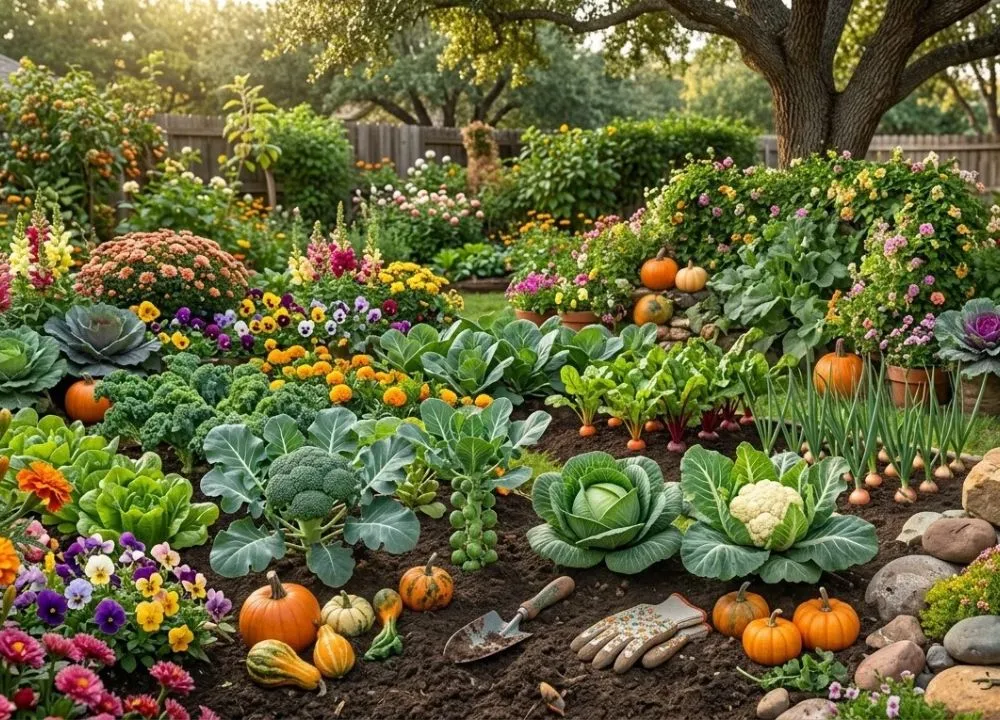
Here’s the failure other guides never diagnose. You plant lettuce in early October, water faithfully, and nothing sprouts. The seed isn’t bad, the soil is too warm.
Cool-season seeds respond to soil temperature, not the pleasant air outside. Research on lettuce shows germination drops off sharply once soil climbs above 80°F, and spinach goes unreliable above roughly 68°F.
The problem is that early-October soil in Texas often still holds summer heat. A comfortable 78°F afternoon can sit above dark ground baking well into the 90s, which quietly kills germination.
Two fixes solve it. Start seeds indoors where you control the temperature, then transplant, or shade the bed and water in the evening to cool the soil first. Lettuce and spinach sprout best once soil settles into the 55 to 65°F range, so a soil thermometer beats the calendar every time.
Herbs and Flowers to Plant in Texas in October
The fall garden isn’t only vegetables. October suits cool-season herbs and color across most of Texas.
For herbs, reach for the ones that love cooling weather. Cilantro, dill, parsley, chives, sage, and thyme all do well now, from seed or transplant.
Flowers get their moment too. Cool-tolerant bedding plants like petunias, marigolds, and mums brighten fall beds, while tough Texas natives such as salvia and coneflower dig in for the long haul. If you planted color last month, this simply extends the September flowers already going.
October Lawn and Garden Care for Texas
Getting plants in the ground is only half the job. October also brings key lawn work as the season turns.
Water stays important even as temperatures fall. New transplants need steady moisture to root before winter, so keep watering until they take hold, then ease back.
Fall is also the moment for cool-season grass. Many Texans overseed with ryegrass now for winter green, and it’s a smart time to fertilize the lawn before dormancy, right when you settle on which grass suits your yard best.
One last tip for the beds. Mulch your new plantings a couple of inches deep, which steadies soil temperature and keeps that lingering fall heat off tender roots.
Why October Is the Turning Point for Texas Gardens
October isn’t just another month on the Texas calendar. It’s the turn that unlocks the state’s most comfortable and productive growing season.
Everything you plant now aims at cool, pleasant months when Texas vegetables actually enjoy themselves. Summer beat your garden down, and fall lets it stretch out and produce.
The real edge, though, is planting with your own numbers. Know your freeze date, count back from it, and watch your soil temperature instead of the wall calendar.


