Greeley sits in an odd position on the Colorado map. The Rocky Mountains rise just 25 miles to the west, but Greeley itself spreads across the high plains, where flat ground meets open sky and wind has nothing to slow it down.
That geography creates conditions unlike what gardeners on the Front Range or Western Slope deal with. Winters here can swing from mild one week to brutally cold the next, and summer heat builds fast across the open terrain.
Choosing the wrong plants in this kind of climate leads to frustration. Trees that cannot handle the cold die back. Perennials rated for warmer zones vanish after their first winter. Knowing your exact planting zone before you spend a dollar at the nursery prevents all of that.
This guide covers Greeley’s specific zone designation, how local conditions shape what grows, and which plants will actually thrive in your yard.
What Planting Zone Is Greeley, Colorado?
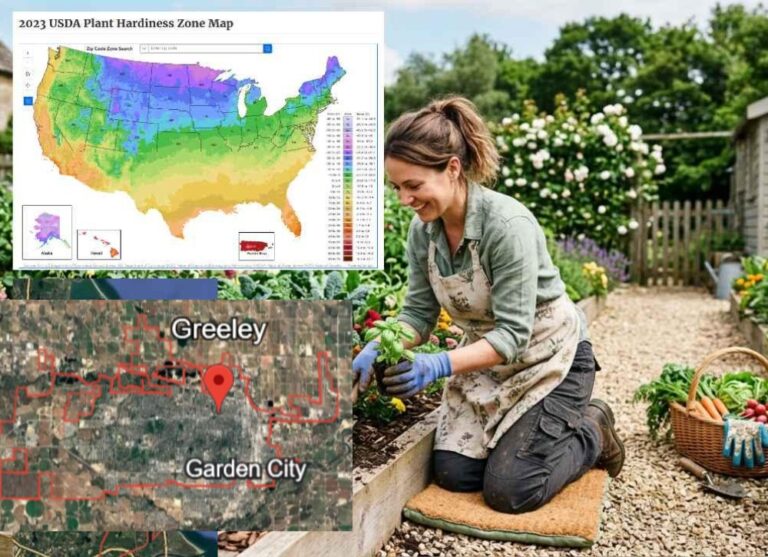
Greeley falls in USDA Hardiness Zones 5a and 5b, according to the 2023 USDA Plant Hardiness Zone Map.
Zone 5a covers central and eastern portions of Greeley, where average annual minimum temperatures dip to between -20°F and -15°F. Zone 5b covers other parts of the city, with minimums between -15°F and -10°F.
The 2023 map used 30 years of temperature data gathered between 1991 and 2020. The PRISM Climate Group at Oregon State University built the algorithms behind the zone boundaries, accounting for elevation differences and terrain features across the landscape.
Both zones fall on the colder side of what you find along the northern Front Range. Denver sits in Zone 6a, and even Boulder lands in a slightly warmer range than most of Greeley.
How Greeley’s Location Shapes Its Zones
Greeley’s zone designation is not just about latitude. The city’s position on the high plains, its elevation, and its exposure to open-air weather patterns all play a role.
High Plains Climate
Greeley sits at roughly 4,660 feet in elevation. That is lower than Denver but higher than many plains cities in neighboring states. The flat, open terrain around Greeley means there are no mountains, hills, or dense urban corridors nearby to buffer against cold air masses rolling in from the north.
Winter cold fronts sweep across the plains with very little resistance. These arctic blasts can push overnight lows well below the zone averages for a night or two, which is why Zone 5a appears in parts of the city while most of Northern Colorado stays in 5b or warmer.
Summer, on the other hand, brings strong heat. Daytime highs in July and August regularly push past 90°F. That combination of harsh winters and hot summers defines the growing challenge in Greeley.
Wind and Temperature Swings
Wind is a constant factor in Greeley. The open plains funnel gusts through the area year-round, but especially in spring and fall. Wind pulls moisture from soil and foliage faster than most gardeners expect.
Temperature swings are another defining trait. A February day might hit 60°F, tricking early bulbs into sprouting, only to plummet to single digits the following night. These rapid shifts stress plants more than a steady, cold winter would.
Selecting plants bred for temperature volatility, not just cold tolerance, helps your garden survive these swings. Natives and regionally adapted varieties handle this better than cultivars bred for steadier climates.
Frost Dates and Growing Season in Greeley
Greeley’s last spring frost typically falls in early to mid-May. The first fall frost arrives in late September to early October, depending on the specific year and location within the city.
That gives gardeners a growing season of roughly 140 to 150 days. It is shorter than what Denver or Grand Junction offers, but long enough to grow a solid range of warm-season vegetables if you time things well.
Starting seeds indoors six to eight weeks before the projected last frost extends your effective season. Transplanting hardened-off seedlings into the garden after mid-May gives warm-loving crops the best shot at producing before fall cold arrives.
A report from the Colorado Climate Center at Colorado State University notes that the northern Front Range and adjacent plains experience some of the most unpredictable spring weather in the state. Watching the forecast closely between late April and mid-May is essential for anyone gardening in Greeley.
What to Plant in Greeley’s Zone 5
Zone 5 supports a wide range of edible and ornamental plants as long as you select varieties that tolerate cold winters and handle the heat and wind of plains summers.
Vegetables for Zone 5a and 5b
Cool-season crops go into the ground first, as early as late March or April if the soil is workable. Warm-season crops follow after the frost danger passes in mid-May.
- Lettuce, kale, and spinach handle Greeley’s cool spring nights well
- Peas and radishes mature fast and finish before summer heat arrives
- Tomatoes transplant safely after the last frost in mid-May
- Squash, cucumbers, and beans go in the ground once soil hits 60°F
- Garlic plants best in fall and harvests the following summer
Hail is a genuine risk in Greeley during June and July. Lightweight hail netting over raised beds protects crops without blocking necessary sunlight.
Trees, Shrubs, and Perennials
Bur oak and hackberry are two shade trees that handle Zone 5 winters, alkaline soils, and wind without much complaint. Austrian pine and ponderosa pine offer year-round greenery and wind protection.
For flowering shrubs, lilac, potentilla, and sand cherry all thrive in Greeley’s conditions. These species tolerate the dry air, temperature swings, and clay-based soil common throughout the area.
Perennials like coneflower, black-eyed Susan, and yarrow return year after year with minimal care. They also tolerate the intense UV exposure that comes with gardening at altitude on the plains.
Gardening Strategies for Greeley’s Conditions
Beyond picking the right plants, a few practical habits make a big difference in Greeley.
Wind protection ranks near the top of the list. A fence, wall, or row of evergreen trees on the north and west sides of your garden creates a sheltered pocket that reduces moisture loss and physical stress on stems and leaves.
Watering on a consistent schedule matters more here than in humid climates. Drip irrigation at the base of plants delivers water where roots can use it. Overhead watering wastes moisture to evaporation and wind, especially during afternoon hours.
Mulching with organic material like wood chips or straw keeps soil temperature stable and reduces the water needs of every plant in your beds. Two to three inches of mulch around the base of perennials and vegetables makes a noticeable difference within the first week.
Preparing your garden for winter each fall also protects your investment. Cutting back perennials, adding a fresh layer of mulch, and wrapping young trees against wind and sun scald helps everything survive until spring planting begins again.
Working With Your Zone, Not Against It
Greeley’s Zone 5a and 5b designation tells you exactly where the boundaries sit. Plants rated for these zones, or colder, will survive the winter. Plants rated warmer are a gamble.
Build your garden around that number, respect the frost dates, and plan for the wind and dryness that define this part of Colorado. With those habits in place, Greeley gardens produce rewarding harvests season after season.
For exact zone information by zip code, the USDA Plant Hardiness Zone Map gives you the most precise data available.