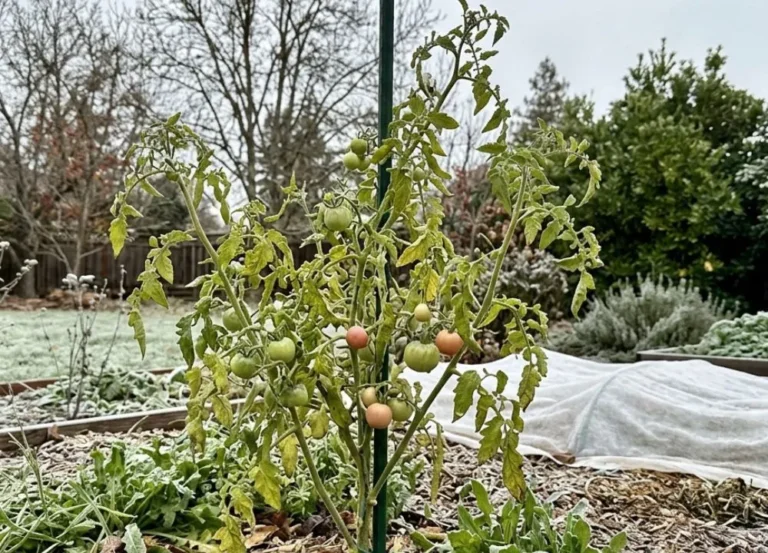
The first frost warning of the season always brings the same question to a tomato grower’s mind. Is the plant that took months to fill out worth trying to save, or is it already a lost cause?
That question gets harder to answer once you remember how much work went into it. Weeks of watering, staking, and watching for pests all lead up to this one cold snap.
Skip the wrong call here and you lose the plant for good, along with any fruit still ripening on the vine. Get it right, and that same plant can keep growing long after the garden around it has gone quiet.
- Can Tomato Plants Survive Winter?
- Can Tomato Plants Survive Winter Outside?
- Overwintering the Whole Plant Indoors
- Keeping Tomatoes Alive Through Cuttings
- Do Tomato Plants Die in Winter?
- Protecting Tomato Plants From Winter Frost
- Signs Your Tomato Plant Survived the Winter
- Is Overwintering Actually Worth It, or Should You Start Fresh?
Can Tomato Plants Survive Winter?
Tomato plants are tender perennials, not true annuals, like many gardeners assume. Left in a spot that never freezes, a single plant can keep growing and fruiting for years.
The catch is temperature, not time. Once the mercury drops to freezing, the plant’s cells break down and the tissue dies within hours.
So the real question is not whether a tomato plant can survive winter in theory. It is whether the grower manages frost exposure well enough to stop that freeze from happening.
There are three ways to manage it: leave the plant outside with protection, bring the whole plant indoors, or root cuttings from it as backup. Each one is really just a different way of knowing how to keep plants alive through a hard freeze.
Can Tomato Plants Survive Winter Outside?
Outdoor survival comes down almost entirely to climate zone. In frost-free regions, a tomato plant can live outside through the coldest months without any extra help.
Anywhere that dips to freezing even once, though, the plant is fighting a battle it will eventually lose. A single hard freeze below 28°F is usually enough to kill the roots along with the top growth.
Mild, borderline climates sit in a tricky middle ground. A light frost here and there might only singe the leaves, while a deeper cold snap later in the season finishes the plant off.
This is why outdoor survival should be treated as a short-term stretch, not a full winter plan, in any region that sees regular freezes. How to prepare your garden for winter covers the broader steps for protecting beds before that first cold night arrives.
Overwintering the Whole Plant Indoors
Moving the entire plant inside gives it the best odds of making it through winter intact. This works whether the tomato is already in a pot or still rooted in garden soil.
For in-ground plants, dig up the root ball a few weeks before the first expected frost. Keep as much soil around the roots as possible and settle it into a large container right away.
Container plants have it easier. Simply carry the pot indoors and set it near your brightest window before temperatures turn.
Once inside, the plant needs steady warmth, several hours of strong light daily, and just enough water to keep the soil from drying out completely. Growth will slow down, and that is normal for a plant riding out its dormant stretch.
A few habits keep an indoor tomato healthy through the colder months:
- Trim back leggy growth to reduce stress on the roots
- Check the soil weekly instead of watering on a fixed schedule
- Watch closely for pests like aphids, which thrive indoors
- Rotate the pot so light reaches all sides evenly
- Note any yellowing leaves early, since they often signal stress rather than dormancy
Keeping Tomatoes Alive Through Cuttings
Not every grower has room to shelter a full-grown plant indoors, and that is where cuttings come in. This method, a form of vegetative propagation, saves the plant’s genetics without moving the whole thing.
Snip a healthy stem several inches long from the parent plant before frost hits. Strip the lower leaves, then set the cut end in water, matching the ideal environment for cutting propagation.
Roots typically form within one to two weeks, especially with the right materials on hand for propagation. Checking a plant’s ability for cutting propagation explains how to judge whether a stem is strong enough to root successfully.
By spring, that rooted cutting is ready to harden off and go back outside. Even if the original plant never makes it, its exact variety carries forward into the new season.
Do Tomato Plants Die in Winter?
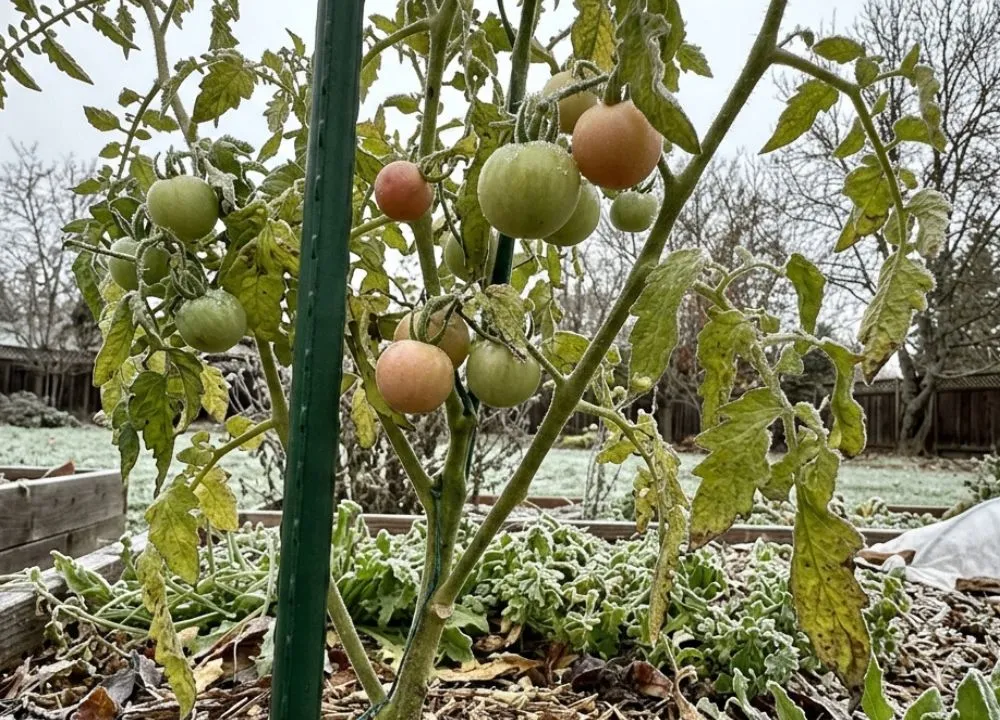
Yes, and the reason ties back to where tomatoes come from. The plant hails from warm South America, unlike deciduous trees that shed leaves and rest through winter.
Damage begins well before an actual freeze arrives. Research from Ohio State University on tomato chilling injury shows that fruit and foliage start suffering below 59°F if exposed for more than a few days.
Between 41°F and 50°F, growers typically see wilted leaves, slowed growth, and pitting on any fruit still on the vine. Drop below 32°F, and the damage turns from stress into outright cell death.
Ice crystals form inside the plant’s tissue at that point, rupturing the cell walls from within. Once that happens, water and nutrients can no longer move through the stem, and the plant collapses within hours.
The visible signs follow a fairly consistent pattern:
- Leaves turn dark, almost black, and go limp
- Stems soften and lose their upright shape
- Fruit develops sunken, water-soaked patches
- The whole plant wilts even though the soil is moist
According to the University of Maryland Extension, frost injury on tomato leaves often shows up first as whitened or bleached spots before the tissue turns fully black. Catching that early stage is often the difference between saving a plant and losing it outright.
Protecting Tomato Plants From Winter Frost
Knowing when the damage starts is only half the picture. The other half is acting on that knowledge before the cold actually arrives.
A grower generally has two real options once frost is forecast: shield the plant where it stands, or get it indoors before the temperature drops too far. Both routes buy time, but they suit different situations.
The sections below break down each approach on its own, since the right choice depends heavily on how far the cold snap is expected to go.
Insulating Plants Left Outdoors
For plants staying in the ground through a borderline cold snap, insulation is the first line of defense. A thick layer of mulch around the base helps trap warmth held in the soil overnight.
Row covers or old bedsheets draped over the plant work well for light frosts, especially when the fabric reaches all the way to the ground. This traps rising heat instead of letting it escape into the night air.
For smaller plants, cloches made from cut plastic jugs or glass jars create a mini greenhouse effect. Water your tomato plants deeply the evening before a frost, since damp soil holds heat far better than dry soil.
A few extra tactics can stretch a plant’s odds even further:
- String old-fashioned incandescent lights through the foliage for gentle warmth
- Stack straw bales around containers to block wind
- Remove all coverings once daytime temperatures climb back above 50°F
Timing the Move Indoors Before First Frost
Insulation only works down to a point, and past that point, the plant needs to come inside. This is where knowing your local frost dates becomes essential.
Check your average first frost date for the season, then start watching the ten-day forecast about two weeks out. Once nighttime lows are predicted to fall near 40°F, treat that as your cue to prepare the move.
Waiting until the morning of a hard freeze is usually too late, since damage can already be underway by then. Zone 5 frost dates and growing season is a useful reference for gardeners trying to pin down that window in colder zones.
Moving the plant a few days early, while the weather is still mild, gives it time to adjust to indoor conditions with far less shock.
Signs Your Tomato Plant Survived the Winter
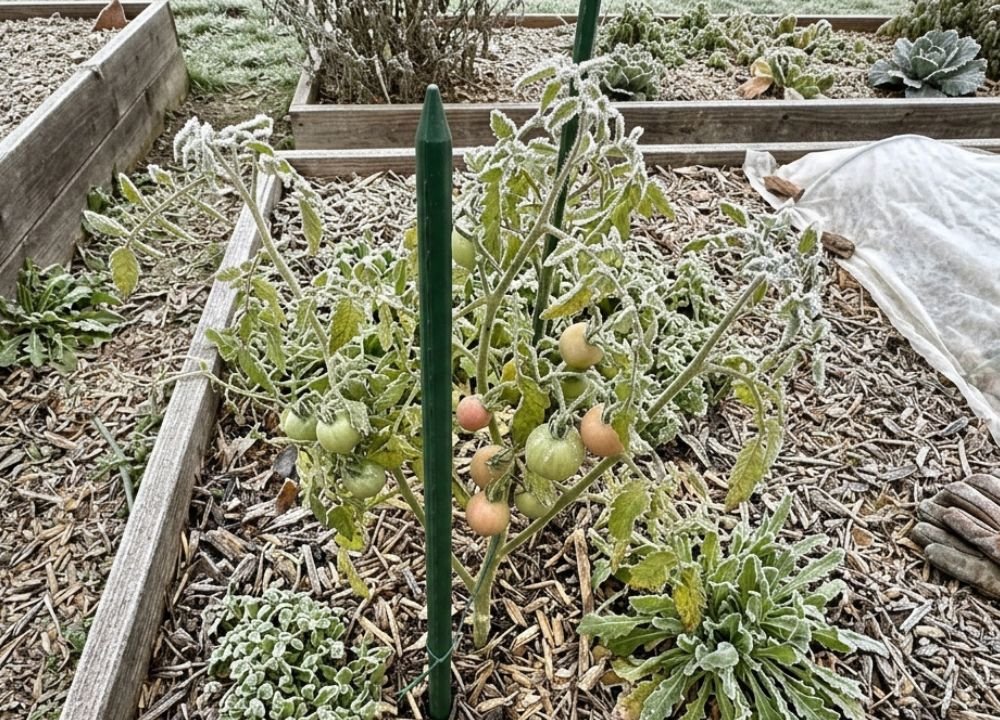
Once spring arrives, the plant will tell you clearly whether it made it through. The clearest signal is fresh growth that starts to match what a healthy tomato plant looks like.
Gently bend a stem to check its condition. A surviving plant has firm, flexible growth, while a dead one snaps dry and brittle with almost no resistance.
Roots offer another honest clue. Slide the plant slightly out of its pot and check for the same mushy, dark roots seen on an overwatered tomato plant, rather than pale, firm ones.
Watch for these markers over the first few weeks of warmer weather:
- New leaf buds forming along existing stems
- Green tissue visible just under the outer bark when scratched lightly
- Steady, if slow, upward growth week over week
- No blackened or collapsed sections spreading further
If none of these show up within three to four weeks of consistent warmth, the plant has likely not survived. At that point, it makes more sense to start over than to keep waiting.
Is Overwintering Actually Worth It, or Should You Start Fresh?
Here is the honest tradeoff. Overwintering tomato plant saves you the wait for seeds to germinate, and it lets you keep a variety you already know produces well all summer.
But it also demands months of indoor space, steady light, and regular attention through a season when most gardeners want a break. For a plant that barely produced or fought disease all summer, that effort rarely pays off.
If your tomato plant was healthy, productive, and a variety worth repeating, overwintering the whole plant or rooting cuttings is worth the extra work. For anything else, starting fresh from seed in spring gives you a stronger, cleaner plant with far less hassle.
The clearest answer is this: save the exceptional plants, and let the average ones go. When is the best time to plant tomato seeds walks through timing your next round so a fresh start is just as strong as the plant you’re letting go of.