Frost is coming, and that healthy tomato plant out back is not ready for the compost pile just yet. It spent months fighting off pests and pushing out fruit all summer long, long after weaker plants gave up.
Tossing a plant like that feels wasteful, and that instinct is right. Tomatoes are naturally tender perennials, not the one-season annuals most gardeners assume they are.
Wait too long to decide, though, and the cold makes the choice for you. Once a hard freeze hits, that same plant is gone for good, and next year’s tomato starts over as nothing more than a seed.
The good news is you don’t have to choose between losing it and fighting a losing battle against the cold. Overwintering gives that plant a real shot at making it to spring, and the right method depends entirely on your setup.
Some of these methods barely take an afternoon of work. Others ask for a spare corner of the house and a little patience through the coldest months.
- Can You Overwinter Tomato Plants?
- Bringing Tomato Plants Inside for Winter
- Overwintering Tomatoes as Cuttings
- Holding Tomato Plants Dormant in Cold Storage
- When to Bring Tomato Plants Indoors
- Preparing a Tomato Plant Before You Overwinter It
- Caring for Overwintered Tomato Plants Until Spring
- Getting Overwintered Tomatoes Ready for the New Season
Can You Overwinter Tomato Plants?
Yes, you can, because tomatoes are tender perennials that keep growing indefinitely once frost is no longer a threat. Left in a warm enough spot, the same plant can live for several seasons rather than just one summer.
The method that works best for you depends mostly on the plant’s size and how much space you have free. A small container tomato is far easier to shelter than a sprawling six-foot vine.
That size difference is exactly why there is no single overwintering method that suits every grower. A gardener with a sunny spare room has different options than one with only a dark closet to spare.
Three approaches cover nearly every situation: bringing the whole plant indoors, rooting cuttings from it, or storing it in a semi-dormant state. Each one trades a bit of effort for a different kind of payoff.
Bringing Tomato Plants Inside for Winter
This route works best for container tomatoes or smaller plants dug up and potted before the first hard freeze. The whole plant keeps growing indoors instead of pausing for winter.
Container plants are the simplest case. Just carry the pot indoors and set it near your sunniest window before the cold arrives.
For plants still in the ground, dig around the root ball carefully and settle it into a pot with fresh soil. Give the plant several days to recover from that transplant shock before expecting new growth.
A frost-free indoor spot for active growth needs a few specific things to keep the plant thriving:
- At least six hours of strong, direct light daily
- Steady room temperature, ideally between 65°F and 75°F
- Consistent but not soggy soil moisture
- Enough airflow to keep the leaves from staying damp
Without those conditions, the tomato plant may survive but grow weak and leggy instead of staying healthy through winter.
Overwintering Tomatoes as Cuttings
A full-grown tomato plant takes up serious space, and not every home has room for one indoors all winter. Cuttings solve that problem by carrying the plant’s genetics forward in a fraction of the size.
Choose a healthy, non-flowering stem several inches long from the parent plant. Checking a plant’s ability for cutting propagation is worth doing first, since a weak stem rarely roots well.
Strip the lower leaves, then set the cut end in a glass of water on a bright windowsill. Roots usually appear within one to two weeks, at which point the cutting can move into its own small pot.
This is really just one of several types of cutting propagation gardeners rely on for many plants, not just tomatoes. Once rooted, the young plant grows through winter much like a smaller version of the original.
By spring, you can end up with several new plants instead of one bulky survivor. Even if the parent plant is lost along the way, its exact variety carries on through the cuttings.
Holding Tomato Plants Dormant in Cold Storage

Growing a tomato indoors all winter takes light and warmth many homes simply don’t have to spare. Dormant storage skips that requirement by slowing the plant down instead of keeping it active.
Start by cutting the plant back hard, leaving only four to six inches of main stem. This removes most of the leaf surface that would otherwise demand light and water it won’t get.
Dig up the root ball, shake off loose soil, and repot it in fresh potting mix. According to horticulture guidance from Iowa State University Extension and Outreach, tender perennials handled this way should be kept somewhere cool, dark, and dry rather than warm and bright.
Move the pot to a spot that stays between 45°F and 55°F and never dips to freezing. A basement corner, unheated garage, or cool closet usually fits the bill.
Water only enough to keep the soil from drying out completely, roughly once every two to three weeks. The plant won’t grow much through this stretch, and that is exactly the point.
When to Bring Tomato Plants Indoors
Timing decides whether any of these methods actually work. Move too early and you waste the last weeks of a warm outdoor season; move too late and the plant is already damaged.
Start checking your average first-frost date about two weeks out. Once the ten-day forecast shows nighttime lows nearing 40°F, treat that as your signal to begin preparing the move.
Waiting for a frost warning the night before is usually cutting it too close. Cold air can settle low enough to damage leaves even when the official forecast stays a few degrees above freezing.
Bring the plant in a few days before conditions turn, rather than the same day. That gap gives it time to adjust gradually instead of facing shock from both a move and a temperature swing at once.
Preparing a Tomato Plant Before You Overwinter It
Whichever method you choose, the plant needs the same basic prep work first. Skipping these steps is one of the most common reasons an otherwise healthy tomato fails indoors.
Two things matter most before that plant crosses the threshold: trimming it down to a manageable size, and making sure nothing unwanted is hitching a ride along with it.
Pruning and Cleaning Up the Plant
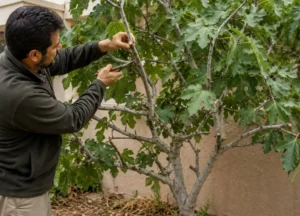
Cut the plant back before moving it, regardless of which overwintering method you’re using. A smaller plant needs less light and water, and it recovers from transplant stress faster.
Remove any spent flowers, ripening fruit, and yellowed or damaged leaves first. These parts drain energy the plant needs for surviving winter, not for producing anything new.
For plants headed into dormant storage, prune harder, down to just a few inches of main stem. Plants staying active indoors can keep more of their healthy top growth intact.
Checking for Pests and Disease Before Moving Indoors
An unchecked plant can carry aphids, whiteflies, or fungus gnats straight into your home along with the soil. Once indoors, those pests spread fast with no natural predators to keep them in check.
Inspect the undersides of leaves and the stem joints closely, since that’s where most insects hide. Fungus gnats around houseplants are especially common in soil that stays too moist after a plant comes inside.
If you spot pests, treat the plant with insecticidal soap or neem oil a few days before the move. Also check the leaves for spots, mold, or discoloration that could signal a disease worth addressing first.
Caring for Overwintered Tomato Plants Until Spring
Once the plant is settled indoors, its needs shrink dramatically compared to summer. Overwatering and overfeeding are far bigger risks now than neglect.
For plants kept actively growing, water only when the top inch of soil feels dry. Signs a plant needs water still apply here, just on a slower schedule than during the growing season.
Skip fertilizer completely through the dormant stretch, since feeding a slow-growing plant does more harm than good. Light, whether natural or from a grow lamp, should stay consistent even on short winter days.
“Just keeping it alive” really means resisting the urge to baby the plant too much. A tomato riding out winter should look stalled, not lush, and that’s a sign things are going as planned.
Getting Overwintered Tomatoes Ready for the New Season
Once the days lengthen and your last frost date approaches, the plant needs to wake back up. For dormant plants, this starts with moving them somewhere brighter and warmer, around 65°F to 70°F.
Watch for the first signs of new growth along the stems, which usually shows up within a week or two of the change. That growth is the clearest signal the plant survived and is ready to ramp up again.
Begin hardening off about ten days before transplanting, setting the plant outside for a couple of hours at a time. Extend that outdoor stretch a little each day so the leaves adjust to direct sun and wind gradually.
Once nights stay reliably above 50°F, the plant can go back into the garden for good. From there, it should settle in and start producing fruit through the summer just like it did before winter ever came.