

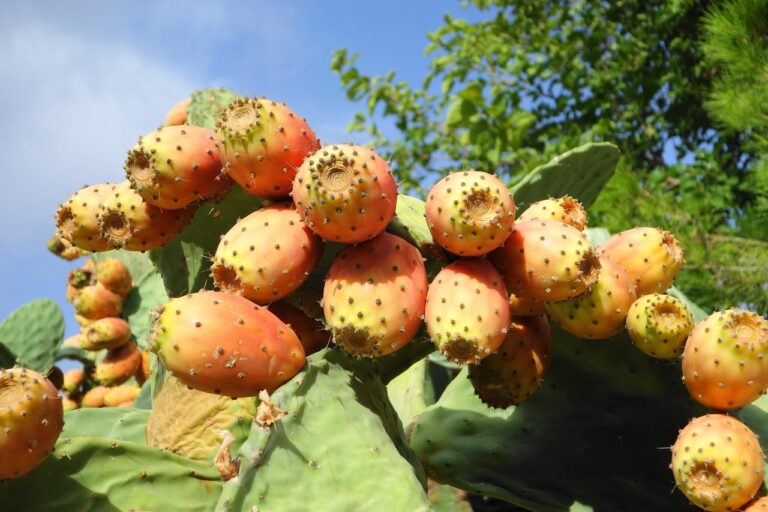
Most people associate prickly pear cactus with Arizona or Mexico. The idea that prickly pear grows wild in Colorado surprises nearly everyone who hears it for the first time.
But the answer is not just “yes.” It is “they were here long before anyone planted a garden.” Multiple species of prickly pear are native to Colorado, growing wild from the Eastern Plains to the Western Slope without any human help.
If you have ever seen a yucca plant growing along a Colorado highway and assumed it was the only native desert-style plant in the state, think again.
Do Prickly Pears Grow in Colorado?
Yes. Multiple Opuntia species are native to Colorado and have grown wild across the state for thousands of years. They thrive in the same conditions that challenge most garden plants: intense sun, dry soil, cold winters, and minimal rainfall.
The key distinction is species. Not all prickly pears tolerate cold equally. The ones that grow naturally in Colorado evolved to survive temperatures that would kill nursery imports from warmer climates.
Native Colorado Prickly Pear Species
Opuntia polyacantha (Plains prickly pear) is the most widespread species in Colorado. It grows across the Eastern Plains, Front Range foothills, and into mountain valleys up to at least 7,000 feet. According to iNaturalist’s Colorado cacti database and field observations from Golden, this species forms low, ground-hugging clumps rarely taller than six to eight inches.
Spines cover the entire pad surface, and the flowers bloom yellow, sometimes with pink or peach tones, in May and June. The fruit is small, reddish-purple, and edible. This species is cold-hardy to well below zero and survives in USDA Zones 4 through 11.
Opuntia macrorhiza (Twist-spine or Bigroot prickly pear) is the second common native. The Lady Bird Johnson Wildflower Center lists its range across Colorado. Field observations from the Denver metro area confirm it grows along creek paths and in open grasslands within city limits.
It has slightly larger pads than polyacantha, with spines concentrated on the upper half of each pad. Flowers are yellow with red centers, and the fruit is fleshy, reddish-purple, and spineless.
Opuntia phaeacantha (Brown-spine prickly pear) is found in western and southwestern Colorado. It grows at lower elevations on the Western Slope and in canyon country. This species has longer, brownish spines and produces larger pads and fruit.
Non-Native Prickly Pear Species and Colorado
The common Opuntia ficus-indica, the large-padded commercial prickly pear sold in grocery stores, will not survive a Colorado winter outdoors. These warm-climate types lack the cold dormancy adaptations native species have. They rot at the roots when soil temperatures drop below freezing.
Where Prickly Pears Grow in Colorado?
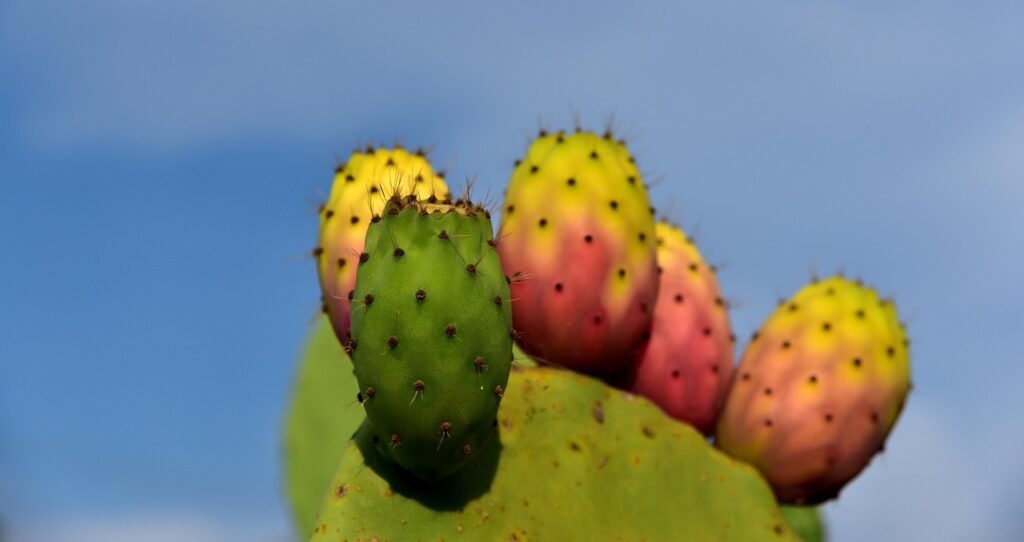
The Eastern Plains and Front Range grasslands hold the densest populations. You can find them in open spaces around Lakewood, Littleton, Parker, Golden, and across the south metro area.
On the Western Slope, prickly pear grows in canyon country, on mesa tops, and in dry terrain between Grand Junction and Durango. Near Pueblo and Canon City, populations are also common on south-facing slopes and rocky outcrops.
The habitat is consistent everywhere: well-drained sandy or gravelly soil, full sun, south-facing slopes. They avoid shaded areas, heavy clay, and irrigated landscapes.
Growing Prickly Pear in a Colorado Garden
Choose a spot with full sun, excellent drainage, and ideally south-facing exposure. Rocky slopes, gravel beds, and raised rock gardens all work.
Prickly pear needs poor, lean soil. Do not add compost or organic amendments. Sandy, rocky, well-drained substrate is what these plants want.
To plant from pads, let the cut end dry and form a callus for three to five days before planting. Set the calloused end one to two inches deep. Do not water at planting. Wait a week, then water lightly.
After establishment (roughly two to three months), stop watering entirely. Overwatering is the most common killer. These plants evolved to survive on Colorado’s natural rainfall alone.
Can I Collect Prickly Pear in Colorado?
The rules depend on whose land you are on.
Private land requires landowner permission. BLM and National Forest land generally allows personal-use gathering in small quantities without a permit. National Parks and National Monuments prohibit all plant collection. State Parks typically prohibit collection as well.
For responsible harvesting, take only a small number of pads or fruits from any single plant. Use tongs or thick gloves since the tiny glochids embedded in the skin are far more irritating than the visible spines.
Prickly Pear Uses: Fruit, Pads, and Beyond
Fruit (tunas) ripens in late summer, turning reddish-purple when ready. The flesh is sweet and mild, with small hard seeds. Use raw, or process into jelly, syrup, or juice.
Pads (nopales) can be harvested when young and tender in spring. Remove spines and glochids, then grill, saute, or dice for salads and scrambles.
Colorado’s native species produce smaller fruit and thinner pads than commercial types grown in Mexico. Set expectations accordingly.
Colorado’s Toughest Native Fruit
Prickly pear is one of Colorado’s most overlooked native food plants. It requires zero irrigation, zero fertilizer, and zero winter protection. It survives in soil that would kill most garden plants.
The answer to “do prickly pears grow in Colorado” is not just yes. Several species have been growing here for thousands of years across the plains, foothills, and Western Slope without help from anyone. They were here first, and they will be here long after the last garden hose is coiled up for the season.
For readers exploring what grows naturally across Colorado’s diverse climate zones, the full breakdown of the Colorado planting zone map covers every region in the state. You can also explore individual city zones for Colorado Springs, Fort Collins, Boulder, Pueblo, and Monument.


