A fig tree sits in a strange middle ground. It isn’t fully tropical, but it isn’t built for harsh cold either.
That in-between nature is exactly why the question of winter survival doesn’t have one clean answer.
A grower in coastal Georgia and a grower in Ohio are asking the same question, but they’re facing two completely different winters.
The truth is that fig trees are semi-hardy, which means their fate over the cold months hinges on where you live and how much effort you put in before the first freeze.
This piece walks through what actually decides whether a fig tree makes it to spring, zone by zone, along with the prep work and the warning signs that tell you what happened once winter has passed.
- Can a Fig Tree Survive the Winter?
- Fig Tree Winter Survival in Warm and Mild Climates
- Fig Tree Winter Survival in Moderate or Borderline Climates
- Fig Tree Winter Survival in Cold Climates
- Preparing a Fig Tree for Winter Before the Cold Arrives
- Signs a Fig Tree Did Not Survive Winter vs. Signs of Recovery
- Are Figs a Summer or Winter Fruit
- Why Understanding Your Climate Zone Is the Real Key to Fig Tree Winter Survival
Can a Fig Tree Survive the Winter?
Yes, a fig tree can survive the winter, but the honest answer stops there and branches into “it depends.”
Growing guides on fig hardiness generally agree that the tree’s cold tolerance shifts with its age, its variety, and whether it has already settled into full dormancy for the season.
A young tree planted last spring behaves nothing like a mature tree with five years of root growth behind it.
Region matters just as much as the tree itself. According to Gardener’s Path, most fig trees grow unprotected without trouble in USDA zones 8 through 10, while cold-hardy varieties can make it through zones 6 and 7 only with some form of added protection.
So survival isn’t really a coin flip. It’s closer to a sliding scale, where your zone sets the odds and your prep work tips them in your favor.
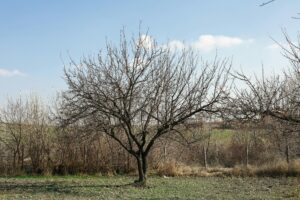
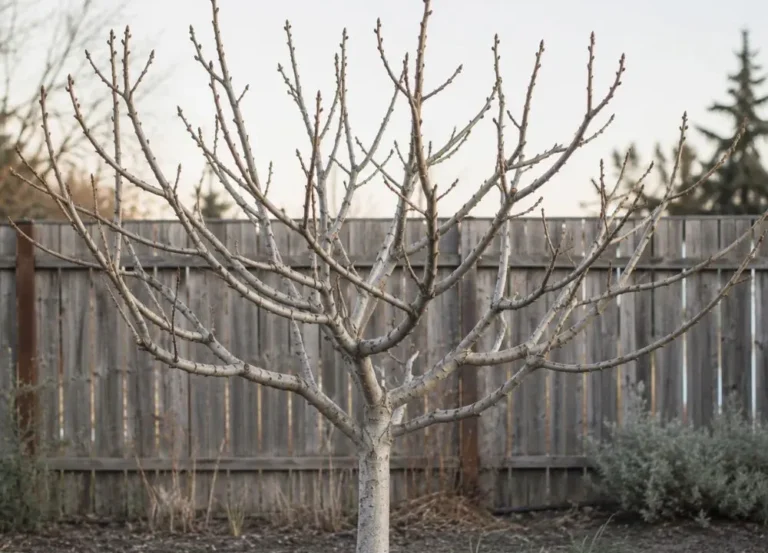
Even in a rough winter, a fig tree that loses its top growth to cold often keeps living through its roots, sending up fresh shoots once warmer weather returns. Since figs drop their leaves before this happens anyway, a bare tree in December isn’t automatically a dead one.
That single fact changes how most gardeners should think about “survival.” It rarely means all or nothing.
Fig Tree Winter Survival in Warm and Mild Climates
Growers in roughly USDA zone 8 and warmer have the easiest path here, and most years, a fig tree in these regions needs almost no help at all.
Winter lows in these zones rarely dip low enough to threaten a mature fig’s wood, so the tree simply drops its leaves and rests until spring pushes new growth.
Even so, “little protection” doesn’t mean zero effort, and a few small habits still pay off.
A light layer of mulch around the base holds soil moisture steady and buffers the roots from the occasional sharp cold snap.
Pulling back on watering once the leaves fall also matters, since soggy roots going into a cold night are far more vulnerable than dry ones.
Warm-winter states like the ones covered in this guide to the Georgia growing season fall squarely into this easy category, and the same holds for most of the Texas planting zone map.
Fig Tree Winter Survival in Moderate or Borderline Climates
Zone 7 sits right at the edge of what a fig tree can handle on its own, which is why gardeners here often call it the borderline zone.
As noted in fig-growing guides that track cold-hardy cultivars, these varieties can hold on through winters in zones 6 and 7, but only when paired with some form of protection.
Without that help, a borderline-zone fig tree will often survive at the roots while losing a good portion of its branches to dieback.
Mulching heavily around the base, four to six inches deep, is usually the first line of defense against a hard freeze reaching the root zone.
Wrapping the trunk and lower branches with burlap or frost cloth adds another layer of insurance during the coldest stretches of the season.
The Brown Turkey variety, for example, is commonly rated for zones 7 through 9, and it drops some of its leaves once freezing temperatures hit, then fills back in as things warm.
This is the reality for growers planting a fig tree in Georgia outside the warmer coastal belt, and for those planting a fig tree in NC as well, since both regions straddle this borderline zone. It’s also the situation many growers face when they wonder whether fig trees grow in Massachusetts, where winters swing between mild and harsh from one year to the next.
Fig Tree Winter Survival in Cold Climates
Once you’re gardening in zone 6 or colder, the odds shift hard against an unprotected fig tree making it through winter.
Even the toughest cold-hardy cultivars are typically rated only to zones 6 and 7, and even then, growers report needing real protection to keep them alive.
Left completely exposed, a fig tree in these regions will likely freeze back to the ground, and a severe enough winter can kill the roots too.
Growers who wonder whether figs grow in Colorado are usually dealing with exactly this situation, since much of the state sits well within this harsher range. The same goes for anyone working off a zone 5 frost dates chart, and for the most extreme case of all, gardeners checking Alaska planting zones before even attempting a fig outdoors.
Growers in cold climates lean on a handful of stronger tactics to keep their trees alive.
- Wrap the trunk in thick insulation like straw, blankets, or foam pipe wrap.
- Bury young or small trees entirely under a mound of soil or mulch.
- Build a simple frame around the tree and pack it with leaves or straw.
- Grow figs in containers and move them into a garage or shed for winter.
- Choose known cold-hardy cultivars bred specifically for shorter growing seasons.
The Container Route for Serious Cold
Growing a fig in a pot instead of the ground gives cold-climate gardeners the most control over the outcome.
A potted fig can simply be wheeled into an unheated garage or basement once temperatures start dropping toward the danger zone.
That single move sidesteps most of the risk that ground-planted trees face in a true zone 5 or zone 4 winter.
If a potted fig eventually outgrows its container, the same care used when transplanting trees safely applies before moving it into the ground or a larger pot.
Preparing a Fig Tree for Winter Before the Cold Arrives
Good winter prep starts well before the first frost, not after a cold snap has already caught you off guard.
Timing is the first thing to get right. Begin protective work once leaves start naturally dropping, which signals the tree has entered dormancy and can handle being wrapped or covered.
Cutting back on watering through autumn also helps, since it encourages the tree to slow down and toughen up rather than pushing soft new growth into the cold. This general approach to how you prepare a garden for winter applies to figs just as much as it does to other perennials.
Mulch is one of the simplest tools available, and applying it correctly makes a real difference. If you’re unsure of quantity, working out how many bags of mulch you’ll need ahead of time saves a cold, last-minute trip to the store.
- Wait until after the first light frost to apply mulch around the base.
- Spread it four to six inches deep, keeping it slightly away from the trunk itself.
- Use straw, wood chips, or shredded leaves for good insulation.
- Refresh the layer if heavy rain or wind thins it out mid-winter.
For trees that need wrapping, work from the ground up, layering burlap or frost cloth around the trunk and main branches without crushing them too tightly.
Leaving a little airflow inside the wrap prevents moisture from building up and causing rot over a long winter.
For a deeper walkthrough of every wrapping and insulating method by climate, this full guide on how to protect a fig tree in winter covers each option step by step. It’s also worth saving healthy prunings, since knowing when to take fig cuttings in your area means a hard winter doesn’t have to cost you the variety entirely.
Signs a Fig Tree Did Not Survive Winter vs. Signs of Recovery
Spring brings a nervous wait for fig growers, since a tree can look completely dead for weeks before proving otherwise.
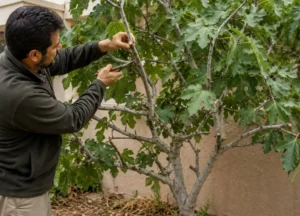
The scratch test is the quickest way to check. Scrape a small patch of bark on a branch with your fingernail, and green tissue underneath means that section is still alive.
Brittle, dry branches that snap easily and show brown or gray wood underneath are usually a sign that particular section has died.
Don’t panic if the upper branches fail this test, though, since dieback at the top often leaves the roots intact and ready to send up new shoots once the soil warms.
Give the tree until late spring before writing it off completely, because fig trees are notoriously slow to show new growth compared to other fruit trees.
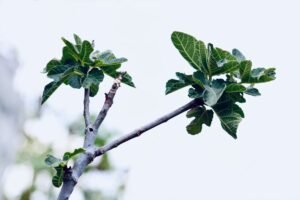
New shoots emerging from the base of the trunk or directly from the soil are the clearest sign the roots survived, even if the entire top of the tree needs to be cut away. As with any recovering plant, general how to keep plants alive basics, like steady watering and full sun, help these new shoots establish quickly.
Since figs are deciduous trees rather than evergreens, a bare canopy alone was never proof of death, only proof that the tree followed its normal seasonal pattern.
A tree that shows no green under the bark anywhere, from the branches down through the trunk and root crown, unfortunately did not make it through. If that happens, taking a healthy cutting from a nearby tree and learning how to propagate a fig tree is often faster than starting from a nursery sapling.
Are Figs a Summer or Winter Fruit
Figs themselves have nothing to do with winter. The fruit ripens during the warm months, not the cold ones.
Most varieties produce their main harvest in late summer, generally through August and September, depending on the climate and cultivar.
Some fig trees also carry a smaller early crop, sometimes called the breba crop, which ripens earlier in summer on the previous year’s wood. In that sense figs behave much like other summer fruit trees, where the cold season is strictly for rest, not ripening.
So while the tree spends winter dormant and often looking bare or damaged, that season has nothing to do with fruit production itself. If you’re planning ahead, knowing when to plant a fig tree in the fall can also set the stage for a stronger summer harvest the following year.
Winter is purely a survival test for the plant. Fruiting is a separate story that plays out entirely once warm weather returns.
Why Understanding Your Climate Zone Is the Real Key to Fig Tree Winter Survival
Every answer in this piece traces back to one thing: your specific climate zone.
A warm-zone gardener can mostly ignore winter prep, while a cold-zone gardener needs to treat it as a serious yearly task.
Knowing your zone tells you whether mulch alone will cover you, whether you need to wrap the trunk, or whether a container and a garage are your safest bet.
It also sets your expectations for spring, so you’re not shocked by dieback that’s actually normal for your region, or worried over a tree that’s simply slow to leaf out.
Whether you’re checking a Chicago planting zone map or one for a much warmer city, that single lookup shapes every decision that follows.
Figure out your zone first, match your prep to it honestly, and a fig tree becomes a far more forgiving plant to grow than its Mediterranean reputation suggests.