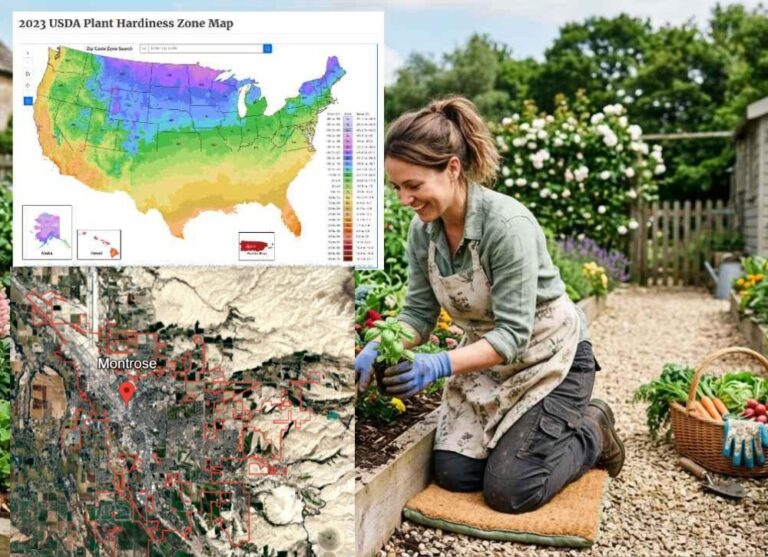
Montrose occupies a unique position on Colorado’s Western Slope, tucked between the Uncompahgre Plateau and the San Juan Mountains. Gardeners here deal with alkaline clay soil, dry winters, and a growing season shaped more by elevation and cold-air drainage than by latitude alone.
Picking the wrong plants for this region wastes an entire season. A peach tree rated for Zone 7 will likely die back during a cold January. Tomato transplants placed outdoors in April will stall in Montrose’s still-cold soil. Both mistakes trace back to one missing piece of information: the city’s USDA planting zone.
Here is what that zone is, what it means, and how Montrose gardeners can use it to grow with more confidence.
Montrose Sits in USDA Hardiness Zone 6a
The 2023 USDA Plant Hardiness Zone Map classifies Montrose, Colorado as Zone 6a. That means the average annual extreme minimum winter temperature in Montrose ranges from -10°F to -5°F.
Some areas around the city, especially lower-elevation spots closer to the Uncompahgre River valley, can edge into Zone 6b territory, where winter lows sit between -5°F and 0°F. According to Plantmaps.com, Montrose straddles the 6a/6b boundary depending on exact location within city limits.
For most residential gardeners in Montrose proper, Zone 6a is the safer planning baseline.
Why Zone 6a Matters for Montrose
The zone number tells you the coldest temperature a perennial, tree, or shrub must survive to grow here year after year. Any plant rated for Zone 6 or lower should handle typical Montrose winters.
Plants rated for Zone 7 or higher carry risk. They might survive a mild winter but will likely suffer or die during a colder-than-average year.
Western Slope Climate Adds Extra Factors
Montrose’s Western Slope location makes its growing conditions different from a Front Range city that shares the same zone number. The soil around Montrose is primarily alkaline clay, often sitting at a pH between 7.0 and 7.8.
That high pH locks up iron and other micronutrients, which causes yellowing in acid-loving plants. If your plant is turning yellow and you garden in Montrose, soil pH should be one of the first things you check.
Precipitation is low, and irrigation water in this region tends to be mineral-heavy. These factors layer on top of the zone classification and influence what actually thrives here versus what merely survives.
Frost Dates and the Montrose Growing Season
Vegetable gardeners care about frost dates more than zone numbers, because annual crops live and die by the frost-free window.
According to data from local extension and gardening resources, Montrose averages a last spring frost around May 25 and a first fall frost near September 21. That gives roughly 119 frost-free days, which is shorter than what many gardeners expect for a Zone 6a city.
The explanation is cold-air drainage. Cold air from the surrounding mountains settles into Montrose’s valley position overnight, pulling temperatures lower than they would be at the same elevation on a slope or ridge.
Starting seeds indoors for warm-season crops is essential here. Check the specifics on when to plant tomatoes in Colorado to get the timing right for this compressed season.
What Grows Well in Montrose
Montrose’s combination of mild winters and warm, dry summers supports a wider range of plants than most people expect, especially compared to mountain towns an hour east.
Vegetables for the Western Slope
Cool-season crops like lettuce, spinach, peas, and radishes go into the ground as soon as the soil can be worked in April or early May. Montrose warms up faster in spring than many Front Range cities at the same zone, thanks to its lower elevation and sheltered valley setting.
Warm-season crops like tomatoes, peppers, squash, and corn need to wait until after Memorial Day in most years. Lettuce in Colorado follows a similar timeline on the Western Slope but can be planted slightly earlier here than in the mountains.
Garlic performs very well in Montrose. Plant cloves in fall as recommended for Colorado and harvest the following summer once the lower leaves begin to brown.
Fruit Trees and the Western Slope Advantage
The Western Slope is Colorado’s fruit-growing corridor, and Montrose benefits from that regional reputation. Peach trees, apple trees, cherry trees, and pear trees all grow here with proper variety selection.
Cities like Grand Junction nearby sit in even warmer zones (6b to 7a), but Montrose’s 6a status still supports excellent fruit production. Gardeners interested in stone fruit should read about peach season in Colorado and whether pears produce well in this climate.
Figs are a stretch in Montrose. While the Western Slope is the warmest region in the state, Zone 6a is borderline for most fig varieties. You can explore whether figs grow in Colorado for a more detailed breakdown.
How Montrose Compares to Other Colorado Cities
Montrose’s Zone 6a matches what you find in Denver and nearby Front Range suburbs. The difference is climate character, not zone number.
Denver gets more wind and more extreme temperature swings. Montrose has drier winters, warmer daytime highs in summer, and that alkaline Western Slope soil that affects everything from vegetable gardens to orchard trees.
Heading south to Durango, zones can range from 5b to 6b depending on elevation. Heading east toward the mountains, zones drop sharply into 5a and 4b within a short drive.
Tips for Gardening in Montrose’s Zone 6a
A few habits help Montrose gardeners get the most from their zone and climate.
Amend soil with comite, sulfur, or acidifying organic matter if you plan to grow blueberries, azaleas, or other acid-preferring plants. The native alkaline clay will work against them without amendment.
Water deeply and on a schedule. Montrose receives less than 10 inches of annual precipitation, so irrigation is not optional for most gardens. Understanding how often to water your plants helps prevent both drought stress and overwatering in this dry climate.
Protect fruit tree blossoms in spring. Late frosts in May can wipe out an entire peach or apple crop in one night. Keeping frost cloth on hand during bloom season is worth the small investment.
Final Thoughts
Montrose, Colorado sits in USDA Hardiness Zone 6a, with average winter lows between -10°F and -5°F. Some parts of town edge into 6b. The growing season runs roughly from late May through mid-September, giving gardeners around 119 frost-free days.
The Western Slope setting gives Montrose warmer summers and better fruit-growing conditions than most of the state, but the alkaline soil and dry air add their own set of challenges. Matching your plant choices to both the zone and the local conditions is what separates a productive garden from a frustrating one.